dk@dkoutsource.com


Construction budgets are under increasing pressure from fluctuating material prices, labour shortages, supply chain disruption and changing project requirements. Traditional cost planning methods remain important, but they often rely heavily on historical data and assumptions that may become outdated as a project develops. This is where Artificial Intelligence (AI) and predictive models are creating new opportunities for more responsive and forward-looking construction cost management.
Rather than simply estimating what a project may cost today, AI can help project teams assess how costs could change in the future. For Quantity Surveyors, contractors, developers and consultants, this can support better decisions before financial risks become difficult to control.
Moving Beyond Traditional Cost Estimates
Conventional construction cost estimation typically draws on previous projects, current market rates, quantities and professional judgement. These remain valuable sources of information, but they may not fully account for rapidly changing market conditions.
Predictive modelling refers to the use of historical and current data, statistical techniques and machine learning to identify patterns and predict potential future outcomes. -IBM
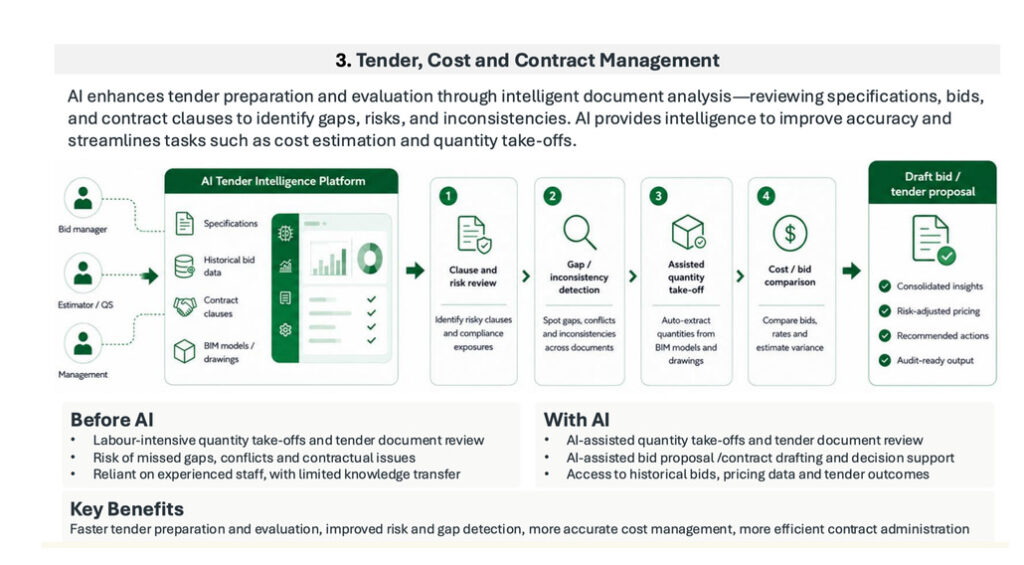
AI predictive models can process much larger datasets, including historical project costs, material prices, labour rates, programme information, procurement data and market trends. By identifying patterns within this information, AI can generate forecasts and highlight potential cost movements.
For example, if a project depends heavily on steel, an AI model could analyse historical pricing alongside market trends and procurement timelines. Instead of relying solely on today’s price, the project team can consider potential future scenarios and assess how they could affect the overall project budget.
Improving Cost Forecasting Throughout the Project
One of the biggest advantages of cost planning using AI is its ability to support continuous cost forecasting. Building budgets are rarely static. Design changes, variation orders, delays and procurement decisions can all influence the final cost.
Cost forecasting is the process of predicting the final cost of a project based on its current status, available information and cost trends. -AACE International
AI-powered systems can continuously evaluate updated project information and identify emerging patterns. If spending begins to move away from the original cost plan, predictive analytics can potentially flag the issue earlier. This allows Quantity Surveyors and project managers to investigate the cause and consider corrective action before a relatively small deviation develops into a significant budget problem.
For businesses providing professional Quantity Surveying services, this technology can also strengthen the way financial information is presented to clients. Forecasts can be supported by data-driven scenarios rather than relying exclusively on historical comparisons.

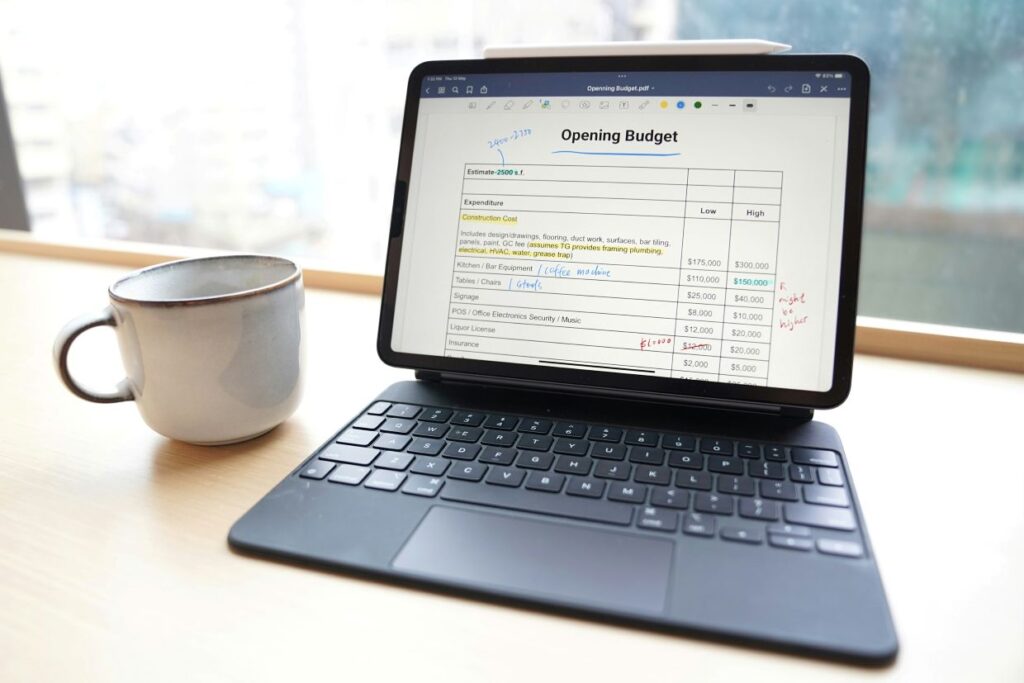
Picture by Brianpenny
Managing Uncertainty Across Different Markets
The value of predictive cost planning extends well beyond one country. Construction markets across Asia, Europe, the Middle East and North America face different combinations of inflation, labour availability, regulations and supply chain conditions.
In Singapore, for example, construction companies operate within a highly developed built environment where labour availability, productivity, construction demand and material costs can influence project economics. Similar pressures exist internationally, although their scale and causes differ between markets.
AI can help companies account for these differences by incorporating relevant local and project-specific data into forecasting models. This makes cost planning more adaptable rather than treating every project as though it operates under identical market conditions.
Supporting Better Decisions
Predictive models should not replace professional judgement. Instead, they can give construction professionals more information with which to make decisions. A Quantity Surveyor can use AI-generated forecasts to examine questions such as whether a material should be procured earlier, whether a design alternative could reduce future expenditure, or whether sufficient contingency has been included in the budget.
Scenario modelling can also be valuable. Project teams could compare optimistic, expected and adverse cost scenarios and understand how each might affect the final construction budget. This provides a stronger basis for discussions between developers, consultants and contractors.
Building More Resilient Budgets
The goal of AI-driven cost management is not to predict the future perfectly. Construction projects will always contain uncertainty, and unexpected events can occur despite careful planning. The greater opportunity lies in identifying risks earlier and making budgets more responsive. When combined with experienced Quantity Surveying, reliable project data and effective cost controls, predictive technology can help organisations move from reactive financial management towards proactive decision-making.
As construction becomes more data-driven, AI predictive models can give project teams greater visibility over potential cost movements, helping them make informed decisions and build budgets that are better prepared for an uncertain future.
References
- RICS – AI in Construction 2025 https://www.rics.org/news-insights/artificial-intelligence-in-construction-report
- RICS – Responsible Cost Planning Using AI in Surveying Practice https://www.rics.org/profession-standards/rics-standards-and-guidance/conduct-competence/responsible-use-of-ai
- RICS – AI for Cost Management and Cost Engineering https://www.rics.org/training-events/online-training/scheduled/global-ai-cost-management-cost-engineering-webinar
- ScienceDirect – AI-Driven Construction Cost Planning Using AI and Cost Forecasting Research https://www.sciencedirect.com/science/article/pii/S0926580526000Frontiers – Machine Learning and AI in Construction Cost Prediction https://www.frontiersin.org/journals/built-environment/articles/10.3389/fbuil.2026.1867673/full
- BCA – Key Construction Information https://www1.bca.gov.sg/e-services/key-construction-information/
- BCA – Construction Demand in Singapore 2026 https://www1.bca.gov.sg/resources/newsroom/steady-construction-demand-in-2026-as-singapore-steps-up-support-for-built-environment-firms-through-collaboration-and-innovation/