dk@dkoutsource.com


In the construction sector, verifying completed work for monthly progress claims is a vital but complex task. Contractors typically submit progress claims based on completed site works, supported by 2D drawings, measurements, photographs, and progress reports.
The quantity surveyor (QS) must then evaluate whether the claimed work has been completed on-site and whether the valuation aligns with the contract. Historically, this has been a labour-intensive and manual process; however, the integration of AI vision and computer vision technologies is establishing a more systematic, evidence-based approach to progress verification.
Bridging the Gap Between Design and Physical Reality
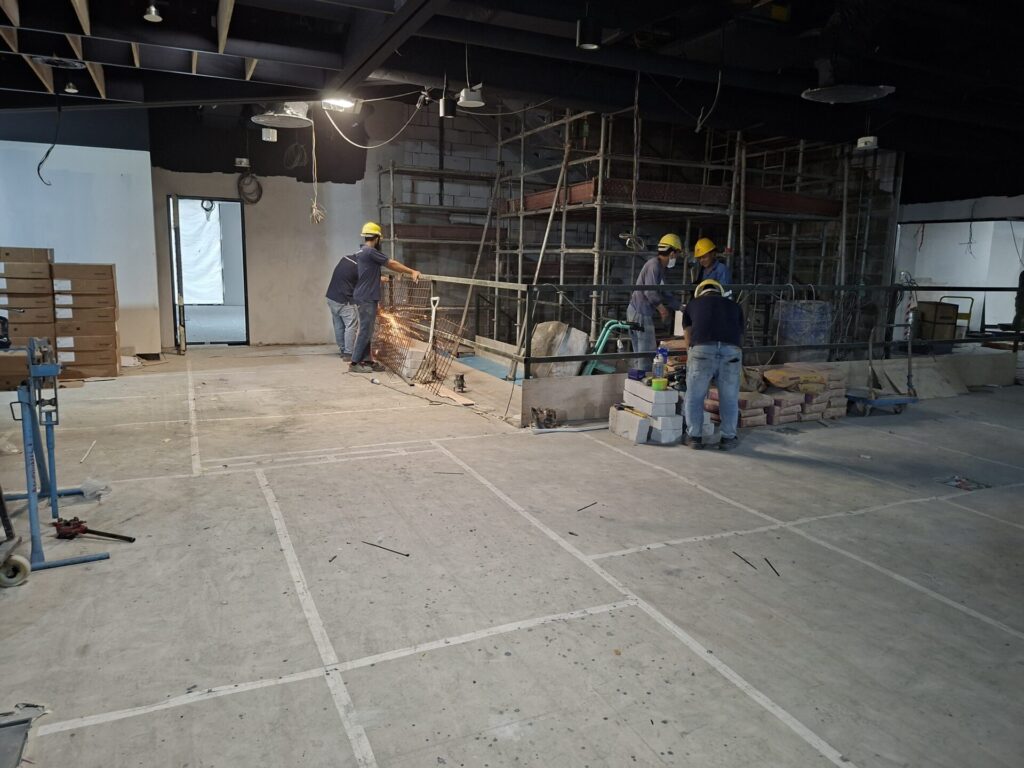
Traditional progress audits depend heavily on physical site inspections, manual measurements, photographs, and voluminous documentation. While these practices remain essential, they are exceptionally time-consuming—particularly on large-scale developments such as hospitals, residential towers, or commercial complexes where hundreds of rooms and structural elements must be checked.
A 2D construction drawing represents the design intent, while a site photograph captures physical reality at a specific point in time. The primary challenge for cost managers has always been connecting these two distinct data sets.
AI-powered computer vision bridges this gap by automatically analysing site imagery to identify visible physical elements—including walls, doors, ceilings, flooring, windows, and installed equipment—and comparing them directly against the expected scope of work shown in the 2D drawings.
Computer vision refers to the use of image-processing and artificial intelligence techniques to identify and interpret information from photographs or video. -MDPI
How AI Vision Supports Progress Claim Audits
Rather than replacing the quantity surveyor’s physical inspections, AI vision serves as an analytical assistant to identify discrepancies and streamline verification.
- Targeted Investigations: Consider a scenario where a contractor claims that 80% of a finishing package is complete. An AI vision system can scan recent site photographs to identify which areas are complete, partially complete, or unfinished. If the visual evidence conflicts with the progress report, the QS can focus their attention on those specific locations.
- Identifying Discrepancies: If a progress claim states that wall finishes are substantially complete across multiple floors, but site images reveal exposed structural surfaces, the AI flags the discrepancy. This does not automatically mean the contractor’s claim is fraudulent, but it provides a critical, targeted verification point for further site investigation.
- Temporal Comparisons: AI can analyse and compare photographs taken on different dates. This automates the process of identifying changes in construction activity over time, saving surveyors from manually sorting through hundreds of historical site photos.
Building a Stronger Evidence Trail for Quantity Surveyors
In quantity surveying, certifying interim payments requires establishing a defensible valuation of completed work. Standard professional guidelines, such as the Royal Institution of Chartered Surveyors (RICS) guidance on interim valuations and payment, state that progress payments must reflect the actual value of work completed, which must be validated by the quantity surveyor.
An interim valuation is an assessment of the value of work carried out and other amounts properly due under the terms of a construction contract at a particular stage of the project. -RICS
Integrating AI vision into this workflow adds a highly reliable layer of visual evidence to complement the surveyor’s professional judgment. Research from Western Sydney University has demonstrated how computer vision can automate parts of work-in-progress measurement and support interim payment assessments, providing a more transparent, auditable history of physical progress.

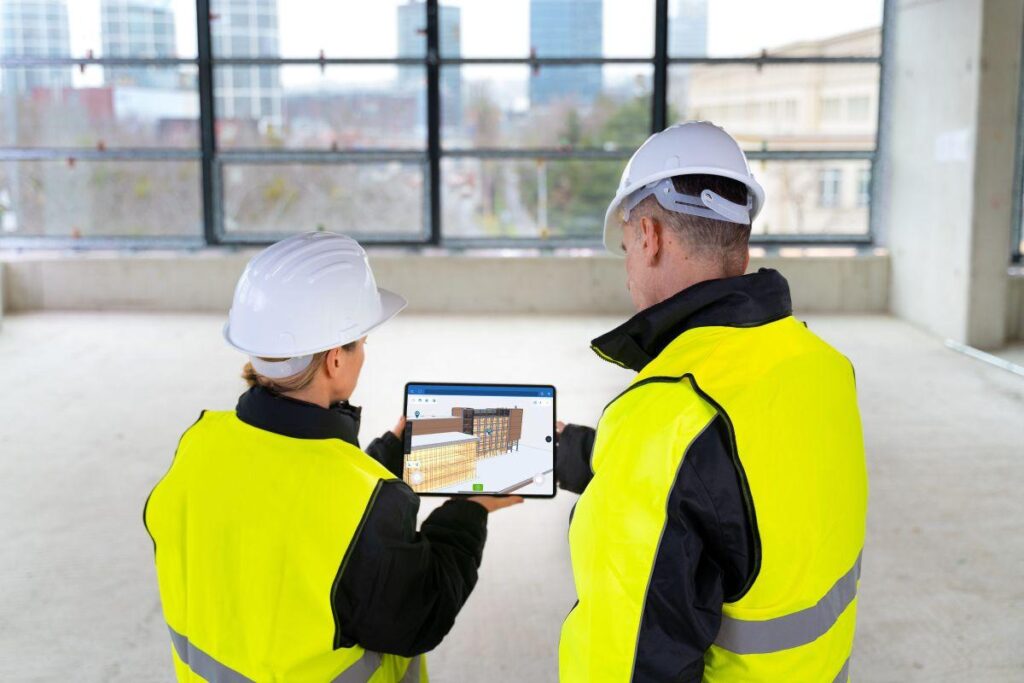
Picture by karola g on pexels
Where AI Vision Adds the Most Value
AI vision technology is highly effective on projects characterized by highly repetitive work, such as residential housing, healthcare facilities, commercial office buildings, and major infrastructure.
In these environments, the technology is typically applied to:
- Compare active site progress directly against design drawings and schedules.
- Flag incomplete or outstanding works within a submitted progress claim.
- Organize, categorize, and archive massive volumes of site photographs.
- Generate consistent visual records of the project history to assist monthly valuation reviews.
The Indispensable Value of Human Oversight
Despite its rapid processing capabilities, AI vision is not an automatic payment-certification system. The technology operates under several physical and operational limitations:
- Site photographs can be obstructed by equipment, materials, or temporary structures.
- Images taken from inconsistent angles can lead to interpretation errors.
- Visual sensors cannot verify concealed works, such as plumbing behind walls or underfloor services.
- Many contractual entitlements and valuation mechanisms rely on complex conditions, measurements, and records that cannot be established through photographs alone.
Academic research, including systematic reviews in Automation in Construction and Buildings, emphasizes that while computer vision dramatically accelerates progress monitoring, experienced human involvement remains completely indispensable.
The Bottom Line
The future of progress claim audits lies in collaborative intelligence. When 2D drawings, site photographs, physical measurements, and contractual records are integrated and reviewed together, project teams can identify discrepancies earlier and resolve valuation disagreements before they turn into payment disputes. By utilizing AI vision to handle repetitive image analysis, quantity surveyors can strengthen their professional judgment, secure clearer evidence, and deliver highly informed valuations of completed work.
References
- RICS, Interim Valuations and Payment.https://www.rics.org/profession-standards/rics-standards-and-guidance/sector-standards/construction-standards/black-book/interim-valuations-and-payment
- Reja, V. K., Varghese, K. and Ha, Q. P., Computer vision-based construction progress monitoring, Automation in Construction, 2022. https://www.sciencedirect.com/science/article/pii/S0926580522001182
- Rehman, M. S. U., Shafiq, M. T. and Ullah, F., Automated Computer Vision-Based Construction Progress Monitoring: A Systematic Review, Buildings, 2022. https://www.mdpi.com/2075-5309/12/7/1037
- Zhang, X. et al., 2D Drawings Automating progress measurement of construction projects, Western Sydney University. https://researchers.westernsydney.edu.au/en/publications/automating-progress-measurement-of-construction-projects/