dk@dkoutsource.com


Summary: Singapore’s net-zero transition increases initial building capital. However, integrated carbon-cost planning, structural material optimization, and life-cycle costing offset these upfront premiums by securing substantial, highly predictable long-term operational savings.
Singapore’s built environment is moving towards a lower-carbon future as part of its wider national sustainability agenda. Driven by the Singapore Green Plan 2030 and a long-term goal of achieving net-zero emissions by 2050, the construction industry is undergoing a structural transition.
Central to this effort is the Singapore Green Building Masterplan, which establishes ambitious benchmarks:
- 80% of all buildings to be certified green by 2030.
- 80% of new developments to achieve Super Low Energy (SLE) standards from 2030 onwards.
- 80% improvement in energy efficiency for best-in-class buildings compared to 2005 levels.
These targets have major implications for developers, contractors, and consultants. Sustainability is no longer an optional environmental add-on; it is becoming directly connected to construction cost planning and value engineering.
The Upfront Reality: Where Decarbonisation Impacts Budgets
Transitioning to low-carbon construction methods can introduce immediate capital expenditure (CapEx) pressures, primarily driven by three factors:
- Low-Carbon Materials Premium: Concrete and steel are highly carbon-intensive. Opting for lower-carbon alternatives (such as low-carbon concrete) can carry initial price premiums, additional testing requirements, or limited local supplier availability.
- Specialist Consultancy & Design: Conducting embodied carbon assessments and energy modelling requires specialised engineering expertise and comprehensive design coordination.
- High-Performing Systems: Achieving Super Low Energy standards under the Green Mark 2021 scheme often requires a higher initial investment in high-efficiency mechanical, electrical, and plumbing (MEP) equipment.
Evaluating the Trade-Offs
To help project teams balance environmental targets against commercial reality, cost managers must weigh the initial capital cost of decarbonisation measures against their long-term performance benefits:
|
Decarbonisation Measure |
Possible cost impact |
Potential Value & Benefit |
| Low-carbon concrete | Possible material price premium. | Lower embodied carbon |
| Energy-Efficient Systems | Higher upfront equipment cost. | Lower energy consumption |
| Embodied Carbon Assessment | Additional consultancy and analysis fees. | Better-informed procurement and material selection. |
| Green Mark 2021 Compliance | Additional design and documentation | May require more extensive early design coordination. |
| Material Optimisation | May require more design coordination | Reduced physical material and waste disposal costs. |
Connecting Carbon Analysis with Cost Planning
Embodied carbon represents the greenhouse gas emissions associated with the extraction, manufacturing, transportation, and installation of building materials before the building is even occupied. Reducing operational energy alone is no longer sufficient; addressing upfront carbon is critical to achieving net-zero targets. -Singapore Green Building Council
For consultant Quantity Surveyors, this creates a major opportunity to integrate carbon analysis directly with traditional cost planning. Instead of treating cost and carbon as separate issues, project teams should evaluate structural designs through a dual-lens framework:
|
The Carbon Cost Matrix |
||
|---|---|---|
| Conventional design | Low- Carbon Material | Optimised structure |
| Lowest initial prize | Material Premium | Lower Concrete volume |
| Highest carbon embodied footprint | Lower embodied carbon footprint | Lower cost and CO2 |
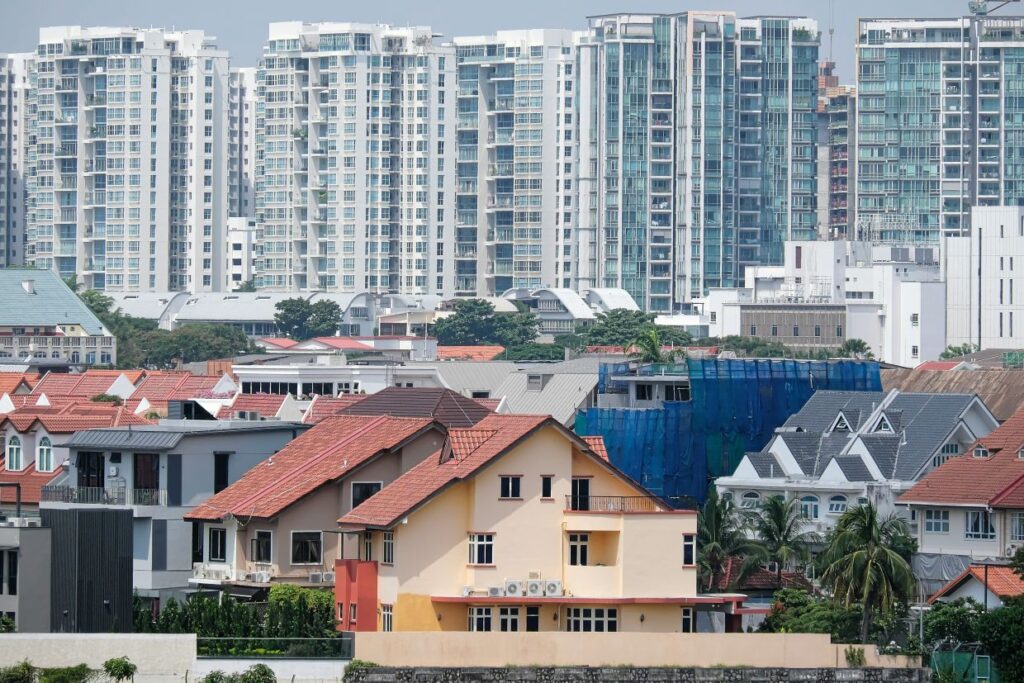
Picture by vidit-goel on Pexels
The Life-Cycle Costing Advantage
Focusing solely on upfront tender prices provides an incomplete picture of project value. While achieving advanced Green Mark ratings can increase initial budgets, they deliver substantial, predictable savings over the building’s operating life.
According to the Building and Construction Authority (BCA), Singapore’s Green Mark-certified buildings collectively save more than 4.2 billion kWh of energy annually—equivalent to approximately S$1.3 billion in annual cost savings.
By utilising Life Cycle Costing (LCC), Quantity Surveyors can help developers model these long-term operational expenditure (OpEx) savings, proving that investing in higher-performing building envelopes and energy-efficient systems yields a superior return on investment over the asset’s lifecycle.
How Decarbonisation Can Drive Cost Reductions
It is a commercial misconception that sustainability always equates to higher project costs. When managed proactively, decarbonisation strategies can actively reduce capital expenditure:
- Material Optimisation: Designing out excess concrete and steel directly reduces structural material purchasing and waste disposal costs.
- Adaptive Reuse: Restructuring or refurbishing existing structural frames instead of resorting to full demolition avoids massive demolition costs and the purchase of brand-new, carbon-intensive materials.
- Digital Integration: Leveraging Building Information Modelling (BIM) and digital twins allows teams to coordinate designs virtually, reducing on-site rework and material waste.
At a global level, the pressure to adopt these resource-efficient methods is growing. The UN Environment Programme (UNEP) Global Status Report notes that buildings and construction account for 37% of global CO₂ emissions and nearly 50% of global material extraction. Minimising material consumption is therefore essential to preserving both global resources and developer margins.
Actionable Roadmap for Project Teams
To successfully navigate the carbon-cost transition without losing competitiveness, developers, contractors, and consultants should adopt the following practices:
- Engage Quantity Surveyors Early: Involve cost managers during the conceptual phase to model the financial and carbon impacts of design options when flexibility is highest.
- Compare Materials Systematically: Evaluate conventional and low-carbon materials side-by-side during design development, accounting for current pricing and local availability.
- Use Localised Carbon Tools: Leverage the free, Singapore-specific Singapore Building Carbon Calculator—developed jointly by JTC, BCA, and the Singapore Green Building Council (SGBC)—to access localised Environmental Product Declaration (EPD) data and measure upfront embodied carbon accurately.
- Embed Standards in Tenders: Clearly specify the required Green Mark targets, material performance standards, and carbon-reporting expectations in all tender documents to prevent post-contract scope disputes.
- Utilise Life Cycle Costing: Present capital budgets (CapEx) alongside operational forecasts (OpEx) to support balanced, data-driven decisions.
Conclusion
Decarbonisation is changing how construction costs are planned, evaluated, and managed. While capital expenditure remains a primary project metric, long-term commercial success belongs to projects that achieve a balanced equilibrium between upfront cost, embodied carbon, material efficiency, and life-cycle asset performance. By connecting carbon analysis with traditional cost planning, the modern Quantity Surveyor plays an indispensable role in delivering sustainable, high-value assets on a highly stable financial foundation.
Frequently Asked Questions
Will decarbonisation increase construction costs in Singapore?
Answer: It can increase upfront costs where projects require low-carbon materials, specialist consultancy, energy-efficient systems or additional sustainability assessments. However, these costs can potentially be offset by lower operating expenses and material savings.
What is embodied carbon in construction?
Answer: Embodied carbon refers to emissions associated with the production, transportation, construction and other lifecycle stages of building materials and components.
Are low-carbon construction materials more expensive?
Answer: Some lower-carbon materials can currently carry a premium depending on availability, specification and supplier. Increased adoption could improve availability and pricing over time.
Does Green Mark increase construction costs?
Answer: Higher Green Mark performance can require additional design, equipment, modelling and documentation. However, improved building performance can generate operational savings over time.
What is the Singapore Building Carbon Calculator?
Answer: The Singapore Building Carbon Calculator is a localised tool that helps built environment professionals assess upfront embodied carbon using Singapore-relevant data.
How can Quantity Surveyors support decarbonisation?
Answer: Quantity Surveyors can compare material costs, quantities, specifications and lifecycle costs while helping clients evaluate the financial implications of lower-carbon options.
Can sustainable construction reduce costs?
Answer: Yes. Material optimisation, reduced waste, energy efficiency and adaptive reuse can potentially reduce both capital and operating costs.
Why should carbon be considered during cost planning?
Answer: Carbon decisions made during early design can influence material quantities, specifications and construction methods. Considering them early gives project teams more opportunity to identify cost-effective alternatives.
References
- Building and Construction Authority (BCA) – Green Mark 2021. https://www1.bca.gov.sg/sustainability/legislation-on-environmental-sustainability-for-buildings/
- Ministry of Sustainability and the Environment (MSE) – Singapore Green Plan 2030.https://www.mse.gov.sg/resources/sgp-2030/
- Singapore Green Building Council (SGBC) – Bringing Embodied Carbon Upfront. https://www.sgbc.sg/embodied-carbon
- Singapore Green Building Council (SGBC) – Built Environment Decarbonisation Technology Roadmap. https://www.sgbc.sg/resources/decarb-tech-roadmap/
- JTC Corporation – Championing Sustainability and Singapore Building Carbon Calculator. https://www.jtc.gov.sg/about-jtc/championing-sustainability
- Energy Market Authority (EMA) – Singapore Energy Statistics. https://www.ema.gov.sg/resources/singapore-energy-statistics/chapter2
- UN Environment Programme (UNEP) – Global Status Report for Buildings and Construction 2025–2026. https://www.unep.org/resources/report/global-status-report-buildings-and-construction-2025-2026
- Singapore Green Building Council (SGBC) – Singapore Building Carbon Calculator. https://www.sgbc.sg/sg-building-carbon-calculator/