dk@dkoutsource.com


You have a clear vision for your project, a budget you are comfortable with, and initial plans that seem to fit perfectly. Then, the Quantity Surveyor (QS) estimate comes back, and the figure is higher than expected.
When faced with this gap, the most important first step is to remain calm—a higher construction cost estimate does not mean the project is unfeasible. Instead, it serves as an early commercial alignment checkpoint. It highlights a mismatch between your initial cost assumptions and current market or design realities. Before making any hasty decisions, it is critical to understand why this gap exists, what the estimate actually reveals, and how to systematically bring your budget and design back into balance.
Cost estimating and cost planning are structured processes used to establish and manage the expected cost of a construction project as design information develops. -RICS
Why the QS Estimate and Initial Budget Diverge
It is common for early-stage budgets and detailed QS estimates to look very different. Understanding the causes of this divergence is the key to resolving it:
- The Information Gap: Initial budgets are often prepared during the conceptual phase based on limited, high-level project information. Conversely, a professional QS estimate is built on granular details—incorporating the specific scope of work, physical quantities, materials, technical specifications, and labor requirements.
- Real-World Market Pricing: In accordance with the Royal Institution of Chartered Surveyors (RICS) Cost Prediction Professional Standard, a reliable estimate must account for practical cost factors. These include actual subcontractor rates, current market conditions, inflation, site-specific constraints, procurement routes, and project risks.
- The “Hidden” Project Costs: Conceptual budgets frequently overlook non-construction expenses. A detailed QS estimate provides a realistic picture by including essential costs such as professional fees, external works, temporary works, project allowances, and contingencies.
-
Using the Estimate as a Diagnostic Tool
A QS estimate should never be viewed as just a single, discouraging number; it is a highly structured financial map of your project. Using standards like the RICS New Rules of Measurement (NRM), consultant quantity surveyors organise cost information into consistent, elemental categories. This structured breakdown allows you to dissect the project and identify the exact cost drivers:
| DIAGNOSING THE BUDGET GAP | ||
|---|---|---|
| Structural Elements & Civil Works | Mechanical & Utility (MEP) Services | Architectural & Interior Finishes |
| • Ground/site works
• Concrete & steel • Structural integrity |
• HVAC systems
• Electrical & plumbing • Specialist equipment |
• Facade materials
• Flooring & walls • Sanitary fittings |
By isolating which elements are driving the budget overrun, you can avoid blanket cuts and instead apply targeted commercial solutions.
Conduct a Collaborative Review with Your QS
Before altering your designs or slashing specifications, sit down with your consultant quantity surveyor to conduct a rigorous, line-by-line audit of the cost plan. Use this diagnostic checklist to guide the session:
- Cost Concentration: Which specific project elements or trades are contributing most to the cost overrun?
- Essentiality: Are all included items and spaces strictly necessary to achieve the core project objectives?
- Risk Allowances: What contingencies, design margins, or cost allowances are currently built into the estimate, and are they justified?
- Material Specifications: Are specific luxury materials or premium finishes disproportionately inflating the cost?
- Scope Creep: Has the project scope quietly expanded or evolved since the original baseline budget was set?
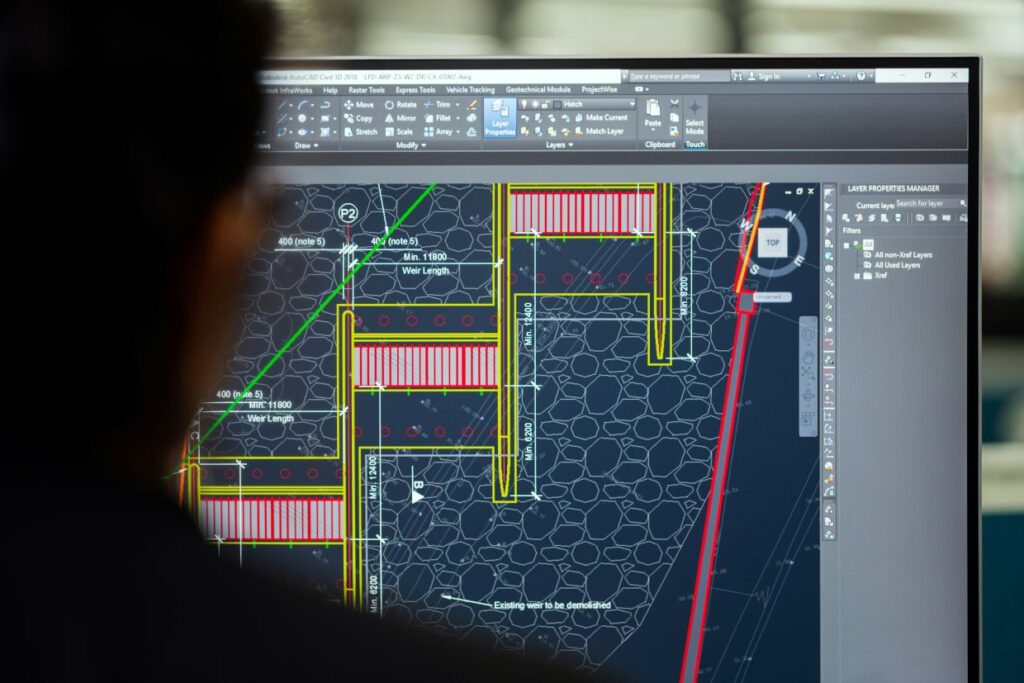
In Singapore, this review should be grounded in localized market data. The Building and Construction Authority (BCA) regularly publishes critical indicators on construction demand, tender prices, and raw material costs, providing an objective benchmark for your budget review.

Picture by Microsoft 365 on Unsplash
Apply Strategic Value Engineering
If the project is genuinely over budget, Value Engineering (VE) offers a structured way to bring costs under control without sacrificing the building’s core functionality or design intent.
Value Engineering is an approach used to improve the relationship between a project’s required benefits and the cost or effort needed to achieve them. – RICS
Value engineering is not about simply choosing the cheapest alternative; it is about finding smarter, more cost-effective ways to achieve the same performance and quality. Your project team should systematically evaluate:
- Finishes: Reviewing alternative floor and wall finishes that mimic premium aesthetics at a fraction of the cost.
- Fittings & Fixtures: Standardizing sanitary ware, door hardware, and interior fittings.
- M&E Systems: Optimizing lighting specifications, electrical layouts, and HVAC system designs.
- External Works: Simplifying landscaping, boundary walls, and external paving.
- Façade & Envelope: Exploring alternative cladding materials and window systems that maintain thermal performance while lowering manufacturing and installation costs.
Prioritise Scope Over Quality
When faced with budget overruns, a common mistake is to retain a large project footprint but cheapen all the materials and finishes. This often leads to poor workmanship, high maintenance costs, and a finished asset that feels compromised.
Instead, evaluate the overall scope before cutting quality. Ask yourself whether the physical size or programmatic scope of the project is simply too large for your budget. It is often far better to deliver a smaller, high-quality build than a massive, cheaply finished one. Consider whether certain non-essential elements can be simplified, postponed to a future phase, or removed entirely—such as delaying decorative landscaping or leaving shell spaces to be fitted out later.
The Three Paths to Reconciliation
If a cost gap remains after a thorough estimate review and value engineering, you ultimately face three strategic choices to align your finances and design:
- Increase the Budget: If the current project requirements are commercially critical or the long-term value justifies the investment, securing additional capital is the most straightforward route.
- Reduce the Scope: Cleanly subtract, simplify, or indefinitely postpone entire project elements to force the design to fit within the strict limits of your original budget.
- Find a Balanced Compromise: Work collaboratively with your architect and QS to select a hybrid path—preserving highly visible, high-priority features while aggressively optimizing behind-the-scenes systems and finishes.
The Power of Early Cost Management
The single greatest defence against budget overruns is engaging quantity surveying services as early as possible in the project lifecycle. As recognized by the BCA, quantity surveyors play an indispensable role in estimating costs during the planning and design stages. Waiting until construction tenders are returned to discover you are over budget is an incredibly expensive mistake that leads to costly redesign fees and severe project delays.
By utilising continuous cost planning, cost modeling, and proactive risk analysis from day one, your QS provides an early warning system—giving you the time and data needed to make adjustments while changes can still be made effortlessly on paper.
Conclusion
A QS estimate that exceeds your project budget is not the end of your project; it is a vital tool for commercial success. It replaces optimistic assumptions with reliable, market-tested financial data. By systematically identifying your primary cost drivers, reviewing project scope, and leveraging professional value engineering, you can make highly informed decisions that protect your capital. Backed by structured cost planning and experienced quantity surveying advice, you can move forward into the construction phase with absolute confidence, clear budget control, and zero financial surprises.
References
- RICS, Cost Prediction Professional Standard – guidance on preparing reliable construction cost predictions. https://www.rics.org/profession-standards/rics-standards-and-guidance/sector-standards/construction-standards/rics-cost-prediction-professional-statement-global-1st-edition
- RICS, New Rules of Measurement (NRM) – guidance on cost estimating and cost planning. https://www.rics.org/profession-standards/rics-standards-and-guidance/sector-standards/construction-standards/nrm
- Singapore Institute of Surveyors and Valuers (SISV) – QS Estimate Exceeds Your Project Budget. https://www.sisv.org.sg/qs-services.aspx
- Building and Construction Authority (BCA), Key Construction Information – Singapore construction demand, tender price and construction cost information. https://www1.bca.gov.sg/e-services/key-construction-information/
- Building and Construction Authority (BCA), Quantity Surveying – information on the role of quantity surveyors in construction cost management. https://www1.bca.gov.sg/