dk@dkoutsource.com


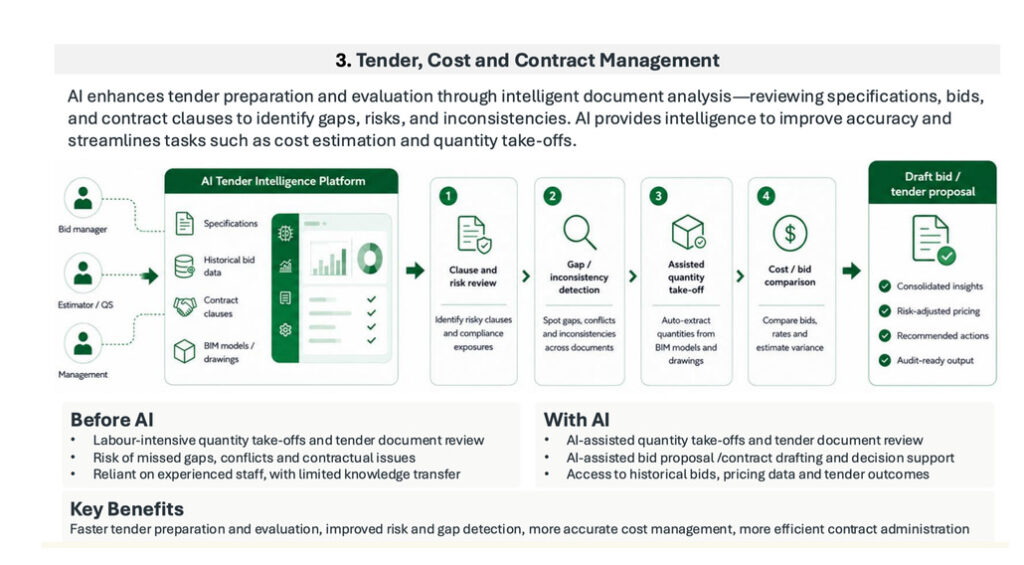
Construction projects are becoming increasingly complex, characterized by rising material costs, frequent design changes, labour constraints, and tight project programmes that place immense pressure on budgets. For consultant quantity surveyors, maintaining accurate cost information throughout a project’s lifecycle is essential. However, traditional processes can be time-consuming and vulnerable to human error.
This is where Artificial Intelligence (AI) has started to play a greater role; by analysing large volumes of project and cost data, AI can support construction cost control, identify potential risks earlier, and help project teams make better-informed financial decisions.
Artificial Intelligence (AI) refers to digital systems capable of performing tasks requiring human-like intelligence, such as learning, reasoning, and inferring. -RICS
Improving Construction Cost Estimation
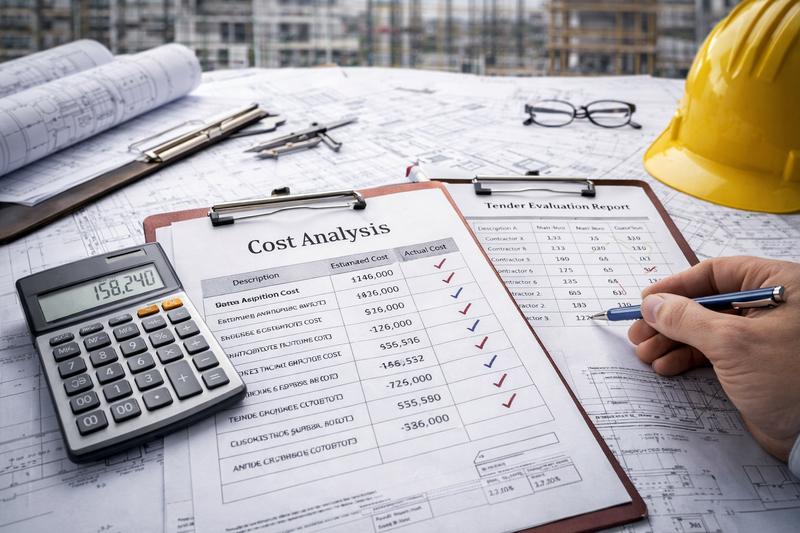
Traditional cost control often relies on periodic reports that show how a project is performing against its baseline budget. While valuable, these retroactive reports often identify a problem only after costs have already started to escalate. AI offers the possibility of more predictive, real-time cost management.
By analysing available project information, AI models can identify early patterns associated with increasing costs and highlight areas that require closer professional attention. For example, repeated variations, creeping material costs, or frequent changes to project requirements could indicate that the final cost is highly likely to exceed the original budget. Instead of simply reporting the variance after the fact, AI can help project teams proactively assess where the project’s budget is heading.
| Area | Traditional approach | AI-assisted approach |
| Cost monitoring | Relies on periodic cost reports and manual review | Analyses project and cost data continuously or at shorter intervals |
| Variation analysis | Variations are reviewed and assessed manually | AI can identify patterns in variations and flag unusual changes |
| Budget forecasting | Forecasts rely heavily on historical project information and professional judgement | AI can analyse multiple project variables to identify potential cost trends |
| Risk identification | Risks may become apparent after costs have started increasing | AI can highlight patterns that may indicate emerging cost risks |
| Decision-making | Teams respond to identified cost variances | Teams can investigate potential issues earlier and take corrective action |
Furthermore, recent research has highlighted the growing use of AI and machine learning for construction cost prediction, particularly because traditional approaches can struggle with complex data, changing conditions, and the intricate relationships between multiple project variables.
Identifying Budget Risks Earlier
Traditional cost control often relies on periodic reports that show how a project is performing against its baseline budget. While valuable, these retroactive reports often identify a problem only after costs have already started to escalate. AI offers the possibility of more predictive, real-time cost management.
By analysing available project information, AI models can identify early patterns associated with increasing costs and highlight areas that require closer professional attention. For example, repeated variations, creeping material costs, or frequent changes to project requirements could indicate that the final cost is highly likely to exceed the original budget. Instead of simply reporting the variance after the fact, AI can help project teams proactively assess where the project’s budget is heading.
Recent research has highlighted the growing use of AI and machine learning for construction cost prediction, particularly because traditional approaches can struggle with complex data, changing conditions, and the intricate relationships between multiple project variables.

Picture by leeloo the first on pexels
Reducing the Financial Impact of Delays
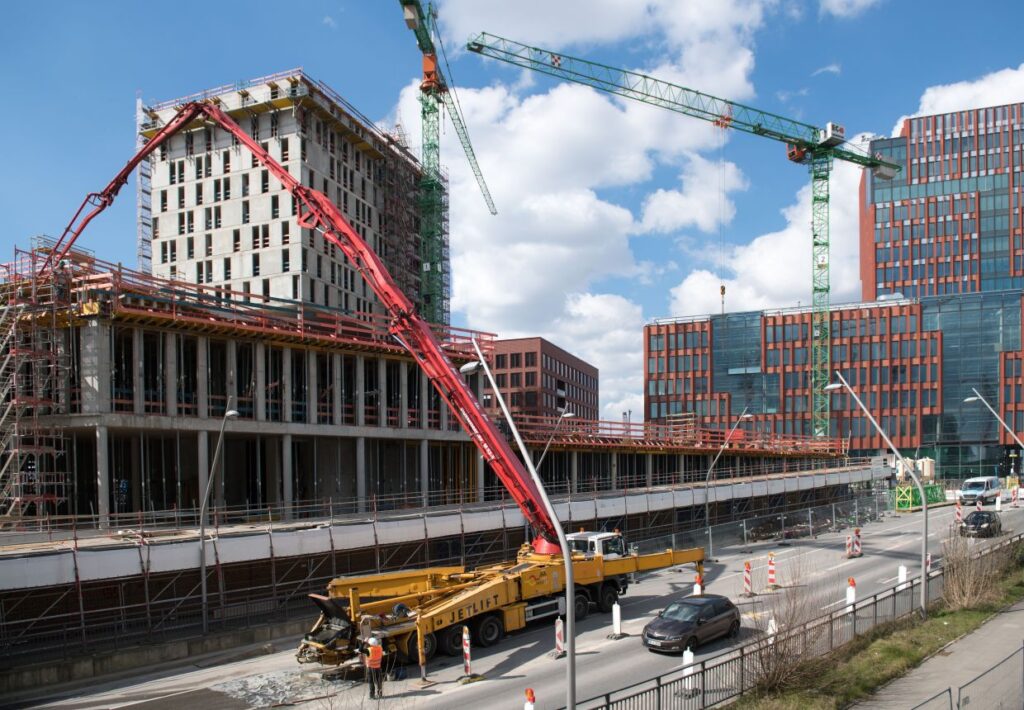
Time and cost are legacy issues that remain inextricably linked in the construction industry. A project delay can trigger a cascade of additional expenditures, including rising labour costs, extended equipment hire, increased site overheads, and potential contractual claims.
AI can support construction project management by analysing scheduling and project information to identify potential delays and project their associated financial consequences. RICS research into AI in construction has identified progress monitoring and project scheduling among the key areas where industry professionals see significant potential for AI, alongside risk management and cost management.
This creates a valuable opportunity to transition toward more proactive construction risk management. Rather than waiting until a delay has become unavoidable, project teams can use predictive insights to investigate potential root causes and implement corrective actions much earlier.
Why AI Still Needs Professional Oversight
Despite its immense analytical potential, AI should not be treated as a replacement for consultant quantity surveyors or other construction professionals. The quality of an AI-generated result depends heavily on the quality and completeness of the baseline information provided. If the system is fed incomplete drawings, inaccurate data, or inappropriate assumptions, there is a high probability it will lead to unreliable and misleading outputs.
Therefore, while AI can identify patterns, process large datasets, and highlight potential risks, experienced human professionals remain completely indispensable. A qualified QS is needed to understand the wider project context, verify the data, and determine the most appropriate contractual and commercial response.
A Smarter, Proactive Approach to Cost Control
The true value of AI in construction cost control is not simply about automating existing, manual processes. Its greater potential lies in helping project teams become more proactive. By supporting cost estimation, budget forecasting, cost management, variation analysis, and risk management, AI provides earlier insights into where financial vulnerabilities may be developing. This gives quantity surveyors more time to thoroughly investigate issues, advise clients, and support better-informed project decisions.
For construction companies, developers, and clients, the ultimate objective is straightforward: fewer avoidable errors, earlier identification of risks, and greater confidence in project budgets. While AI will not eliminate every construction cost risk, when combined with reliable data and professional quantity surveying services, it becomes an invaluable tool for achieving more informed and effective construction cost control.
References
- RICS — Responsible use of AI case study: Construction https://www.rics.org/profession-standards/rics-standards-and-guidance/conduct-competence/responsible-use-of-ai/ruai-case-studies-05
- RICS — Responsible use of artificial intelligence in surveying practice https://www.rics.org/profession-standards/rics-standards-and-guidance/conduct-competence/responsible-use-of-ai
- RICS — Artificial Intelligence in Construction Report https://www.rics.org/news-insights/artificial-intelligence-in-construction-report
- ScienceDirect — Predicting cost overrun in construction projects using machine learning algorithms https://www.sciencedirect.com/org/science/article/pii/S0969998825001092
- Frontiers in Built Environment — Applications of machine learning and AI in construction project cost prediction https://www.frontiersin.org/journals/built-environment/articles/10.3389/fbuil.2026.1867673/full
- Emerald Publishing — AI-enabled prediction of delay and cost overrun risk in construction https://doi.org/10.1108/ECAM-06-2025-1024