dk@dkoutsource.com



Summary: Construction contract termination can leave contractors, subcontractors and employers facing significant financial uncertainty. Once a party is removed from site, determining the value of completed work, outstanding payments, termination costs and damages becomes critical. This guide explains how to measure and reconcile construction contract termination quantum, with practical insights relevant to Singapore construction projects and international construction disputes.
Understanding Quantum After Site Ejection
In construction disputes, quantum refers to the financial value of a claim, including amounts owed, costs incurred, losses suffered or damages recoverable. Following site ejection, where a contractor or subcontractor loses access to the project site, the immediate challenge is establishing the financial position of each party at the termination date.
Termination does not automatically mean that all outstanding payments become payable or that every cost claimed is recoverable. The outcome depends on the construction contract termination clause, the validity of termination and the applicable legal principles.
As explained in Singapore Law Watch’s Building and Construction Law chapter, termination may arise under contractual provisions or general contract law. This distinction matters because different termination mechanisms may produce different financial consequences.
Measuring Quantum: What Should Be Included?
A reliable termination account reconciliation should establish both the value of work performed and the financial consequences of termination.
Key components include:
- Completed works: Measure work properly executed up to the termination date, using site measurements, drawings, progress records and applicable contract rates.
- Materials and equipment: Identify materials delivered, off-site materials, unfixed goods, plant and equipment, including ownership and contractual payment entitlements.
- Outstanding payments: Reconcile certified and uncertified work, previous payments, retention sums, variations and approved claims.
- Completion costs: Assess reasonable, contractually recoverable costs of engaging replacement contractors, completing outstanding works and rectifying defects.
- Damages and deductions: Examine applicable liquidated damages, proven losses, contractual set-offs and other permitted deductions.
A practical reconciliation framework Example
| Item | Amount (S$) |
| Value of completed works | 500,000 |
| Eligible materials and other entitlements | 40,000 |
| Less: Previous payments | (350,000) |
| Less: Supported contractual deductions | (30,000) |
| Indicative balance | 160,000 |
Evidence and Valuation: Building a Defensible Claim
A quantity surveyor (QS) or independent quantum expert can help reconstruct the financial position through a structured assessment.
The recommended approach is:
- Establish the effective termination date and the last verified progress position.
- Conduct a joint measurement or reconstruct site quantities using available records.
- Reconcile the original bill of quantities (BOQ) against variations and actual completed work.
- Verify invoices, delivery orders, payroll records, subcontractor accounts and procurement commitments.
- Separate agreed sums from disputed claims and potential counterclaims.
Why evidence matters: In CAA Technologies Pte Ltd v Newcon Builders Pte Ltd [2017] SGCA 53, the Singapore Court of Appeal rejected a claim for liquidated damages passed down from the employer because sufficient evidence did not establish that those damages were caused by the subcontractor’s breaches.
The practical lesson is clear: contractual liability and financial causation must be demonstrated, not simply assumed.
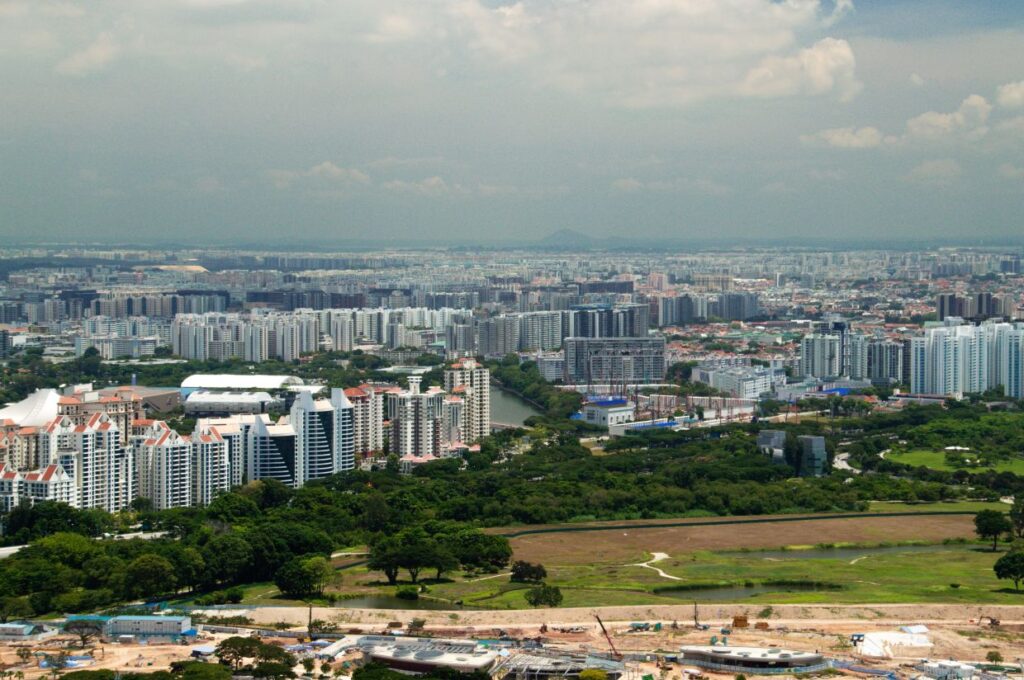
Picture by Saksham Vikram on Pexels
Singapore and International Considerations
Singapore construction projects may use standard forms such as the PSSCOC or SIA Conditions of Contract, while international projects may adopt FIDIC or NEC forms. Each contract may prescribe different valuation methods, payment entitlements, notice requirements and termination procedures.
For example, the treatment of liquidated damages after termination requires particular care. Singapore decisions distinguish damages accruing before termination from claims for subsequent periods, subject to the contract and applicable law. Also, contractors should also avoid assuming that wrongful termination automatically guarantees lost profits. Recoverability depends on the contractual framework, causation, mitigation and proof of loss.
Achieving a Fair Financial Close-Out
An effective construction termination settlement requires more than comparing invoices. It involves reconciling contractual entitlements, physical progress, outstanding liabilities and recoverable losses.
The following priorities help reduce disputes:
- Preserve site records, photographs, correspondence and measurement data.
- Maintain a transparent quantum assessment with supporting calculations.
- Separate established entitlements from contingent or disputed amounts.
- Obtain independent QS and legal input where substantial sums are contested.
- Explore negotiation, adjudication, mediation or arbitration where appropriate.
For employers and contractors alike, a properly supported termination account provides a stronger foundation for settlement, dispute resolution and financial recovery. Ultimately, accurate construction contract termination valuation is not merely an accounting exercise. It is a disciplined process that connects contract rights, project evidence and commercial realities.
Frequently Asked Questions
How do you calculate the value of work after site ejection?
Establish measured progress at the termination date, apply relevant contract rates and adjustments, then reconcile previous payments and applicable deductions.
Can a contractor claim for materials left on site?
Potentially. Recovery depends on contractual terms, payment provisions, ownership, vesting requirements and supporting evidence.
Can an employer recover replacement contractor costs?
Potentially, if permitted under the contract or applicable law and supported by evidence of recoverable costs, causation and compliance with relevant requirements.
Are liquidated damages automatically payable after termination?
No. Their recoverability depends on the contract, applicable law, the relevant period and the circumstances of termination.
Does wrongful termination entitle a contractor to lost profits?
Not automatically. The contractor must establish a valid legal basis, prove recoverable loss and address causation, mitigation and contractual limitations.
References
- Singapore Law Watch – Building and Construction Law, Chapter 26: Termination https://www.singaporelawwatch.sg/Headlines/ch-26-building-and-construction-law
- Building and Construction Authority (BCA) – Public Sector Standard Conditions of Contract (PSSCOC) https://www1.bca.gov.sg/growth-and-transformation/procurement/standard-contract-forms/public-sector-standard-conditions-of-contract-psscoc/
- Singapore Court of Appeal – CAA Technologies Pte Ltd v Newcon Builders Pte Ltd [2017] SGCA 53 https://www.elitigation.sg/gd/s/2017_SGCA_53
- Singapore Court of Appeal – termination costs and final settlement of accounts https://www.elitigation.sg/gdviewer/s/2020_SGCA_121
- Chambers and Partners – Singapore Construction Law: Termination https://practiceguides.chambers.com/practice-guides/comparison/1079/19275/30543-30546-30552-30564-30569-30577-30581-30587-30591-30598
- CMS – Annual Review of Singapore Construction Law Developments 2022 https://cms.law/en/media/local/cms-cmno/files/publications/other/annual-review-of-singapore-construction-law-developments-2022?v=1