dk@dkoutsource.com


Summary: Adjudication timelines in construction can be decisive in construction disputes, with strict statutory deadlines governing payment claims, responses, applications, and decisions. Understanding these requirements, maintaining accurate project records, and using quantity surveying services can help contractors and project teams protect their rights, support claims, and respond effectively to payment disputes in Singapore and other jurisdictions.
Disagreements over payment claims, valuations, variations, or completed work rarely happen in isolation. Left unmanaged, these commercial conflicts quickly restrict cash flow, delay downstream subcontractor payments, and compromise overall project progress.
While statutory adjudication provides construction parties with a rapid mechanism to resolve payment disputes, its speed is governed by strict, unforgiving procedural deadlines. For contractors, subcontractors, developers, and consultants, understanding these timelines is essential—missing a single statutory deadline does not merely delay a dispute; it can permanently extinguish a party’s right to pursue its claim.
Why Timing is Critical in Construction Adjudication
Unlike traditional litigation or arbitration, which can take years to yield a final judgment, adjudication is designed to deliver a prompt, binding decision while construction works are still actively progressing on-site. This maintains the flow of working capital throughout the supply chain.
However, this accelerated pace leaves zero room for administrative or clerical errors. Project teams must rigorously monitor exactly when payment claims, payment responses, and adjudication applications are served, calculate the relevant periods with absolute mathematical precision, and compile extensive supporting evidence under highly compressed schedules. Because the precise procedural rules vary significantly across global jurisdictions, construction professionals must adapt to the specific statutory regimes governing their projects.
Singapore’s Adjudication Framework (SOPA)
Singapore provides a premier example of a tightly structured, fast-paced construction dispute resolution regime.
Under the Building and Construction Industry Security of Payment Act (SOPA), the timeline is highly condensed:
- Triggering the Entitlement: A claimant’s entitlement to file an adjudication application arises when a payment response is disputed, or when the employer fails to provide a payment response within the mandatory period.
- Dispute Settlement Period: Depending on the circumstances, a mandatory 7-day dispute settlement period may apply first to allow the parties a final opportunity to resolve the issue amicably.
- Filing the Application: Once the entitlement to adjudicate officially arises, the claimant faces a strict deadline: the adjudication application must be lodged within 7 days.
- The Respondent’s Defense: The respondent faces an equally tight turnaround. Under Section 15 of the Act, a respondent generally has only 7 days after receiving the copy of the adjudication application to lodge a formal adjudication response.
- The Adjudicator’s Decision: Once commenced, the adjudicator is contractually and legally bound to determine the application rapidly—typically within 7 or 14 days, subject to specific statutory conditions or any mutually agreed extensions.

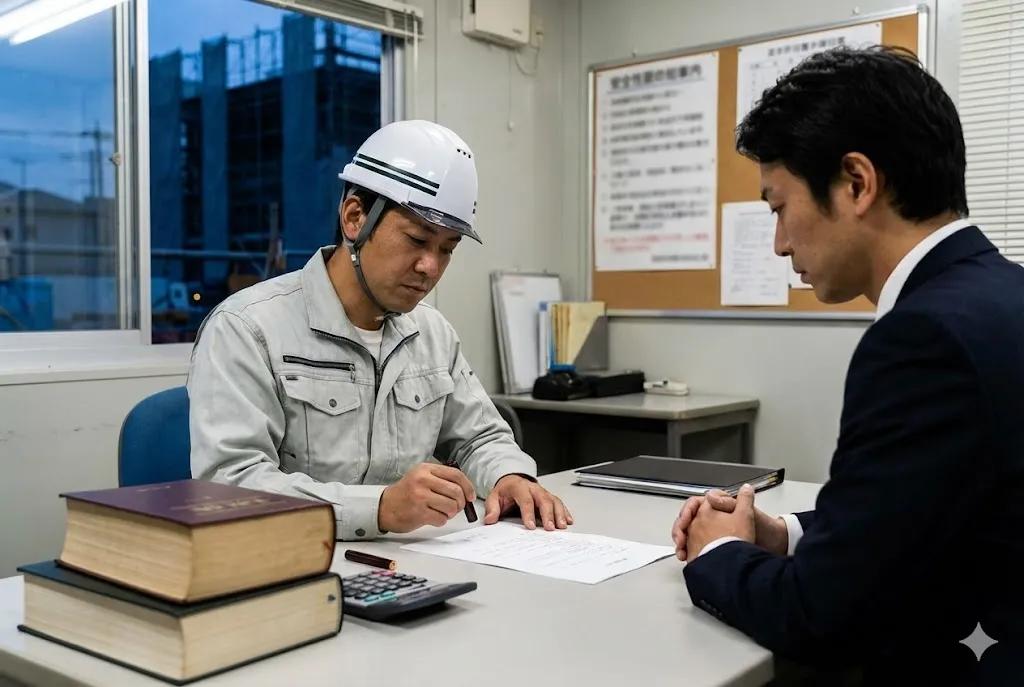
Picture by Marcus Winkler
The High Cost of Missing a Deadline
In adjudication, a missed calendar date carries immediate and severe procedural consequences:
| CONSEQUENCES OF PROCEDURAL ERRORS | |
|---|---|
| For the Claimant | For the Respondent |
| • Complete loss of the right to adjudicate that specific claim
Severely delayed cash recovery and restricted liquidity |
• Adjudicator proceeds solely on the claimant’s submitted case
No opportunity to present key evidence, offsets, or defenses |
These errors frequently occur long before the adjudication itself begins. They are often triggered by incorrect payment claim dates, incomplete records, or misunderstandings regarding when a statutory period is contractually triggered.
To de-risk this process, construction companies must establish and maintain a flawless, centralized project chronology. This timeline must systematically track and archive contracts, payment claims, payment responses, formal correspondence, variation orders, tax invoices, and statutory notices. In adjudication, robust document control is just as critical as the legal arguments themselves.
Leveraging Quantity Surveying for Adjudication Readiness
Because adjudication is a document-heavy, fast-moving process, professional quantity surveying (QS) services are indispensable to establishing a successful claim or defence. Quantity surveyors are directly responsible for the financial history of the project, including progress certifications, valuations, variations, and cost reports.
When a payment dispute escalates to adjudication, the quantity surveyor’s contemporary records serve as the primary evidence to:
- Substantiate the physical quantities and values of completed work-in-progress.
- Provide detailed measurement sheets and objective cost breakdowns for variation claims.
- Identify inconsistencies or gaps in the opposing party’s financial claims before they reach the adjudicator.
Specialist Risks: Modular Construction
Maintaining precise documentation is especially vital in modular and prefabricated construction. These modern methods involve complex commercial structures, including off-site manufacturing stages, international logistics, specialized transportation, and highly coordinated site installation schedules. A clear, contemporaneous record of these interconnected stages is essential to proving
International Comparisons: Singapore, UK, and Australia
While Singapore’s SOPA utilizes a highly compressed 7-day filing cycle, other major construction markets operate under different statutory timelines:
- United Kingdom: Under UK construction adjudication rules, the process is structured around a standard 28-day timetable, providing slightly more time for the preparation and exchange of responses, although still requiring rapid, disciplined management.
- Australia (New South Wales): Under NSW Security of Payment legislation, the statutory framework sets out its own distinct, mandatory deadlines for serving payment claims, applying for adjudication, submitting responses, and delivering adjudicator decisions.
Regardless of the jurisdiction, the core commercial lesson remains identical: adjudication timelines in construction have deadlines that must be managed proactively, not reactively. Project teams must establish robust, automated systems to monitor payment dates, contractual notice periods, and statutory timelines long before a payment disagreement reaches a commercial crisis.
References
- Singapore Statutes Online – Building and Construction Industry Security of Payment Act 2004 https://sso.agc.gov.sg/Act/BCISPA2004
- Building and Construction Authority (BCA) – Security of Payment Act https://www1.bca.gov.sg/growth-and-transformation/procurement/procurement-and-legal-frameworks/security-of-payment-act/
- CMS – Singapore High Court clarification on adjudication deadlines https://cms.law/en/sgp/legal-updates/singapore-high-court-clarifies-the-lodgement-period-of-adjudication-applications
- DLA Piper – Adjudication Timelines in Construction in Singapore https://www.dlapiper.com/en/insights/publications/2025/03/adjudication-in-singapore
- Singapore Law Gazette – The Evolution of Construction Law in Singapore https://lawgazette.com.sg/feature/the-evolution-of-construction-law-in-singapore/
- RICS – Construction Adjudication https://www.rics.org/dispute-resolution-service/drs-services/adjudication-services/construction-adjudication
- NSW Government – Security of Payment for Construction Contractors https://www.nsw.gov.au/housing-and-construction/compliance-and-regulation/security-of-payment/about
- SISV – Security of Payments and Construction Adjudication https://www.sisv.org.sg/images/pic/Brochure_SPM_Seminar_Book_Launch_16_May_2013.pdf