dk@dkoutsource.com

The quantity surveying profession has historically been defined by physical drawings, manual scale rulers, carbon-copy site diaries, and massive, complex paper files. However, as modern construction projects grow in scale, technical complexity, and regulatory demands, paper-based workflows are rapidly becoming a major commercial liability.
For the consultant quantity surveyor (QS), transitioning to digital cost management is no longer merely an operational upgrade—it is a strategic necessity. By replacing manual processes with integrated digital workflows, QS teams can eliminate administrative bottlenecks, improve pricing accuracy, and deliver more responsive, data-driven commercial advice.
The Hidden Costs of Paper-Based Workflows
Relying on manual, paper-based administration introduces substantial commercial and operational risks throughout the project lifecycle:
- The Inefficiency Trap: Estimators spend up to 50 to 60 per cent of their time performing manual measurements and data entry, leaving minimal room for high-value cost analysis, risk management, and value engineering.
- The Version Control Crisis: In construction, design revisions are continuous. Managing multiple physical drawing sets and disconnected spreadsheets makes it exceptionally easy to perform takeoffs using obsolete plans, leading to severe pricing errors and post-contract disputes.
- The Document Retrieval Bottleneck: When a payment dispute or a variation claim arises, searching through physical filing cabinets or unstructured local drives for supporting site records slows down response times, directly compromising supply chain cash flow.
The Digital Take-off Revolution
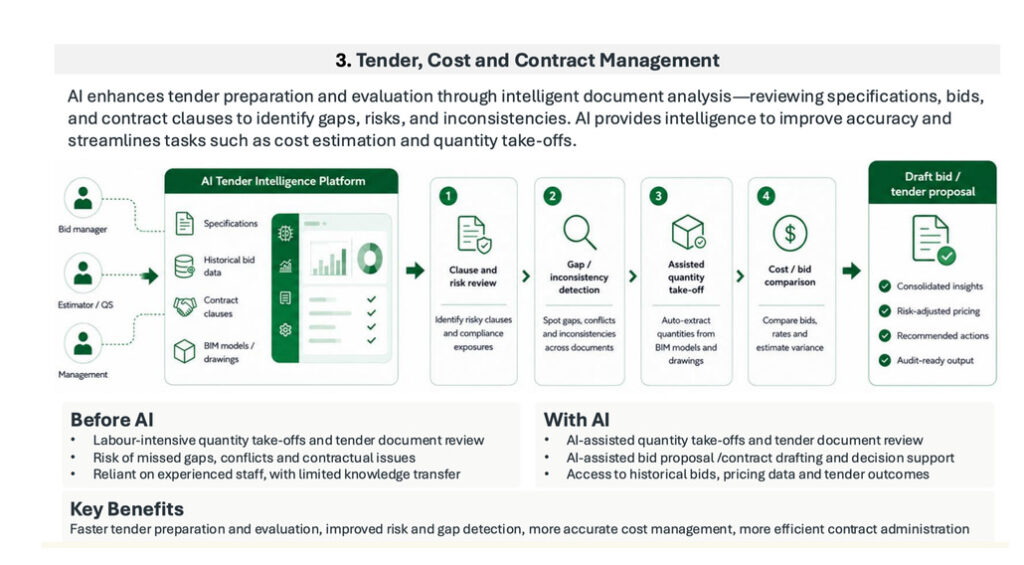
The transition to digital begins with quantity take-off. Modern digital take-off tools allow quantity surveyors to import 2D drawings or 3D Building Information Modelling (BIM) files and perform precise measurements on-screen.
The Take-off Efficiency Gap |
|
|---|---|
|
Manual scale takeoff |
Digital Takeoff Workflow |
| Hours spent tracing with high risk of human error. Static sheets; no change tracking. Physical storage required. | Direct PDF/BIM measurements imports. Automatic count and volume scales. Visual audit trails and instant revision comparisons. |
By linking digital measurements directly to cost items and central databases, estimators can double their tendering speed while establishing a visual, highly auditable record of how every quantity was calculated. If a drawing is revised, digital platforms can automatically highlight the physical changes, allowing the QS to adjust the estimate in minutes rather than days.
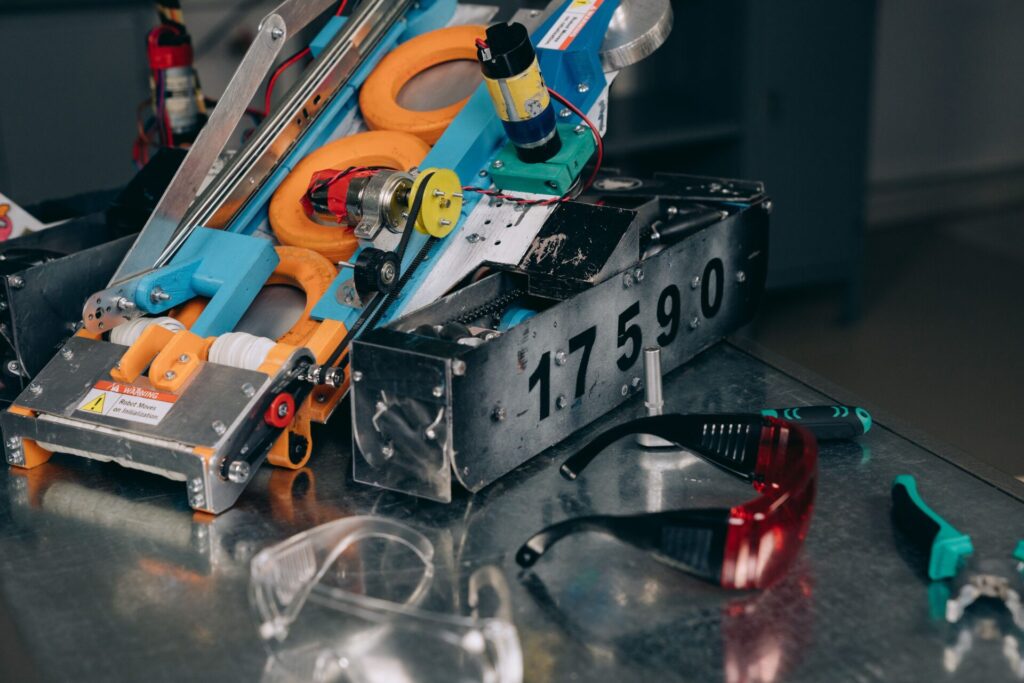
Picture by Mikhail Nilov on pexels
Why You Can’t Rely Solely on Generic AI
While digitalisation and Artificial Intelligence (AI) offer incredible capabilities to accelerate data processing, construction firms must avoid the trap of over-reliance on generic, off-the-shelf AI models.
Generic AI tools suffer from several critical limitations when applied to professional cost management:
- Lack of Industry Context: Generic models do not understand the highly technical rules of standardised measurement codes, such as NRM 2 or Singapore’s CP 97.
- The “Hallucination” Risk: AI systems can generate plausible-sounding but mathematically incorrect figures, which can lead to disastrous margin losses if written into a formal tender.
- Ignorance of Site Realities: An algorithm cannot assess how localized ground conditions, site-access constraints, severe weather, or specific subcontractor availability will influence actual productivity and pricing.
Reliability, and strategic value of any cost estimate still depend entirely on the professional expertise and human judgement of the quantity surveyor interpreting the data.
Establishing a Single Source of Truth
To truly future-proof operations, modern QS teams must establish a centralised, cloud-based commercial environment. This “single source of truth” ensures that all stakeholders—from estimators and project managers to procurement teams and clients—are working from identical, real-time data:
- Centralised Cost Libraries: Maintaining standardised pricing databases, historic rate records, and material indexes to ensure consistent, rapid pricing across all tenders.
- Integrated Change Management: Logging variations, site instructions, and progress valuations in a single system to maintain an active, accurate projection of the final account.
- Real-Time Collaborative Reporting: Generating dynamic cost reports and cash-flow forecasts that can be accessed securely from active construction sites, client offices, or remote locations.
Actionable Steps for a Chaos-Free Upgrade
Transitioning away from legacy paper-based workflows does not have to result in operational chaos. Firms should adopt a structured, evolutionary approach to technology adoption:
- Audit Current Workflows: Identify the most severe administrative bottlenecks, such as manual printing, repetitive data entry, or fragmented Excel sheets.
- Start with Digital Take-off: Prioritise implementing robust digital measurement software before attempting to adopt more complex AI or predictive systems.
- Invest in Technical Training: Ensure your quantity surveyors are highly proficient in both digital tools and core contract administration principles.
- Standardise Your Data: Establish consistent file structures, naming conventions, and cost codes across the entire organisation.
- Bridge the Gap with Human Expertise: Combine advanced digital tools with professional quantity surveying expertise to ensure all data-driven forecasts are vetted by experienced human minds.
Conclusion
The future of quantity surveying belongs to the digitised professional. By ditching paper and embracing digital take-off, cloud collaboration, and disciplined database management, quantity surveyors can elevate their role from routine cost trackers to high-value strategic advisors. Ultimately, technology does not replace the surveyor. It empowers them to protect project margins, reduce dispute risks, and deliver exceptional built environment outcomes on a highly stable commercial foundation.
Frequently Asked Questions
Can robotics completely replace construction workers?
Answer: No. Most construction robots are designed for specific tasks. Workers are still required for supervision, quality control, planning, safety and activities requiring human judgement.
How can robotics reduce construction manpower?
Answer: Robots can perform repetitive activities such as drilling, grinding, painting, material transportation and concrete finishing, reducing the number of workers required for those specific tasks.
Which construction tasks are best suited to robotics?
Answer: Repetitive, physically demanding and highly standardised tasks are generally the strongest candidates for automation.
Can robotics improve construction safety?
Answer: Yes. Robots can perform certain activities involving heavy loads, repetitive movements and awkward working positions. They can potentially reduce workers’ exposure to physical strain.
What is the future of robotics in construction?
Answer: The industry is likely to see greater collaboration between workers and specialised robotic systems, with robots handling repetitive activities while people focus on supervision, decision-making and complex construction work.
References
- Building and Construction Authority (BCA) — Robotics & Automation. https://www1.bca.gov.sg/growth-and-transformation/productivity/robotics-and-automation/
- Building and Construction Authority (BCA) — Built Environment Workforce Study. https://www1.bca.gov.sg/growth-and-transformation/manpower/built-environment-professionals/study-on-the-built-environment-workforce-in-singapore/
- Building and Construction Authority (BCA) — Built Environment Technology and Capability Grant. https://www1.bca.gov.sg/grants-and-funded-programmes/built-environment-technology-and-capability-betc-grant/
- World Economic Forum — Digital transformation in the construction sector. https://www.weforum.org/stories/industries-in-depth/construction-sector-digital-transformation/
- McKinsey & Company — The impact and opportunities of automation in construction. https://www.mckinsey.com/capabilities/operations/our-insights/the-impact-and-opportunities-of-automation-in-construction
- McKinsey & Company — Humanoid robots in the construction industry. https://www.mckinsey.com/industries/engineering-construction-and-building-materials/our-insights/humanoid-robots-in-the-construction-industry-a-future-vision
- National Institute of Standards and Technology (NIST) — Research in autonomous construction. https://www.nist.gov/