dk@dkoutsource.com



Summary: Understanding NEC4 vs PSSCOC helps construction professionals choose a contract that supports effective risk management, cost control and project collaboration. This guide explains their key differences, practical applications and relevance to Singapore’s construction industry, while considering lessons applicable to international projects.
Understanding NEC4 and PSSCOC Contracts
Construction contracts influence how project teams manage costs, delays, variations and disputes. Two important frameworks are the NEC4 Engineering and Construction Contract (ECC) and the Public Sector Standard Conditions of Contract (PSSCOC).
Although both establish contractual responsibilities, they differ in their approaches to project management, risk allocation and collaboration. Understanding these differences enables employers, contractors and consultants to select a framework suited to their project’s requirements.
What Are NEC4 and PSSCOC?
NEC4 is a suite of construction and engineering contracts originating in the United Kingdom. It promotes proactive project management, early risk identification and cooperation between contractual parties.
The Building and Construction Authority (BCA) explains that NEC4 encourages good risk management through “mutual trust and cooperation” between project parties. Its flexible structure offers different pricing options and procedures to accommodate varying project needs.
PSSCOC, meanwhile, is Singapore’s standardised contract framework for public-sector construction projects. According to BCA, consistent contract terms improve familiarity, reduce tendering efforts and support more efficient contract administration.
PSSCOC covers construction works, design-and-build projects and nominated subcontracts. It also offers collaborative contracting provisions, demonstrating that collaboration is not exclusive to NEC4.
NEC4 vs PSSCOC: Key Differences
The main differences concern how each framework manages project administration, changes and risk.
| Feature | NEC4 | PSSCOC |
| Primary approach | Proactive project management | Standardised contractual administration |
| Risk management | Early warnings and risk-reduction discussions | Contractual risk allocation and applicable notice procedures |
| Programme management | Emphasis on the Accepted Programme and updates | Programme obligations under the applicable contract |
| Cost management | Options include target-cost arrangements | Pricing and valuation follow the selected contract provisions |
| Changes | Compensation event procedures | Variations and other contractual adjustment mechanisms |
| Collaboration | Embedded collaborative processes | Collaborative options available for relevant projects |
Neither framework is automatically superior. The appropriate choice depends on the project’s complexity, procurement objectives and the team’s ability to administer the contract effectively.
Risk Management and Collaboration: What Matters Most?
Risk management is a major consideration when comparing the two frameworks. -RICS
NEC4 incorporates an early warning mechanism to identify matters that could affect cost, completion dates or performance. Project participants can discuss mitigation measures before problems escalate. Compensation events provide a separate process for assessing qualifying changes to time and cost.
PSSCOC also establishes procedures for managing variations, delays and other contractual risks. Its collaborative contracting option introduces structured cooperation into projects that adopt the relevant provisions.
Consider a project encountering unexpected underground utilities. Under NEC4, an early warning may prompt discussions about mitigation, followed by an assessment of any qualifying compensation event. Under PSSCOC, the parties would follow the applicable provisions governing site conditions, instructions, variations and extensions of time.
The key lesson: Early communication, accurate records and timely contractual notices are essential under either framework.

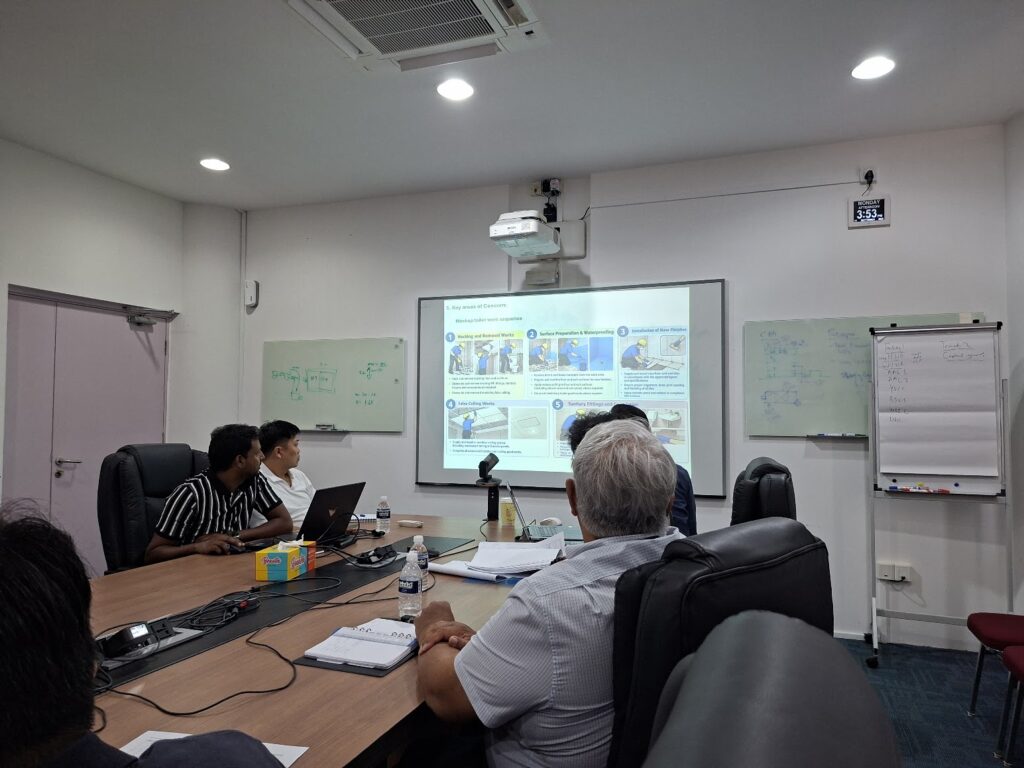
Picture by Kindelmedia on Pexels
Cost Control and Contract Administration
Cost control and programme management further distinguish the approaches. – Institute of Project Management
NEC4 offers pricing options, including target-cost arrangements under which parties share savings or overruns according to the selected option. Its emphasis on forecasting and programme updates encourages forward planning, although effective implementation requires trained personnel and disciplined administration.
PSSCOC provides established mechanisms for valuing variations, administering payments and addressing delays. Its standardised structure can benefit organisations familiar with Singapore’s public-sector procurement practices.
However, neither framework guarantees cost certainty or prevents disputes. Outcomes depend on the contract terms, pricing arrangements, project records and quality of administration.
Which Contract Is Better for Your Project?
The decision should reflect the project’s requirements rather than the popularity of a particular contract.
NEC4 may be suitable when:
- The project involves complex interfaces or significant uncertainty.
- Early risk identification and collaboration are priorities.
- The team can manage detailed project-management procedures.
- Target-cost incentives support the procurement strategy.
PSSCOC may be suitable when:
- The project follows Singapore public-sector procurement requirements.
- Standardised contractual procedures are important.
- The parties understand established local practices.
- Collaborative provisions can address the project’s specific needs.
Conclusion
The NEC4 vs PSSCOC comparison ultimately concerns how a project manages risk, changes, costs and collaboration.
NEC4 emphasises proactive management and structured cooperation, while PSSCOC provides standardised conditions tailored to Singapore’s public-sector construction environment, including collaborative contracting options.
Before selecting either framework, employers and contractors should assess the project’s scope, risk profile, pricing strategy and administrative capabilities. Reviewing the applicable contract conditions and amendments with experienced professionals can help protect contractual rights and support successful project delivery.
Frequently Asked Questions
What is the main difference between NEC4 and PSSCOC?
NEC4 emphasises proactive project management and early warnings, while PSSCOC provides standardised contractual conditions for Singapore public-sector projects. Both can support collaborative working.
Does PSSCOC support collaborative contracting?
Yes. BCA provides collaborative contracting option modules for use with relevant PSSCOC forms. These include provisions for early notification, partnering and structured dispute avoidance.
Which contract is better for construction delays?
Neither is universally better. NEC4 uses programme-management and compensation event procedures, while PSSCOC relies on its applicable delay and extension-of-time provisions.
Can NEC4 and PSSCOC both support design-and-build projects?
Yes. Both frameworks have design-and-build applications. The appropriate form and amendments depend on the project’s requirements.
Does NEC4 guarantee fewer construction disputes?
No. Its collaborative procedures can help identify issues early, but outcomes depend on communication, competent contract administration and compliance with contractual obligations.
References
- Building and Construction Authority (BCA) — NEC4 Contract in Singapore https://www1.bca.gov.sg/growth-and-transformation/procurement/standard-contract-forms/nec4-contract/
- BCA — Public Sector Standard Conditions of Contract (PSSCOC) https://www1.bca.gov.sg/growth-and-transformation/procurement/standard-contract-forms/public-sector-standard-conditions-of-contract-psscoc/
- BCA — Collaborative Contracting https://www1.bca.gov.sg/growth-and-transformation/procurement/progressive-procurement-approaches/collaborative-contracting/
- BCA — Launch of NEC4 Contract for Construction and Engineering Projects in Singapore https://www1.bca.gov.sg/resources/newsroom/launch-of-nec4-contract-for-construction-and-engineering-projects-in-singapore/
- Institution of Civil Engineers — NEC Contracts https://www.ice.org.uk/areas-of-interest/nec-contracts
- BCA — Procurement Frameworks and Resources https://www1.bca.gov.sg/growth-and-transformation/procurement/