dk@dkoutsource.com


As construction moves forward, it has been predicted that by 2050, about 68% of the global population will be living in urban areas. As cities continue to grow, governments and developers are exploring smarter ways to improve infrastructure efficiency, sustainability, and the quality of life.
Smart city: an urban environment that uses technology, data, sensors and automation to make infrastructure and services more connected, efficient and sustainable. This approach is central to Singapore’s Smart Nation initiatives. -Smart Nation Singapore
These types of cities use technologies such as the Internet of Things (IoT), artificial intelligence (AI), real-time data analytics, and digital platforms to improve how buildings and infrastructure are designed, constructed, and managed.
Singapore has been at the forefront of this transformation through initiatives such as Smart Nation and developments like Punggol Digital District, where smart technologies, sustainable design and digital connectivity are integrated into the planning of ready districts.
For the construction industry, the rise of smart cities represents a major change in how projects are delivered. Buildings now, aren’t viewed as standalone structures, but as connected assets that are required to provide long-term value, efficiency, and sustainability.
Digital Twins and BIM Transforming Construction
Digital Twin: A virtual representation of a physical building or infrastructure asset that uses data from sensors, systems, and other sources to monitor performance and support decision-making throughout its lifecycle.
One of the popular technologies that drives smart construction today is Building Information Modelling (BIM). Traditionally used for 3D visualisation, design coordination, and clash detection, BIM is now evolving into a foundation for digital twin technology.
A digital twin is a virtual representation of a physical building or infrastructure asset that uses real-time data from sensors and operational systems. However, unlike traditional models, recent digital twins are continuing to collect information throughout the building lifecycle which allows stakeholders to do various things. These include monitoring performance, identifying potential issues, and optimising operations.
Singapore has adopted digitalisation across the built environment, including initiatives such as Virtual Singapore, a digital model that supports urban planning, infrastructure analysis, and decision-making.
How Digitalisation Supports Quantity Surveyors
The increasing adoption of digital twin technology is also changing the role of Quantity Surveyors (QSs). With access to more accurate project information, QS professionals can improve cost management, provide better cost forecasts, assess design alternatives, and identify potential risks earlier.
| Smart Technology | Application in Quantity Surveying | Potential Benefit |
| BIM | Supports quantity take-offs, cost planning and design coordination | More accurate quantities and earlier cost visibility |
| Digital Twins | Provides ongoing asset and performance data | Supports lifecycle costing and long-term cost decisions |
| IoT Sensors | Provides real-time information on building and equipment performance | Helps assess operational costs and maintenance requirements |
| AI Analytics | Analyses project and operational data | Supports forecasting, risk identification and cost optimisation |
| Cloud Platforms | Enables stakeholders to access and share project information | Improves collaboration and information management |
Digital information also strengthens lifecycle costing, allowing QS professionals to evaluate not only the initial construction cost but also long-term maintenance requirements, operational expenses, and asset performance.
As smart buildings become more complex, the role of quantity surveying is expanding beyond traditional measurement and cost estimation. As they provide professional quantity surveying services, consultant quantity surveyors are getting more involved in providing strategic cost advice. This helps to ensure that technology investments deliver long-term value.
Smart Technologies Creating More Efficient Buildings
Modern smart buildings rely on interconnected systems that collect and analyse data to improve efficiency and user experience.
Technologies increasingly incorporated into developments include:
- IoT sensors that monitor energy usage, environmental conditions, and equipment performance.
- Smart building management systems that automatically control lighting, ventilation, and energy consumption.
- AI-powered analytics that predict maintenance requirements and optimise building operations.
In Singapore, the adoption of smart building solutions supports national sustainability goals by improving energy efficiency and reducing resource consumption. Developments such as the Punggol Digital District are proof of how technology can be integrated into urban planning rather than added after construction projects are complete.
Industry Collaboration Accelerating Smart Cities
Beyond individual developments, industry collaborations are also accelerating the adoption of smart city technologies in Singapore. For example, Surbana Jurong and Singtel have partnered to develop integrated smart city solutions that combine urban planning expertise with advanced digital technologies. The collaboration focuses on areas such as digital connectivity, data analytics, smart facilities management, and urban infrastructure monitoring. Such partnerships demonstrate how technology providers and built environment professionals are working together to create more connected, efficient, and sustainable urban environments.
Additionally, the Jurong Innovation District (JID) was designed as a living lab for the built environment sector. The development incorporates multiple smart facilities management technologies which includes IoT sensors, artificial intelligence, and an Integrated Command Centre. These facilities are able to monitor energy consumption, water usage, occupancy patterns, and indoor air quality. So, by using real-time data to optimise building performance and operational efficiency, the project has demonstrated how smart building technologies are being applied in Singapore to support more sustainable and connected urban environments.

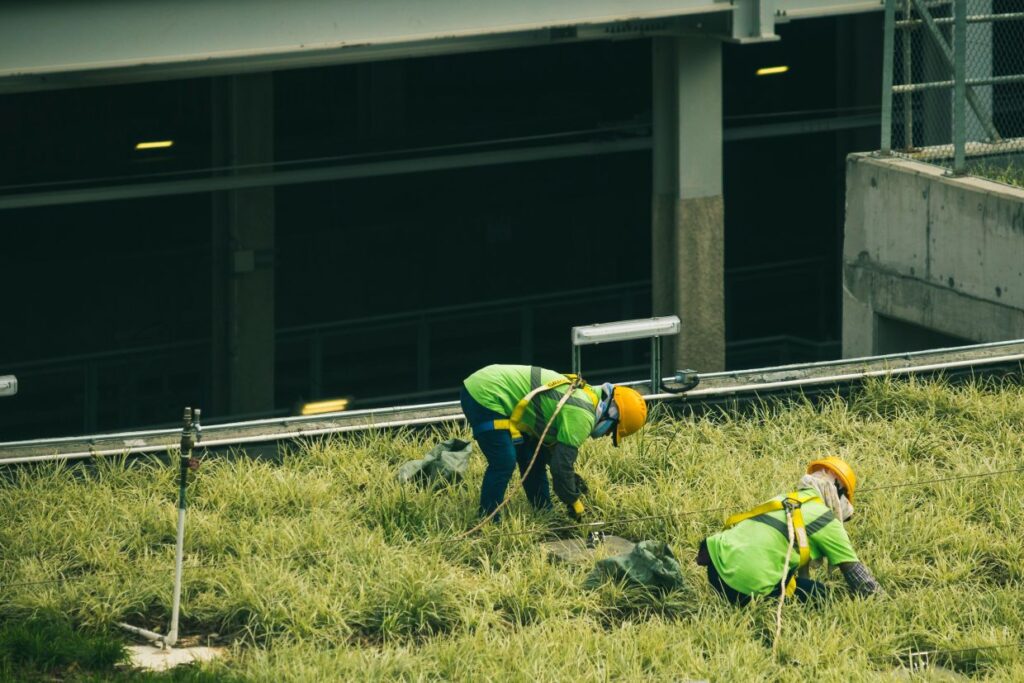
Picture by Stephanie Yeh on Unsplash
However, having smart technologies also introduces new cost considerations. For consultant quantity surveyors, evaluating these solutions requires assessing more than the initial installation cost. As professionals, they must consider the long-term value of these systems, including energy savings, maintenance benefits, and improved operational performance.
This then shows the evolving role of quantity surveying — from traditional measurement and cost estimation towards strategic cost consultancy that supports investment decisions throughout the project lifecycle.
Smarter Construction Through DfMA and Modular Methods
The growth of smart cities has increased the demand for construction methods that are faster, more productive, and less disruptive. Due to this demand, the adoption of Design for Manufacture and Assembly (DfMA) and modular construction approaches has accelerated.
Currently, unlike traditional site-based construction, DfMA shifts more activities into controlled manufacturing environments in which it’s where digital models help improve precision, minimise waste, and streamline assembly. In Singapore, the adoption of DfMA and Prefabricated Prefinished Volumetric Construction (PPVC) has been encouraged to enhance productivity across the built environment sector. These methods allow building components to be manufactured off-site before being transported and assembled on-site.
For consultant quantity surveyors, these modern approaches require a wider understanding of project costs beyond conventional construction processes. They must know how to assess factors such as manufacturing, logistics, installation requirements, productivity gains, and long-term cost benefits. Through engineering and cost analysis, consultant quantity surveyors help clients determine whether innovative construction methods deliver measurable value throughout the project lifecycle.
Sustainability and the Importance of Lifecycle Costing
Smart cities are not only connected but also designed to be more sustainable. As governments introduce stronger environmental requirements, the focus of the construction industry is shifting towards reducing carbon emissions, improving energy performance, and adopting greener solutions.
To help the environment, Singapore has placed a strong emphasis on sustainable construction through initiatives such as the Green Mark certification scheme and the Singapore Green Building Masterplan. These initiatives encourage developers to consider environmental performance throughout a building’s lifecycle.
Lifecycle costing is an economic method used to assess the total cost of an asset over its lifespan, including construction, operation, maintenance, and eventual disposal. -tractian.com dictionary
For QS professionals, sustainability has expanded the scope of traditional cost management. Modern quantity surveyors increasingly support clients through lifecycle costing, sustainability assessments, and value engineering.
The Evolving Role of QS Professionals in Smart Cities
The rise of smart cities is transforming the role of consultant quantity surveyors from cost managers into strategic advisors who help deliver financially viable and sustainable projects. As construction becomes more digital and technology-driven, QS professionals play an important role in balancing innovation with cost efficiency. Through cost planning, cost consultancy, procurement advice, and lifecycle assessments, QS professionals help ensure that smart city developments achieve their intended outcomes without compromising financial feasibility.
Ultimately, smart cities are not only about adopting new technologies. They are about creating efficient, sustainable, and valuable environments for future generations. As the built environment continues to evolve, quantity surveyors will remain essential in ensuring that these ambitious developments are delivered with effective cost management and long-term value in mind.
References
- United Nations Department of Economic and Social Affairs (UNDESA)
https://www.un.org/uk/desa/68-world-population-projected-live-urban-areas-2050-says-un - Fortune Business Insights – Smart Cities Market
https://www.fortunebusinessinsights.com/industry-reports/smart-cities-market-100610 - Market Research Future – Smart Construction Market
https://www.marketresearchfuture.com/reports/smart-construction-market-19257 - Mordor Intelligence – Smart Building Market
https://www.mordorintelligence.com/industry-reports/smart-building-market - Yahoo Finance – Surbana Jurong Partners Singtel to Create Smart City Solutions