dk@dkoutsource.com



Summary: Construction disputes often involve complex questions about costs, delays, defects and contractual responsibilities. Expert evidence helps courts, tribunals and disputing parties understand these technical issues through independent professional opinions. This article examines how quantity surveyors, engineers and other specialists support construction dispute resolution, assess claims and contribute to fairer outcomes in Singapore and internationally.
Understanding Expert Evidence in Construction Disputes
Construction disputes frequently involve disagreements over project delays, construction defects, variations, additional costs and contractual obligations. Resolving these matters often requires specialised knowledge beyond general legal expertise.
Expert evidence refers to professional opinions provided by individuals with relevant technical knowledge, qualifications or experience to help decision-makers understand complex issues. -Singapore Courts
In construction disputes, expert evidence can help clarify:
- Quantum and valuation: Assessing variations, loss and expense, and prolongation costs.
- Delay analysis: Examining project programmes and identifying causes of delays.
- Construction defects: Evaluating workmanship issues and the cost of remedial works.
- Contractual matters: Explaining measurement principles and construction industry practices.
These assessments help parties distinguish between technical disagreements and matters requiring contractual or legal interpretation.
The Role of Quantity Surveyors as Expert Witnesses
Quantity surveyors (QS) play an important role in construction disputes because of their knowledge of construction costs, measurement, contractual arrangements and commercial management. Their expertise can help clarify financial disagreements between employers, contractors and consultants. Depending on the dispute, a quantity surveyor may be appointed to prepare an independent assessment or provide evidence during formal proceedings.
Their responsibilities may include:
- Valuation of variations: Reviewing additional works and assessing their appropriate value.
- Loss and expense claims: Examining supporting records and assessing whether claimed costs are substantiated.
- Final account disputes: Reviewing payments, outstanding amounts and contractual entitlements.
- Cost assessments: Evaluating whether claimed expenditure is reasonable and properly supported.
For example, when a contractor claims additional payment for unforeseen ground conditions, a quantity surveyor can examine the contract, site records, measurements and cost documentation to assess the financial implications. However, records alone do not establish causation or contractual entitlement. Assessments must consider the relevant contract provisions and surrounding circumstances.
Independence and Professional Integrity
The credibility of expert evidence depends on the expert’s independence and professional integrity. An expert should provide an honest assessment rather than simply support the position of the party who appointed them.
Under Order 12, Rule 1 of Singapore’s Rules of Court 2021, an expert’s duty is clearly established:
“The expert’s duty to the Court overrides any obligation to the person from whom the expert receives instructions or by whom the expert is paid.” -RICS
This means professional opinions must remain objective, even when the findings do not support the appointing party’s position.
Maintaining independence involves several responsibilities:
- Disclosing potential conflicts of interest.
- Staying within one’s professional expertise.
- Explaining the assumptions and methodology behind an opinion.
- Acknowledging limitations in the available evidence.
These principles strengthen the reliability of expert witness reports and help decision-makers assess their findings.

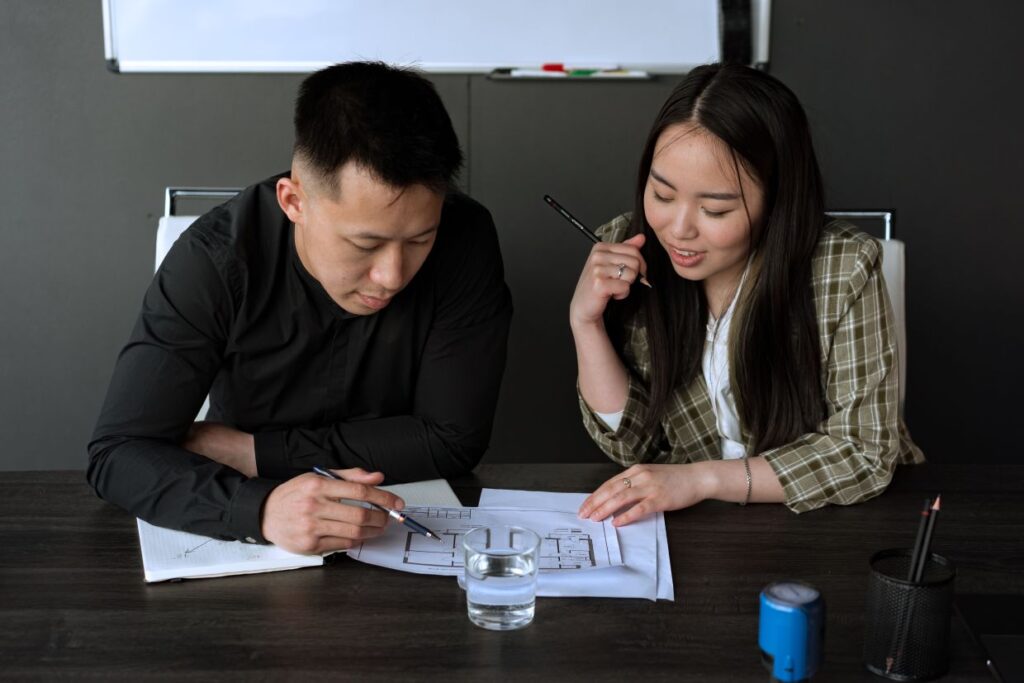
Picture by ANTONI SHKRABA
How Expert Reports Support Dispute Resolution
An expert witness report presents the expert’s findings, evidence reviewed and reasoning behind their conclusions. A well-prepared report should clearly explain:
- Background: The dispute and questions requiring expert assessment.
- Qualifications: Relevant professional experience and expertise.
- Evidence reviewed: Contracts, drawings, site records, programmes and cost documents.
- Methodology: The assessment methods, assumptions and calculations used.
- Findings: Conclusions supported by the available information.
Clear reporting is essential because unsupported conclusions or unclear calculations may create further disagreements instead of resolving existing ones.
Expert Evidence in Different Dispute Resolution Methods
Expert evidence is not limited to court proceedings. It can also support alternative dispute resolution (ADR), including mediation, adjudication and arbitration.
| Resolution method | How expert evidence helps |
| Mediation | Helps parties understand technical disagreements and negotiate settlements. |
| Adjudication | Clarifies payment valuations, variations and supporting cost assessments. |
| Arbitration | Assists tribunals in evaluating technical, delay and quantum disputes. |
| Litigation | Helps courts understand specialised construction matters. |
In Singapore, the Society of Construction Law Singapore (SCL(S)) introduced a Protocol for the Use of Experts’ Joint Statements in Arbitration in January 2026. It encourages experts to identify areas of agreement and disagreement, allowing tribunals to focus on the issues that remain unresolved.
Internationally, the International Chamber of Commerce (ICC) Arbitration Rules also recognise party-appointed and tribunal-appointed experts. These approaches demonstrate how expert evidence can help streamline dispute resolution and reduce unnecessary disagreements.
Conclusion
Expert evidence plays an important role in construction dispute resolution, particularly when disagreements involve technical, contractual and financial complexities. Quantity surveyors and other construction specialists provide valuable insight into valuations, delays, defects and financial claims.
In Singapore and internationally, independent professional assessments can help parties distinguish substantiated claims from unsupported assertions. Combined with proper documentation, contractual understanding and impartial reporting, expert evidence contributes to more informed and effective dispute resolution.
Frequently Asked Questions
What is expert evidence in construction disputes?
Answer: Expert evidence consists of professional opinions provided by specialists to help resolve technical or complex construction-related disagreements.
Can a quantity surveyor act as an expert witness?
Answer: Yes. A suitably qualified and experienced quantity surveyor can provide opinions on construction costs, variations, valuations, loss and expense claims and final accounts.
Why is independence important for expert witnesses?
Answer: Independence ensures that professional opinions are based on evidence and expertise rather than the interests of the appointing party.
Is expert evidence required in every construction dispute?
Answer: No. It is generally useful when disputes involve specialised technical or professional knowledge. Its necessity depends on the issues and applicable procedures.
Can expert evidence help settle disputes without going to court?
Answer: Yes. Independent assessments can help parties understand their respective positions during mediation, adjudication and arbitration, potentially supporting earlier settlements.
References
- Singapore Statutes Online – Rules of Court 2021, Order 12: Expert Evidence. https://sso.agc.gov.sg/SL/SCJA1969-S914-2021
- Royal Institution of Chartered Surveyors (RICS) – Surveyors Acting as Expert Witnesses. https://www.rics.org/profession-standards/rics-standards-and-guidance/sector-standards/dispute-resolution-standards/surveyors-acting-as-expert-witnesses
- Society of Construction Law International – Construction Dispute Protocols. https://www.sclinternational.org/protocols
- Singapore Courts – Neutral Evaluation. https://www.judiciary.gov.sg/alternatives-to-trial/neutral-evaluation
- Singapore Courts – Mediation. https://www.judiciary.gov.sg/alternatives-to-trial/mediation
- International Chamber of Commerce – 2021 Arbitration Rules. https://iccwbo.org/dispute-resolution/dispute-resolution-services/arbitration/rules-procedure/2021-arbitration-rules/
- Singapore Building and Construction Authority – Security of Payment Act. https://www1.bca.gov.sg/growth-and-transformation/procurement/procurement-and-legal-frameworks/security-of-payment-act/