dk@dkoutsource.com


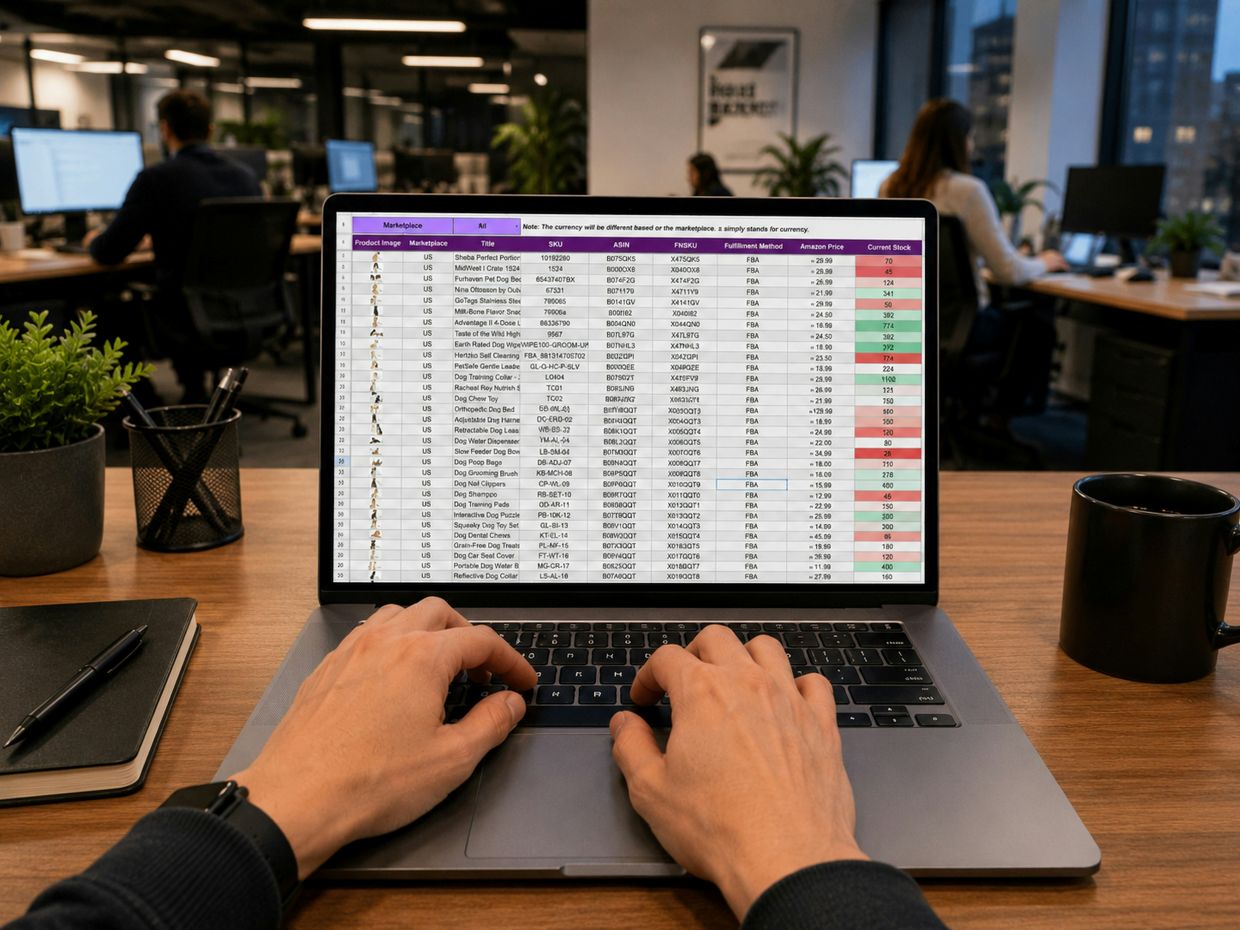
Summary: A well-prepared Schedules of Works provides a clear and consistent basis for tender pricing, evaluation and subsequent cost management. For public sector tenders, where transparency, accountability and value for money are important, accuracy in measurement and clarity of scope are essential. Using Singapore’s GeBIZ tenders as a practical reference, this article outlines how quantity surveyors and project teams can prepare a robust BQ while applying principles relevant to public procurement internationally.
Why Does a Schedule of Works Matter in Public Sector Tenders?
A Schedules of Works is more than a schedule of construction items and quantities. It translates design information into a structured commercial document that allows tenderers to price a defined scope on a consistent basis.
The Royal Institution of Chartered Surveyors (RICS) states that its New Rules of Measurement (NRM) provide “a standard set of measurement rules” and guidance for construction cost management.
For Singapore public procurement, this consistency supports the wider principles of transparency, open and fair competition, and value for money. The Ministry of Finance (MOF) states that government procurement looks beyond the lowest price and can consider factors including quality, reliability, risk, timeliness and long-term costs.
A reliable BQ therefore needs to achieve three things: accuracy, clarity and traceability.
-
Review the Complete Tender Information
Before measurement begins, the quantity surveyor should establish a clear understanding of the complete tender package.
This includes:
- Drawings and drawing revisions
- Specifications
- Schedules
- Employer’s requirements
- Contract conditions
- Instructions to tenderers
- Addenda and corrigenda
- Site and existing-condition information
For GeBIZ tenders, this is particularly important because suppliers can access tender opportunities and documents through Singapore’s government e-procurement portal. Tender-specific requirements can also include electronic submission, site briefings, registration requirements and particular pricing or technical submissions.
The latest issued information should always form the basis of measurement.
-
Establish a Logical BQ Structure
A clear structure makes the BQ easier to price, review and administer.
Depending on the project, sections may include:
| BQ Section | Typical Scope |
| Preliminaries | Site establishment, temporary facilities and management |
| Substructure | Excavation, foundations and piling |
| Superstructure | Concrete, reinforcement and structural steel |
| Architectural | Walls, doors, finishes and ceilings |
| M&E | Mechanical and electrical installations |
| External Works | Roads, drainage and landscaping |
The structure should reflect the project and the applicable method of measurement. RICS NRM 2 provides guidance on the measurement and description of building work, including units, dimensions and supporting information.
-
Make Every Quantity Traceable
A robust BQ should allow each significant item to be traced back to its source information.
A useful process is:
Drawing → Specification → Measurement → BQ Item → Tender Price
This provides a practical audit trail and makes discrepancies easier to identify. It is particularly valuable when drawings are revised or when multiple disciplines contribute to the tender documentation.
Where an item cannot be readily reconciled with the drawings, specifications or schedules, it should be reviewed before the tender is issued.
-
Prioritise Accuracy in Measurement and Description
Accuracy involves more than checking the final quantities. The description, unit and scope of each item must also be appropriate.
Before issuing the BQ, check for:
- Missing or duplicated items
- Incorrect units
- Inconsistent descriptions
- Incorrect dimensions
- Arithmetic errors
- Incomplete work sections
- Items shown on drawings but omitted from the BQ
- Items specified but not measured
- Unclear provisional or optional items
RICS NRM 2 specifically states that a BQ should “fully describe and accurately represent” the quantity and quality of the works.
For complex projects, an independent second-person review can provide an additional layer of assurance.
-
Address Scope, Interfaces and Commercial Risk
A strong BQ should minimise assumptions by clearly communicating the intended scope of work.
Particular attention should be given to:
- Temporary works and facilities
- Testing and commissioning
- Protection and making good
- Access and logistics
- Removal and disposal
- Interfaces between trades
- Specialist installations
- Existing-condition works
- Provisional sums and prime cost items
- Optional or alternative works
These areas can become sources of commercial uncertainty when responsibilities are not clearly defined.
This is relevant beyond Singapore as well. Whether the procurement is conducted through GeBIZ or another public procurement platform, clarity in the tender documents helps establish a more consistent basis for tender evaluation and contract administration.

Picture by Pavel Danilyuk on pexels
-
Reconcile the BQ Before Tender Issue
A final BQ review should be systematic rather than simply a visual check.
A practical review sequence is:
Measure → Cross-check → Reconcile → Review → Finalise → Issue
The completed BQ should be reconciled against the latest drawings, specifications, schedules and tender requirements. Any discrepancy should either be resolved or clearly addressed before issue.
For Singapore’s public procurement process, tender evaluation is based on the published criteria, which generally consider both quality and price. A well-coordinated BQ therefore supports not only pricing but also a clearer and more defensible tender process.
-
Consider the BQ Beyond Tender Submission
The value of a properly prepared Schedules of Works does not end when the tender closes.
Depending on the contract, the BQ may provide a useful basis for:
- Tender comparison
- Valuation of work
- Cost reporting
- Variation assessment
- Progress payments
- Contract administration
This is why BQ preparation should be treated as part of the wider quantity surveying process rather than simply a pre-tender exercise.
Conclusion
Preparing a Schedule of Works requires a combination of accurate measurement, coordinated documentation and sound commercial judgement.
For GeBIZ tenders in Singapore, understanding the specific tender requirements is essential. However, the underlying principles apply to public procurement more broadly: define the scope clearly, maintain traceability, apply consistent measurement, identify commercial risks and conduct disciplined reviews.
A robust BQ gives tenderers a clearer basis for pricing while providing the project team with stronger foundations for cost control and contract administration. For complex public sector tenders, the expertise of an experienced quantity surveyor can help identify omissions, inconsistencies and potential commercial risks before they become costly issues.
Get expert support with your BQ preparation and tender requirements today by contacting us.
Frequently Asked Questions
Is a BQ required for every GeBIZ tender?
Answer: Not necessarily. The required pricing documents depend on the specific procurement and tender documentation. Suppliers should always follow the requirements stated in the relevant tender.
What does GeBIZ stand for?
Answer: GeBIZ is Singapore’s Government Electronic Business System and serves as the government’s one-stop e-procurement portal, where public sector invitations for quotations and tenders are posted.
Who normally prepares a BQ?
Answer: A quantity surveyor (QS) commonly prepares or manages the preparation of a BQ, working with the design and project team to ensure that quantities and descriptions properly reflect the project information.
What makes a BQ accurate?
Answer: Accuracy depends on using current drawings and specifications, applying an appropriate measurement methodology, checking quantities and units, and ensuring that descriptions properly define the work.
Why is BQ accuracy important for public tenders?
Answer: An accurate BQ provides tenderers with a more consistent basis for pricing and can reduce ambiguity, omissions and commercial disagreements during the project.
What is the difference between a BQ and a schedule of rates?
Answer: A BQ generally sets out measured work items and quantities for tender pricing, while a schedule of rates establishes rates that can be applied to measured work, depending on the contract arrangement.
References
- Singapore Ministry of Finance – Government Procurement Ministry of Finance (MOF) https://www.mof.gov.sg/policies/government-procurement/overview/
- GeBIZ – Government Electronic Business System GeBIZ https://www.gebiz.gov.sg/
- GeBIZ – Guide to Singapore Procurement GeBIZ https://www.gebiz.gov.sg/singapore-government-procurement-regime.html
- RICS – New Rules of Measurement (NRM) RICS https://www.rics.org/profession-standards/rics-standards-and-guidance/sector-standards/construction-standards/nrm
- RICS NRM 2 – Detailed Measurement for Building Works RICS https://www.rics.org/content/dam/ricsglobal/documents/standards/nrm_2_detailed_measurement_for_building_works_1st_edition_rics.pdf