dk@dkoutsource.com



Summary: PSSCOC and SIA Building Contracts are widely recognised construction contracts in Singapore, but they serve different project environments. PSSCOC is primarily associated with Singapore public sector projects, while SIA Building Contract 2016 forms are commonly used for building projects in the private sector. Understanding their approach to risk allocation, contract administration and payment terms can help employers, contractors and consultants manage commercial exposure more effectively.
What Are PSSCOC and SIA Building Contracts?
The Public Sector Standard Conditions of Contract (PSSCOC) is a standardised contract framework developed for public sector construction projects in Singapore. – Building and Construction Authority (BCA)
A useful distinction is this: PSSCOC is strongly linked to public procurement, whereas SIA Building Contracts are commonly encountered in private-sector building projects. However, neither should be selected solely because of the sector; the project’s procurement strategy and risk profile also matter.
The SIA Building Contract 2016 provides several forms including contracts with and without quantities and design-and-build contracts. -Singapore Institute of Architects (SIA)
Key Differences in Risk Allocation
Risk allocation determines which party bears the financial and contractual consequences when something goes wrong. This can include design changes, delays, unforeseen conditions, variations, defects, cost increases and other project risks. – Global Arbitration Review
SIA’s own description of its 2016 contract suite highlights the objective to “identify and allocate risks to avoid disputes” and enable parties to work on or price those risks during tender.
The practical difference can be seen:
| Area | PSSCOC | SIA Building Contract 2016 |
| Typical environment | Public sector projects | Private-sector building projects |
| Procurement | Standardised public procurement framework | Flexible standard form for building projects |
| Risk approach | Structured allocation within a government-standard framework | Risk allocation intended to reflect the selected contract and project |
| Contract administration | Strong procedural framework | Significant role for the Architect and contract administration process |
| Payment | Contractual certification and payment procedures | Interim valuation/certification and payment provisions |
| Variations | Managed through contractual procedures and valuation mechanisms | Managed through contractual instructions, valuation and certification |
| Dispute management | Contractual mechanisms, with applicable statutory routes | Contractual mechanisms, with applicable statutory routes |
The important point is that risk allocation is not simply about who carries a risk. It is also about whether that risk has been clearly identified, priced and supported by appropriate contractual procedures.

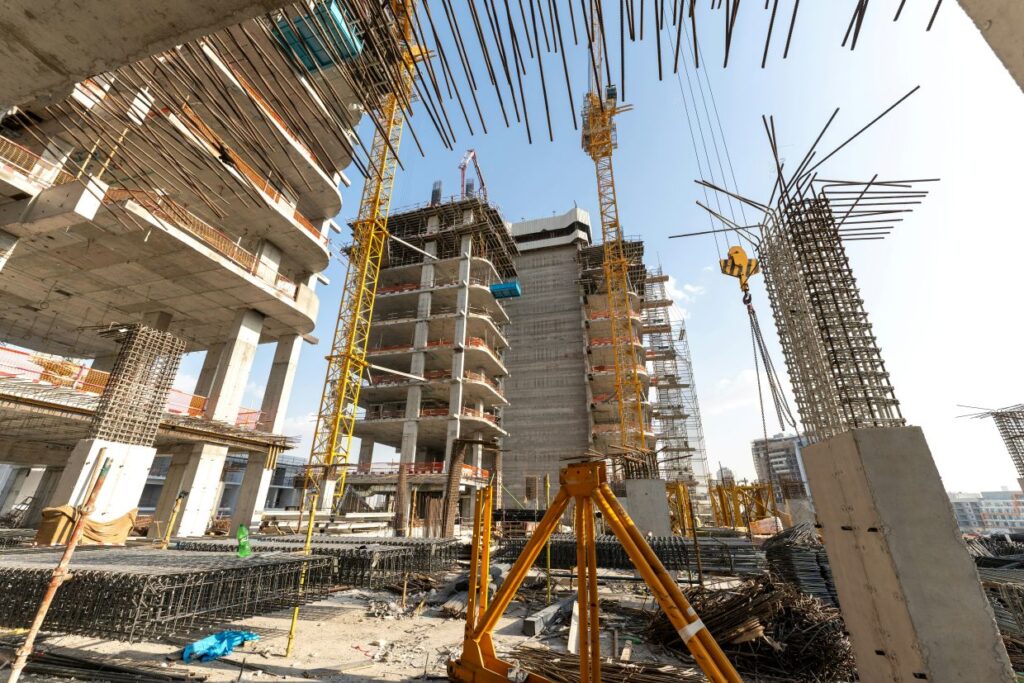
Picture by daum
Payment Terms: Why the Difference Matters
Payment terms are one of the most commercially important parts of any building contract. Delays or disagreements over valuation can affect cash flow throughout a project. -BCA
The SIA Building Contract 2016 With Quantities, for example, contains provisions covering contractual payment schemes, interim valuation, milestone instalments, retention monies, final account claims and the final certificate.
Under PSSCOC, payment is similarly governed by the contract’s certification and payment mechanisms. The applicable PSSCOC form and project-specific amendments should therefore always be reviewed rather than assuming that every PSSCOC project operates identically. BCA currently provides different PSSCOC forms and amendments for different procurement requirements.
In Singapore, contractual payment provisions also operate alongside the Building and Construction Industry Security of Payment Act (SOP Act). BCA states that the legislation gives eligible parties statutory rights to seek progress payment and provides an adjudication mechanism for payment disputes.
This means contractors and employers should pay close attention to: payment claim dates, payment responses, certification, valuation, retention, deductions and supporting records.
Which Contract Should You Use?
There is no universal answer. The choice should reflect the project’s procurement model, risk profile and commercial objectives.
For a Singapore public sector project, PSSCOC may provide the standardised framework expected for the relevant procurement arrangement. For a private building project, an appropriate SIA Building Contract may provide a familiar contractual structure for the parties and consultants involved.
Conclusion
The key difference between PSSCOC vs. SIA Building Contracts is not simply public sector versus private sector. The more important consideration is how each contract structures risk allocation, administration and payment terms for the project.
For employers, contractors and quantity surveyors, understanding these differences can support better tendering, more accurate commercial management and stronger preparation for potential claims or disputes. In practice, the contract should always be read together with its amendments, particular conditions and project-specific requirements.
Frequently Asked Questions
What is the main difference between PSSCOC and SIA contracts?
The main distinction is their typical project environment and contractual framework. PSSCOC is associated with public sector procurement, while SIA Building Contracts are widely used for building projects in the private sector.
Does the Security of Payment Act apply to both PSSCOC and SIA contracts?
The SOP Act may apply to eligible construction contracts regardless of whether the parties use PSSCOC, SIA or another contract form. Its application depends on the relevant statutory requirements.
Which contract is better for contractors?
Neither is automatically better. The commercial outcome depends on the specific contract conditions, amendments, risk allocation, payment provisions and project circumstances.
Why is risk allocation important in construction contracts?
Clear risk allocation helps parties understand their responsibilities and determine which risks should be managed, priced or transferred. Poorly understood risks can contribute to claims and disputes.
Are PSSCOC and SIA contracts the same in every project?
No. Different versions, contract types, amendments, options and project-specific provisions may apply. The actual executed contract should always be reviewed.
References
- Building and Construction Authority (BCA) – Public Sector Standard Conditions of Contract (PSSCOC).https://www1.bca.gov.sg/growth-and-transformation/procurement/standard-contract-forms/
- BCA – Building and Construction Industry Security of Payment Act. https://www1.bca.gov.sg/growth-and-transformation/procurement/procurement-and-legal-frameworks/security-of-payment-act/
- SIA – Building Contracts Committee. https://sia.org.sg/building-contracts-committee/
- SIA – SIA Building Contract 2016 With Quantities (International), Clause 31 payment provisions. https://apex.sia.org.sg/xshare/With_Quantities_%28INT%29.pdf