dk@dkoutsource.com



Summary: Construction tender evaluation is the process of assessing and comparing bids to determine which contractor offers the most suitable combination of price, quality, experience and delivery capability. In Singapore, public-sector projects may use structured Price Quality Method (PQM) frameworks, while private projects can adopt different evaluation approaches. Understanding how tenders are assessed helps clients, contractors and consultants make better procurement decisions and avoid selecting a bid based on price alone.
What Is Construction Tender Evaluation?
Construction tender evaluation is the systematic process of reviewing tender submissions against predetermined requirements and criteria before a contractor is selected. The evaluation normally considers both financial and non-financial factors.
The Royal Institution of Chartered Surveyors (RICS) describes tendering as part of the process used to establish a contract price and notes that tenders are analysed in terms of cost and quality before a preferred contractor is selected.
In simple terms: the lowest tender is not necessarily the best tender.
A contractor may submit a competitive price but have limited experience, an unrealistic programme or weaknesses in its proposed methodology. A slightly higher-priced tender may offer better technical capability, resources and project delivery prospects.
How Does the Tender Evaluation Process Work?
The exact procedure varies according to the project, procurement route and client. However, a typical tender evaluation process involves several stages:
- Check tender compliance
The evaluation team first checks whether submissions meet the mandatory requirements. This can include submission deadlines, required forms, tender securities, eligibility requirements and other conditions stated in the tender documents. - Assess technical and quality criteria
The tenderer’s experience, proposed methodology, project team, programme, resources, safety approach and understanding of the project may be assessed. - Evaluate the tender price
The submitted price is reviewed for competitiveness, completeness and potential pricing anomalies. A very low price may require closer examination to determine whether there are omissions, errors or unrealistic assumptions. - Calculate the scores
Where a weighted evaluation method is used, price and quality scores are calculated according to the published methodology. - Compare the overall results
The evaluation team compares the submissions and identifies the tenderer offering the strongest overall proposition. - Recommend the award
The evaluation outcome is presented to the appropriate approving authority before the contract is awarded.
Singapore’s Ministry of Finance states that government bids are evaluated against the published evaluation criteria in the tender documents, with criteria generally covering both quality and price.
What Criteria Are Used to Evaluate Construction Tenders?
The criteria depend on the project’s complexity and procurement objectives. Common tender evaluation criteria include:
| Evaluation area | What may be assessed |
| Price | Tender sum, rates and price competitiveness |
| Experience | Similar projects and relevant track record |
| Technical capability | Construction methodology and technical approach |
| Project team | Experience and qualifications of key personnel |
| Programme | Proposed construction schedule and resources |
| Safety | Workplace safety performance and proposed controls |
| Quality | Quality management systems and delivery approach |
| Financial capacity | Ability to undertake and complete the project |
For Singapore public-sector construction tenders of S$3 million and above under the relevant BCA workheads, the Price Quality Method (PQM) provides a structured approach combining price and quality. BCA currently specifies different price-quality ranges depending on whether the project falls under general building or civil engineering works.
This demonstrates an important principle: evaluation weightages should reflect what matters to the project rather than automatically giving the greatest importance to price.

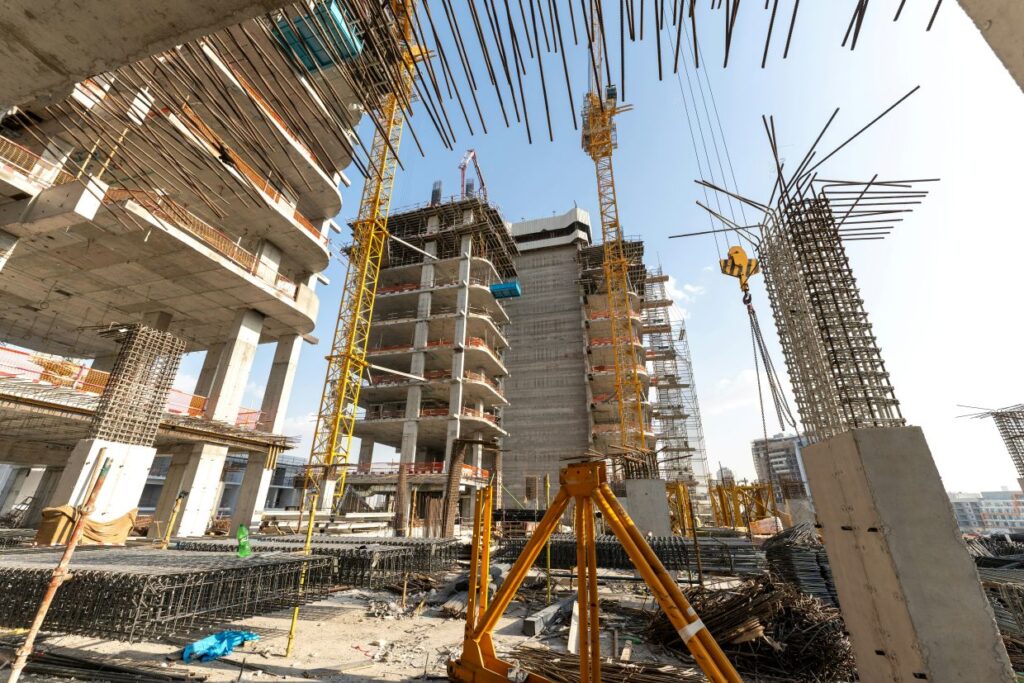
Picture by Lucas Kepner
Why Is the Lowest Tender Not Always the Best Choice?
Choosing the lowest bid can appear attractive because it reduces the initial contract price. However, construction projects involve significant risks that may only become apparent after work begins.
An unusually low tender may result from misunderstood requirements, missing items, unrealistic productivity assumptions or aggressive pricing. These issues can potentially contribute to variations, delays, disputes and additional costs later.
This is why tender analysis should go beyond simply ranking bids from lowest to highest.
For example, a contractor with a strong record of delivering similar projects may provide greater confidence where a project involves a tight programme, complicated interfaces or a constrained site.
BCA also recognises the importance of contractor performance. Its C41 system provides performance information that can be considered by Government Procuring Entities during subsequent tender evaluations.
The Role of Quantity Surveyors in Tender Evaluation
A quantity surveyor (QS) can play an important role in the financial and commercial assessment of tenders.
Tender evaluation may involve checking:
- Tender pricing against the pre-tender estimate.
- Rates and quantities for significant discrepancies.
- Prime cost and provisional sums.
- Qualifications and exclusions stated by tenderers.
- Unusually high or low rates.
- Arithmetic errors and pricing inconsistencies.
- Potential cost and contractual risks.
The QS can also help the project team understand whether a tender price is commercially realistic rather than simply identifying which submission has the lowest total.
Construction Tender Evaluation: Singapore and Beyond
Although Singapore has its own procurement frameworks, the fundamentals of construction tender evaluation are relevant across many markets. Clients generally need to balance price, technical capability, experience, programme, quality and risk.
Singapore’s PQM framework is one example of this approach. Other countries and organisations use their own versions of best-value, price-quality or weighted tender evaluation systems.
The key lesson is straightforward: a successful tender evaluation should identify the contractor most capable of delivering the required project outcome, not simply the contractor offering the lowest initial price.
A structured and transparent evaluation process can help clients make defensible procurement decisions while giving contractors a clearer understanding of what is expected from their submissions.
Frequently Asked Questions
What is tender evaluation in construction?
Answer: Tender evaluation is the process of assessing contractor bids against predetermined price, quality, technical, experience and other project-specific criteria before selecting a preferred tenderer.
Is the lowest construction tender always selected?
Answer: No. Depending on the procurement method, the lowest price may not receive the highest overall score. Price and quality can both be evaluated to identify the best-value submission.
What is PQM in Singapore construction?
Answer: PQM, or the Price Quality Method, is BCA’s structured framework for evaluating certain Singapore public-sector construction tenders using both price and non-price quality attributes.
What does a quantity surveyor do during tender evaluation?
Answer: A QS may analyse tender prices, rates, quantities, exclusions, qualifications and pricing discrepancies, helping the client assess the commercial and cost risks associated with each submission.
What happens after tender evaluation?
Answer: The evaluation results are normally submitted for the required approval. Once approved, the successful tenderer is appointed and the contract proceeds to the next stage.
References
- Building and Construction Authority – Price Quality Method (PQM) Framework https://www1.bca.gov.sg/growth-and-transformation/procurement/procurement-and-legal-frameworks/price-quality-method-pqm-framework/
- Singapore Ministry of Finance – Procurement Processes https://www.mof.gov.sg/policies/government-procurement/procurement-processes/
- Building and Construction Authority – CPAS, C41 and FM Appraisal https://www1.bca.gov.sg/growth-and-transformation/procurement/procurement-and-legal-frameworks/cpas-c41-and-fm-appraisal/
- RICS – Tendering Strategies https://www.rics.org/profession-standards/rics-standards-and-guidance/sector-standards/construction-standards/black-book/tendering-strategies
- RICS – Developing a Construction Procurement Strategy https://www.rics.org/profession-standards/rics-standards-and-guidance/sector-standards/construction-standards/black-book/developing-a-construction-procurement-strategy-and-selecting-an-appropriate-route
- RICS – E-Tendering https://www.rics.org/profession-standards/rics-standards-and-guidance/sector-standards/construction-standards/black-book/e-tendering