dk@dkoutsource.com


Imagine launching a major construction project, only to watch the budget vanish into a black hole of unexpected material costs, zoning delays, and structural surprises. In the building industry, financial blind spots are the ultimate project killers. That is exactly why commercial construction management relies heavily on a specialized financial architect: the consultant quantity surveyor (CQS).
Often described as the construction industry’s financial engineers, these professionals bridge the gap between architectural vision and financial reality. By analyzing blueprints and transforming design concepts into precise line-item budgets, they ensure that a project transitions smoothly from conceptual design to structural completion without breaking the bank. Here is a deep dive into how a consultant quantity surveyor maps out a new build, protects investor capital, and maximises construction project ROI.
The Blueprint Translation: Standardizing the Data
A new build financial estimation does not start with a calculator; it starts with an intense, forensic analysis of the architectural blueprints and engineering specifications. At this initial phase, the consultant QS performs what is known in the industry as a quantity takeoff.
Quantity takeoff (QTO): the detailed measurement and listing of all materiald, labour, and equipment needed to complete a construction project. – RIB Software
During a takeoff, the surveyor measures every single physical component required for the build. This also includes calculating the volume of concrete needed for the foundations, the total tonnage of structural steel, the square footage of drywall, and even the exact number of light fixtures.
To make sure the project is completely accurate and protected from future legal disputes, a consultant quantity surveyor compiles this data into a standardised document called the Bill of Quantities (BoQ). This bill itemises each element of labour, material, and equipment needed for the build.
By utilising internationally recognised benchmarking systems like the RICS New Rules of Measurement (NRM), the surveyor also ensures that all contractors bidding on the project are pricing the exact same scope of work. This then eliminates ambiguity, prevents contractors from underbidding just to win the job, and establishes an unshakeable foundation for the entire project lifecycle.
Strategic Cost Planning and Risk Mitigation
Managing construction costs isn’t only about adding up the cost of materials and labour. True construction cost control requires a proactive approach to risk, inflation, and market volatility.
A skilled consultant quantity surveyor would be able to build a comprehensive cost plan that accounts for all changes happening in the economy.
They divide the budget into distinct, manageable tiers:
- Direct Costs: The tangible components of the build, including raw materials, specialised machinery rentals, and labour wages.
- Indirect Costs: Behind-the-scenes expenses such as site permits, architectural fees, insurance, and temporary site offices.
- Contingency Reserves: A dedicated financial buffer, typically ranging from 5% to 15% of the overall budget, specifically set aside to cover unforeseen site conditions, sudden material shortages, or fluctuating supply chain prices.
By applying focused value engineering early in the design stage, the CQS helps stretch the budget further while keeping the project safe and visually appealing. For example, if the price of structural steel spikes unexpectedly, the surveyor might collaborate with the structural engineer. Together, they would aim to see if an alternative could be used instead. And during this same time, reach the same architectural goals at a lower price point. This data-driven approach keeps the project economically viable before the start of the project.

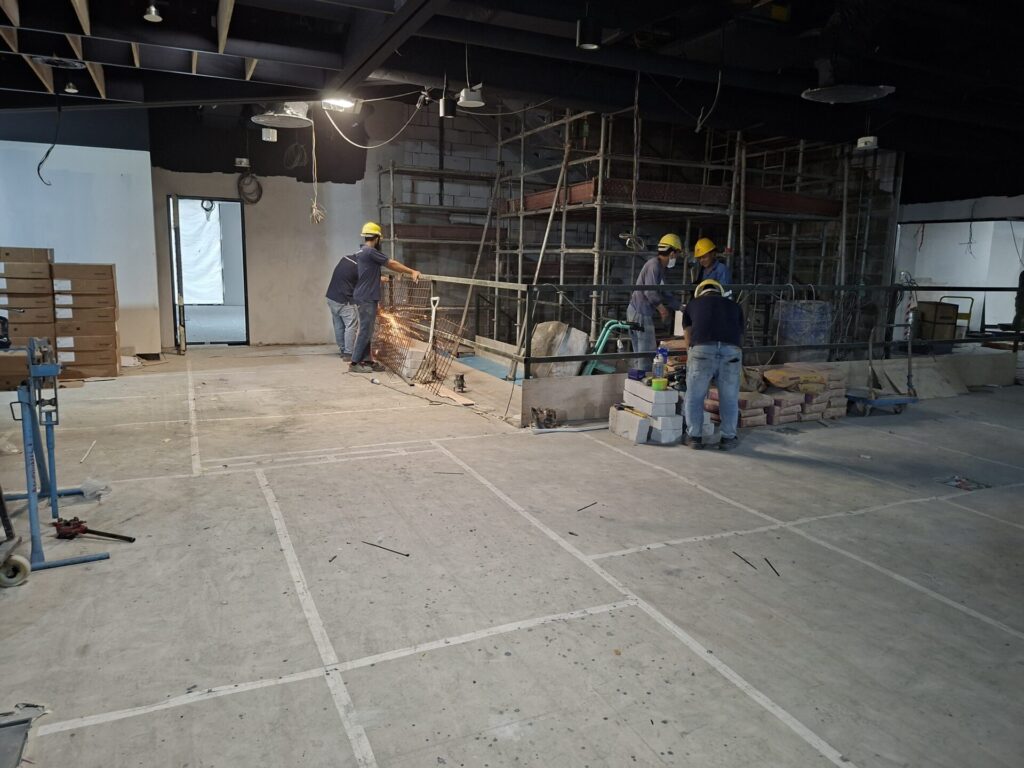
Picture by kampus on pexels
Navigating Procurement and Tendering
Once the design is finalised and the cost plan is locked in, the project enters the high-stakes phase of construction procurement optimisation. This is where the surveyor’s independent consultant status becomes an invaluable asset for property developers. Because they are independent agents rather than employees of a specific general contractor, their sole fiduciary duty is to protect the client’s budget.
The Consultant QS handles the tendering process by issuing the Bill of Quantities to prospective contractors. When the bids come back, the surveyor performs a tender analysis. They don’t only look at the bottom-line price. They also dissect the sub-costs to identify anomalies that are hidden. This includes front-loading tactics, or unrealistically low labour rates that hint at future change orders.
By standardising the bidding process, the consultant gives the client a chance to negotiate contracts from a position of clarity which ensures that the selected contractor offers genuine value rather than a collection of hidden expenses.
Contract Administration and On-Site Financial Control
The surveyor’s role shifts dramatically once construction actively begins on-site. Throughout the construction phase, the CQS acts as an impartial financial referee, administering the contract and managing the monthly cash flow through a process known as interim valuation.
Instead of allowing contractors to invoice based on vague percentages of completion, the contract quantity surveyor conducts physical site inspections to measure the work actually completed. If a contractor submits a bill claiming a certain percentage of the electrical rough-in is finished, the surveyor will then verify it on the ground. The client only pays for verified, high-quality work, which prevents overpayment and maintains a healthy cash flow balance across the entire project schedule.
Additionally, no construction site is completely immune to modifications. Whether driven by unexpected ground conditions or sudden client requests, changes will happen. The consultant quantity surveyor evaluates these variations immediately, calculating their exact financial impact against the original contract terms. By proactively managing variations and updating the final account development forecast in real-time, the surveyor prevents minor mid-project deviations from snowballing into catastrophic budget overruns.
Maximising long-term Asset value
The influence of a consultant quantity surveyor extends well past the day the keys are handed over to the building owner. As the project nears its close, the surveyor compiles the final account—a comprehensive financial reconciliation of every dollar spent, saved, and adjusted throughout the build.
For commercial developers and institutional investors, this final financial mapping serves as a vital tool for long-term construction project ROI calculations. The detailed data captured within the finalized BoQ allows asset managers to set up accurate tax depreciation schedules, establish precise replacement cost valuations for insurance policies, and map out future lifecycle maintenance budgets.
Ultimately, hiring a CQS turns the naturally chaotic world of construction into a structured, predictable, and highly profitable business investment. By systematically mapping blueprints to dollars, these financial experts ensure that ambitious architectural designs are built on a solid rock of financial stability.
References
- Royal Institution of Chartered Surveyors (RICS). What is a Quantity Surveyor?
https://www.rics.org/surveyor-careers/surveying/what-surveyors-do/what-is-a-quantity-surveyor
- Bhangals Construction Consultants. What Does a Quantity Surveyor Do?
https://www.google.com/url?sa=t&source=web&rct=j&opi=89978449&url=https://www.bhangals.co.uk/latest-news/what-does-a-quantity-surveyor-do&ved=2ahUKEwjF65mZodmVAxXmwzgGHZDdAXwQFnoECBkQAQ&usg=AOvVaw00TZplMkBcpyYBW6peV6Nr
- NV5. What is Surveying and Mapping? Available at: NV5
https://www.google.com/url?sa=t&source=web&rct=j&opi=89978449&url=https://www.nv5.com/chw-professional-consultants/what-is-surveying-and-mapping/&ved=2ahUKEwia4quqodmVAxWkyDgGHSbNKwQQFnoECBkQAQ&usg=AOvVaw0FNTvAmEFGeZvHW711kuWG