dk@dkoutsource.com


The defining thing about investing in infrastructure in 2026 is that technology, energy and resilience are all coming together.
For decades, infrastructure investing has revolved around known assets such as highways, ports, airports, and utilities. While these items are still important, today’s investors are directing capital toward certain projects more than others. This includes projects that support artificial intelligence, energy security, digital connectivity, and climate adaptation.
This shift shows a broader reality where infrastructure isn’t just about moving people and goods anymore. Instead, it’s increasingly about powering data, securing energy supplies, and building systems capable of withstanding economic and environmental disruption. As governments and private investors spend billions of dollars into long-term projects, there are several trends that are emerging and are able to shape the future of global infrastructure investment.
The Rise of AI Infrastructure
Artificial intelligence (AI) is quickly becoming one of the biggest drivers of infrastructure demand worldwide. Usually AI focuses on software breakthroughs, but the technology depends on a large network of physical assets. Today, things like data centers and special cables and power lines and power plants are all in demand due to companies using more and additional artificial intelligence.
For infrastructure investors, this represents a major shift. Assets that support digital economies are becoming just as important as traditional transportation infrastructure. In many regions, the ability to supply sufficient electricity to data centers is becoming a competitive advantage.
Energy Security Is Reshaping Capital Allocation
Not long ago, energy security was just something people talked about in meetings; but now it is a top priority for investors. Governments around the world are investing in domestic energy production, electricity transmission systems, and battery storage projects to reduce vulnerability to supply disruptions. Rising electricity demand from industries, households, electric vehicles, and AI facilities is further accelerating investment.
Capital Allocation: The strategic process of distributing a company’s financial resources among different investment opportunities and projects to support long-term value creation. -CFA Institution
As a result, energy infrastructure is attracting quite a bit of capital from institutional investors who are seeking stable, long-term returns. Modern electricity networks are increasingly viewed as essential assets for economic growth and national competitiveness.
Clean Energy Continues to Expand
The world is moving towards a cleaner energy system which remains a major force in the infrastructure markets. Solar, wind, battery storage, hydrogen, and next-generation nuclear technologies are continuously making investments despite economic uncertainty. Many governments see renewable energy development as both an environmental necessity and a strategic economic opportunity.
What makes this international infrastructure investment trend particularly important is its large scale. People no longer invest in clean energy projects. Instead, they’re becoming central components of national infrastructure strategies as well as long-term investment portfolios.
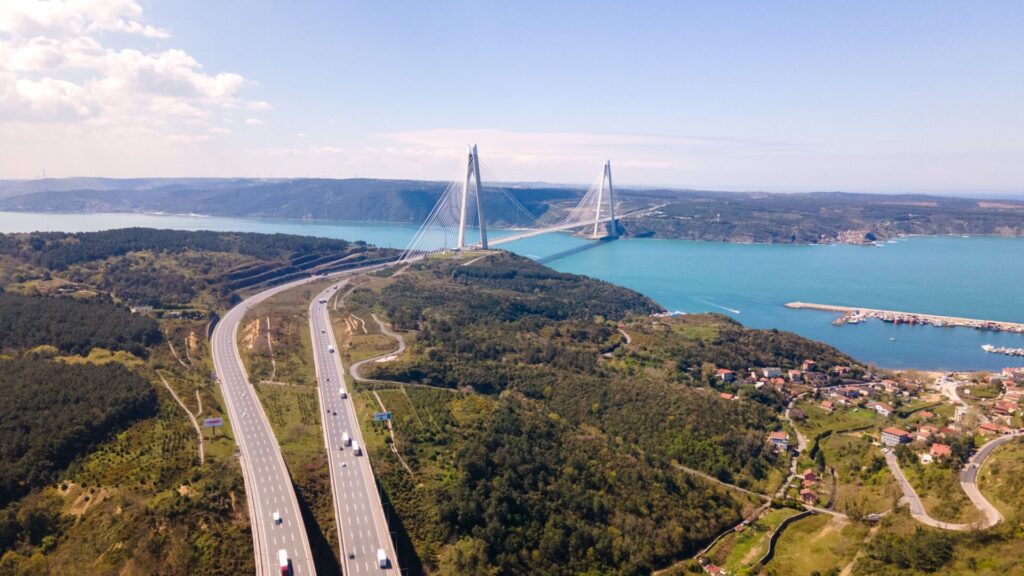
Picture by okndmrcn on pexels
Digital Connectivity Remains Essential
The global economy is becoming increasingly dependent on digital infrastructure. High-speed internet, telecommunications networks, cloud computing facilities, and edge computing systems now support everything from e-commerce and healthcare to education and manufacturing.
While urban areas continue to receive some sort of investments, some of the world’s governments are focusing on expanding connectivity to underserved regions. To many, getting the internet to everyone is important for helping people and making sure everyone has equal opportunities. Also for investors, digital infrastructure allows them exposure to long-term growth trends which is driven by technology adoption and increasing data consumption.
Climate Resilience Is Moving Up the Agenda
In recent months, infrastructure investors have been paying closer attention to climate risks.
They keep track of extreme weather events such as flooding, droughts, and rising temperatures as these matters influence how projects are designed, financed, and managed. As a result of this, investments in resilient infrastructures are increasing. This includes transportation, water management, and energy sectors. Environmental durability is no longer a ‘nice-to-have’—it’s a core investment pillar. Today, the most sustainable, long-term investments are those built to withstand climate challenges.
Looking Ahead
There are many important international infrastructure investment trends to watch in 2026 that don’t happen on their own. Artificial intelligence is driving higher energy consumption. Concerns over energy security are inciting greater investments in power grids and climate resilience is also influencing how projects are designed. Meanwhile, digital connectivity is redefining patterns of economic growth and development.
Together, these forces are transforming what infrastructure means in the modern economy.
For investors, governments, and businesses, the challenge is no longer simply building more infrastructures. It is identifying which assets will remain essential in a world defined by technological change, evolving energy needs, and growing environmental pressures. The infrastructure projects attracting capital in 2026 are likely to be those that support this transition—creating systems that are smarter, cleaner, more connected, and more resilient than ever before.
References
- International Energy Agency (IEA). (n.d.). Artificial Intelligence. https://www.iea.org/topics/artificial-intelligence
- International Energy Agency (IEA). (2025, June 5). Global energy investment set to rise to $3.3 trillion in 2025 amid economic uncertainty and energy security concerns. https://www.iea.org/news/global-energy-investment-set-to-rise-to-33-trillion-in-2025-amid-economic-uncertainty-and-energy-security-concerns
- Boston Consulting Group (BCG). (2026, January 27). Infrastructure Investment in an Uncertain World. https://www.bcg.com/publications/2026/infrastructure-investments-in-an-uncertain-world