dk@dkoutsource.com


Residential restructuring can turn an existing property into a more functional, comfortable, and future-ready living space. Whether it involves a Housing & Development Board (HDB) renovation, condominium refurbishment, landed property addition and alteration (A&A) works, or major internal layout changes, homeowners in Singapore face one common, critical challenge: controlling construction costs without compromising on quality.
Unlike simple cosmetic upgrades, deep restructuring frequently involves demolition, structural alterations, architectural works, plumbing, electrical installations, mechanical services, custom carpentry, and advanced waterproofing. Each additional layer of scope introduces new financial variables, making thorough planning essential to prevent rapid budget overruns.
Understanding the True Scope of Restructuring
Residential restructuring goes far beyond repainting walls or updating furniture. For instance, renovating a resale HDB flat might involve removing existing floor finishes, hacking selected walls, reconfiguring the kitchen layout, completely upgrading bathrooms, replacing legacy electrical wiring, and installing extensive built-in carpentry.
The physical type of property dictates the regulatory and approval path, which must be addressed early to avoid costly redesigns, project delays, or unauthorised works:
- HDB Properties: Homeowners are legally responsible for ensuring that all renovation works comply with HDB’s strict requirements. Certain structural or services works require formal permits and must be executed exclusively by registered renovation contractors.
- Private Residential Properties: For condominiums and landed homes, planning permission from the Urban Redevelopment Authority (URA) may be required. This is particularly true for alterations that increase the property’s gross floor area (GFA).
Why Residential Construction Costs Escalate
One of the most significant challenges homeowners face is that an initial contractor quotation rarely represents the final financial exposure of a project. Costs typically escalate due to several overlapping factors, including variation orders, latent site conditions discovered post-demolition, material changes, design revisions, and remedial works.
For example, discovering that legacy plumbing is corroded and requires replacement after hacking begins can trigger an unexpected chain reaction. What seems like a minor change affects labour costs, materials, hacking, waterproofing, reinstatement, and the overall project schedule.
Similarly, altering a kitchen layout halfway through construction forces changes to electrical outlets, plumbing routes, cabinetry dimensions, and finishes. Consequently, robust cost planning must account for both the visible scope of work and reasonable project risks.
Cost planning is a budget distribution technique implemented during the design stages of a building project. -RICS
Controlling Costs Before Construction Begins
The most effective way to protect a residential budget is to establish strict financial controls before contractors mobilise on-site. This process begins by developing a preliminary budget estimate based on the proposed scope of work, floor area, complexity, material specifications, and the desired level of finishes.
With an initial estimate in hand, homeowners can categorize and prioritize expenditures:
- Essential Works: Prioritising core structural integrity, electrical safety, plumbing, and robust waterproofing.
- Discretionary Upgrades: Treating premium decorative finishes and luxury materials as optional.
Separating “must-haves” from “nice-to-haves” makes it easier to protect the core budget. To ensure full financial visibility, spending should be allocated across major cost categories:
| Cost category | What to consider |
| Demolition and hacking | Removal of existing finishes, fixtures, walls and other elements |
| Structural and building works | Structural alterations, rebuilding and associated construction works |
| Floor and wall finishes | Tiles, flooring, wall finishes, plastering and related works |
| Plumbing and electrical | Pipework, sanitary fittings, wiring, sockets and electrical upgrades |
| Mechanical and air-conditioning | Air-conditioning systems, mechanical services and related installations |
| Carpentry and joinery | Built-in cabinets, wardrobes, kitchen fittings and other custom joinery |
| Professional and regulatory costs | Design, consultancy, submission and approval-related fees |
| Contingency | Allowance for unforeseen site conditions, changes and other project risks |

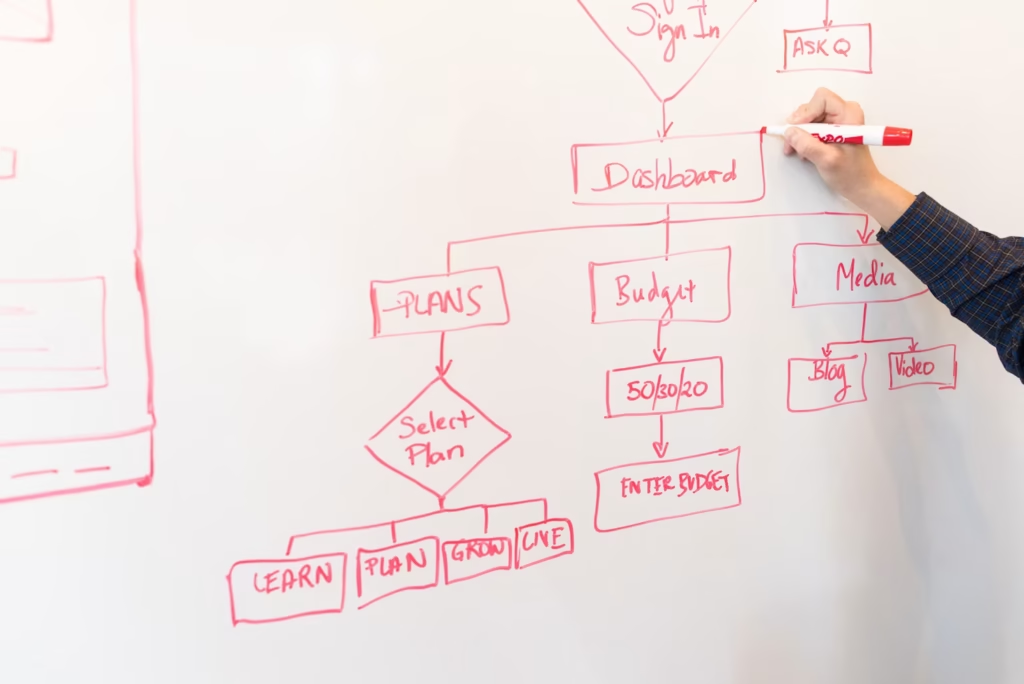
Picture by Jacob Wray on pexels
Managing Variations and Unforeseen Works
Variation orders represent one of the most severe threats to a renovation budget. While some changes are unavoidable due to site conditions, weak documentation and vague original specifications make cost control significantly more difficult.
To mitigate this risk, project teams should implement a structured variation management process where every proposed change is documented, priced, and formally approved before any physical work proceeds. For example, upgrading from standard tiles to imported marble mid-project involves more than just the material price difference; it can also incur additional installation labour, specialised transport, higher wastage factors, and schedule delays. For larger residential projects, a quantity surveyor can evaluate these variation claims to ensure the associated quantities and rates are fair and contractual.
Strategic Procurement and Contractor Selection
Protecting a residential construction budget requires disciplined procurement; homeowners should avoid automatically selecting the lowest bidder.
Instead, contractor quotations must be evaluated holistically, comparing:
- The exact scope of work and technical specifications.
- Clearly defined exclusions.
- The proposed construction programme and timeline.
- Payment terms, warranties, and the contractor’s track record.
In Singapore, homeowners can safeguard their investments by leveraging the Consumers Association of Singapore (CASE) CaseTrust scheme. CaseTrust-accredited renovation businesses utilise standard renovation contracts, progressive payment schedules tied to milestones, and deposit protection mechanisms, which provide vital security for the significant upfront financial commitments involved.
The Essential Role of the Consultant Quantity Surveyor
For major residential restructurings and landed property A&A works, a Consultant Quantity Surveyor (QS) provides an invaluable layer of independent financial governance.
Consultant Quantity Surveyor is a construction professional responsible for managing and advising on project costs throughout the building lifecycle. -BCA
Rather than allowing a contractor to self-certify costs, a consultant QS translates design information into highly structured, measurable construction costs to support data-driven decision-making.
A QS protects the homeowner’s financial interests by:
- Preparing Detailed Cost Plans: Establishing realistic budgets and measuring quantities accurately before tendering.
- Drafting Bills of Quantities (BQ): Creating a standardised breakdown of materials and labor so competing contractors bid on a completely level playing field.
- Conducting Objective Tender Evaluations: Determining if a lower bid is actually cheaper, or if it simply excludes critical scope items like waterproofing, hacking, or electrical works.
- Administering the Contract: Valuing progress payments, assessing the validity of variation claims, and preparing the final account.
The Bottom Line
While residential renovation cost management will always involve some degree of physical and financial uncertainty, it does not have to result in uncontrolled expenditure. By implementing disciplined cost estimating, objective procurement planning, variation controls, and professional quantity surveying services, homeowners can establish strong commercial oversight from day one. Ultimately, successful restructuring is about delivering a beautifully reimagined, future-ready home within a highly predictable and secure financial framework.
References
- Housing & Development Board — Renovation Guidelines https://www.hdb.gov.sg/managing-my-home/renovation-and-maintenance/renovation
- Housing & Development Board — Residential Renovation Cost Management Guidelines for Building Works https://www.hdb.gov.sg/managing-my-home/renovation-and-maintenance/renovation/renovation-guidelines/building-works
- Urban Redevelopment Authority — Renovating Private Residential Property https://www.ura.gov.sg/guidelines/property-and-business-owners/property/renovating-private-residential-property/
- Building and Construction Authority — Building Plan Submission https://www1.bca.gov.sg/safety-and-standards/applications-and-licenses/building-plan-submission/
- Building and Construction Authority — Guidelines and Requirements https://www1.bca.gov.sg/guidelines-and-requirements/
- CASE / CaseTrust — Planning Your Home Renovation https://www.case.org.sg/casetrust/planning-your-home-renovation/
- CASE / CaseTrust — Accreditation for Renovation Businesses https://www.case.org.sg/casetrust/casetrust-accreditation-for-renovation-businesses/