 dk@dkoutsource.com

Summary: Singapore’s built environment is entering a new phase of development, driven by regulatory updates, sustainability standards, and technological adoption. To accelerate this transition, the Government has committed S$112 million over the next five years to advance research, innovation, and the commercialisation of new solutions across the sector.
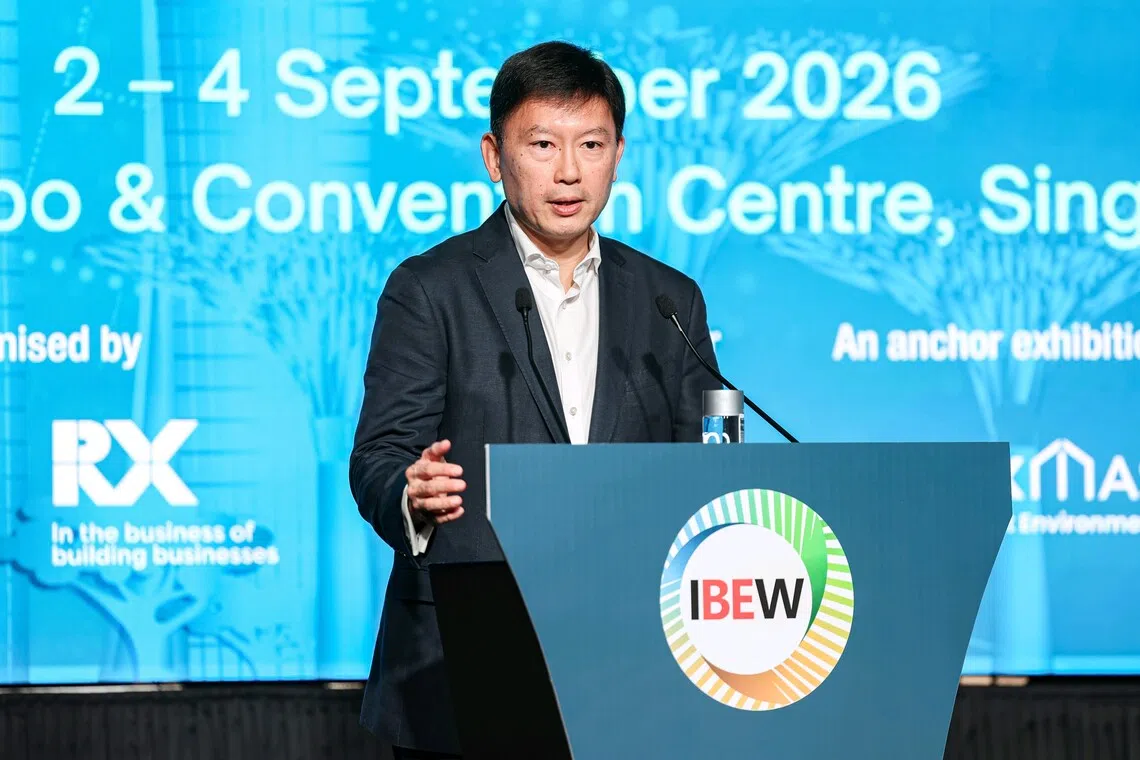
Announced by National Development Minister Chee Hong Tat at the International Built Environment Week (IBEW) 2026, this funding comes under the Research, Innovation and Enterprise 2030 (RIE2030) plan and builds on approximately S$185 million already secured for the sector over the past year. For developers, contractors, and consultants, this capital injection signals a clear message: future project delivery will be defined by safety, sustainability, and technological integration.
Addressing Practical Construction Challenges: Demolition and Smart Maintenance
The new RIE2030 funding is strategically allocated to address practical, on-site challenges where technological innovation can deliver direct, measurable impacts:
- Safer, Low-Impact Demolition: As Singapore’s urban landscape evolves, demolition and redevelopment are becoming increasingly common. Future funding will support the development of demolition methods that reduce noise, dust, localized disruption, and physical site risks in densely populated urban areas.
- Predictive Building Maintenance: For aging building stocks, the funding will focus on smarter maintenance tools to assess structural health, model lifecycle costs, and estimate remaining operational life. This empowers building owners and quantity surveyors to detect maintenance needs early and optimize operational expenditure.
- Accelerating Commercialisation: To bridge the gap between academic research and field application, the Government will actively support co-development, pilot trials, and technology adoption, with the first RIE2030 grant call expected later in 2026.
Greener Buildings: BCA Green Mark Version 7
A significant portion of the built environment’s transition focuses on carbon reduction, supported by the launch of the BCA Green Mark Version 7.
The updated certification scheme introduces more flexible pathways to encourage existing buildings to improve their environmental performance:
- BCA Energy Rating Pathway: This dedicated pathway allows existing buildings to focus specifically on improving energy efficiency.
- The SLE70 Tier: A prestigious new tier recognizing buildings that achieve at least 70 per cent energy savings compared to the 2005 baseline.
- Alternative Cooling Technologies: Version 7 recognizes advanced cooling solutions that can reduce cooling energy consumption by up to 50 per cent.
- Streamlined Administration: To make sustainability practical for businesses, the BCA has introduced portfolio certification options and streamlined recertification processes.
Raising the Bar for Site Supervision (Effective 2028)
To manage the increasing complexity of modern construction, Singapore is implementing stricter oversight requirements:
- Mandatory Licensed Site Supervision: Starting in 2028, developers and builders must engage licensed site supervision firms for all building projects with a contract value exceeding S$75 million.
- Accreditation Launch (September 2026): To prepare the industry, an accreditation scheme for site supervision firms will begin in September 2026. Firms will be assessed on corporate governance, systems, quality control, and their ability to integrate digital technologies into site monitoring.
Robots on Site and Virtual Inspections
Technology is moving from theoretical research directly onto active job sites to drive productivity:
- Robot Leasing Support Scheme: To lower the barrier to entry, a new robot leasing scheme will provide up to 50 per cent co-funding for eligible construction robotics, including concrete-levelling and tile-grouting robots.
- Virtual Inspections & Digital Twins: Using 360-degree scans and digital twins, project teams can now conduct remote inspections with regulatory agencies. Pilot projects at Grand Dunman and HDB’s MacPherson Weave demonstrated impressive outcomes—achieving manpower savings of up to 30 per cent and securing Temporary Occupation Permits (TOP) up to two months earlier.
Conclusion: The Path Forward for Built Environment Professionals
The S$112 million commitment represents a shift in how Singapore’s built environment operates. For contractors, consultants, and developers, commercial success will depend on the ability to combine traditional construction expertise with advanced technology to deliver safer, greener, and more productive projects.
References
The Straits Times- https://www.straitstimes.com/singapore/housing/112-million-more-set-aside-for-built-environment-research