dk@dkoutsource.com



Summary: The NEC4 early warning process helps construction teams identify potential risks before they develop into costly delays, budget overruns or disputes. This guide explains how early warning notices, the early warning register and early warning meetings work, with practical examples for contractors, consultants and quantity surveyors. It also explores how the process supports collaborative contracting in Singapore and international construction projects.
What Is the NEC4 Early Warning Process?
Construction projects face many uncertainties, from delayed materials and design changes to unexpected site conditions. When these issues are identified too late, they can disrupt construction schedules, increase costs and strain relationships between project stakeholders.
The NEC4 early warning process is a proactive risk management mechanism under the NEC4 suite of contracts. Under Clause 15 of the NEC4 Engineering and Construction Contract (ECC), the contractor and project manager must notify each other of matters that could increase the total of the Prices, delay Completion or a Key Date, or impair the performance of the works in use.
The objective is to identify potential problems early and encourage the parties to work together on solutions, rather than wait until the consequences become more difficult to manage. This reflects the principles of collaborative contracting, which emphasises open communication, mutual trust and joint problem-solving. The Building and Construction Authority (BCA) in Singapore promotes these principles to improve project delivery and strengthen construction risk management.
How Does the NEC4 Early Warning Process Work?
The NEC4 early warning procedure follows a structured process that turns risk identification into practical action.
- Identify the risk: A contractor or project manager becomes aware of a matter that could affect cost, time or performance.
- Issue an early warning notice: The relevant party notifies the other party as soon as the contractual requirements apply.
- Record the issue: The project manager records the matter in the early warning register and identifies any actions required.
- Discuss mitigation measures: Relevant project participants assess possible solutions and agree on steps to avoid or reduce the impact.
- Monitor progress: The team reviews agreed actions, updates the register and tracks unresolved risks.
For example, if a supplier informs a contractor that structural steel will arrive later than planned, the contractor can raise an early warning. The project team may then review alternative suppliers, adjust the work sequence or rearrange deliveries to reduce disruption. The aim is not simply to report a problem. It is to give the team time to make informed decisions before the risk affects project delivery.
What Is an Early Warning Register?
An early warning register is a record of notified risks, proposed mitigation measures and agreed actions. It helps project participants keep track of issues requiring attention throughout the construction period.
A useful register should include:
- Risk description: What could happen, and what is causing the concern?
- Potential impact: How might the issue affect cost, completion or performance?
- Responsible parties: Who needs to investigate or take action?
- Mitigation measures: What can be done to avoid or reduce the impact?
- Action deadlines and status: When must the actions be completed, and what remains outstanding?
For quantity surveyors, the register can support cost management, risk reviews and financial forecasting. For project managers, it provides a practical way to monitor outstanding issues and coordinate responses across different teams.

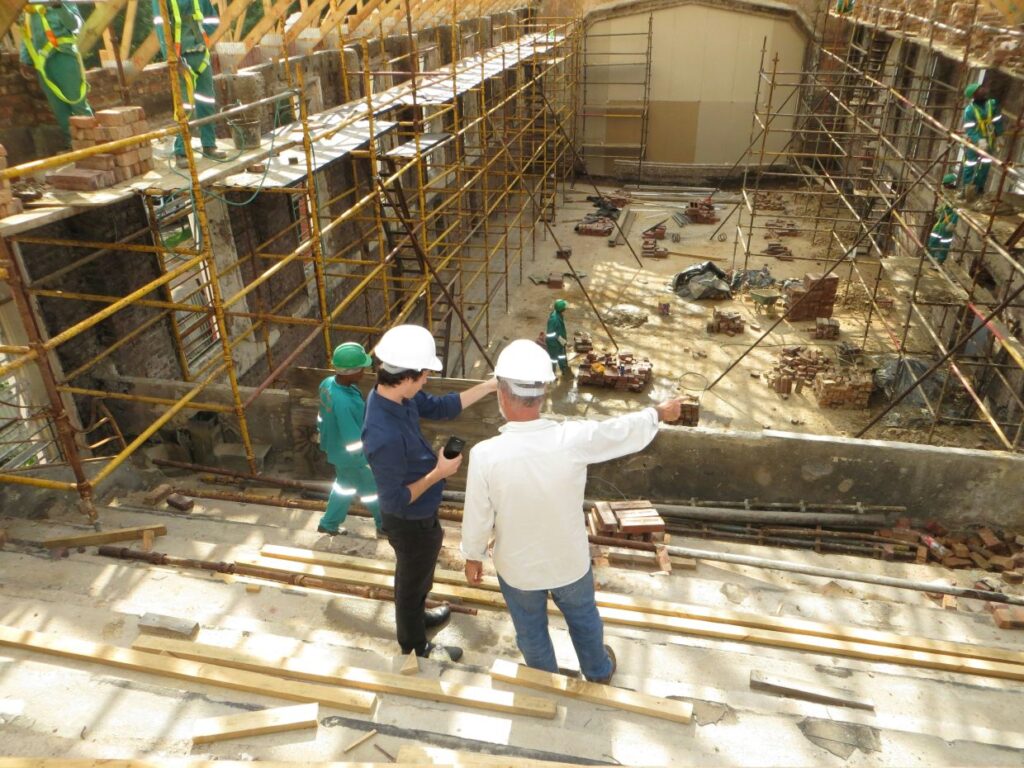
Picture by Ravish Maqsood on Pexels
The Role of Early Warning Meetings
Under the NEC4 ECC, early warning meetings provide a formal opportunity for the project manager and relevant participants to discuss notified risks and agree on ways to address them. Clause 15 sets out the contractual arrangements for these meetings.
As NEC Contracts explains in its guidance on the relationship between key contract processes, early warning concerns matters that could cause future problems; it is not itself a compensation event.
This distinction is important because an early warning meeting focuses on prevention and mitigation, not simply determining who is responsible for a problem.
| Potential risk | Possible mitigation action |
| Late delivery of materials | Review procurement schedules and alternative delivery arrangements. |
| Delayed design information | Prioritise outstanding approvals and resequence unaffected work. |
| Unexpected ground conditions | Investigate site conditions and assess alternative construction methods. |
| Coordination clashes between trades | Review interfaces and clarify work sequences. |
| Rising material costs | Assess procurement options and potential financial exposure. |
Effective construction risk management requires clear communication, relevant technical and commercial input, and agreed responsibilities. Contractors, consultants, project managers and quantity surveyors can each contribute valuable perspectives when evaluating possible solutions.
Why Is the NEC4 Early Warning Process Relevant in Singapore?
Singapore’s construction industry has been exploring collaborative contracting as a way to improve coordination, manage uncertainty and reduce avoidable project disputes.
A significant milestone followed in November 2025, when JTC awarded the first public-sector NEC4 collaborative contract in Singapore for infrastructure works at CleanTech Park in Jurong Innovation District. The project includes improvements to connectivity around an upcoming MRT station and the development of an elevated walkway.
For contractors, consultants and quantity surveyors, the NEC4 early warning process can help to:
- Identify risks before they affect critical construction activities.
- Improve communication between developers, contractors and consultants.
- Support better cost control and programme planning.
- Encourage joint problem-solving before disagreements escalate.
- Maintain clearer records of risk-related decisions and follow-up actions.
Common Mistakes to Avoid
The effectiveness of the NEC4 early warning process depends on how consistently it is applied.
Common mistakes include:
- Reporting risks too late: Waiting until a problem has already disrupted the works reduces the time available to respond.
- Treating early warnings as blame: A focus on fault can discourage open communication and undermine collaboration.
- Ignoring the early warning register: An outdated register makes it harder to track unresolved risks and outstanding actions.
- Confusing early warnings with claims: An early warning does not automatically establish entitlement to additional payment or an extension of time.
- Failing to follow up: Discussions achieve little if actions are not assigned, monitored and completed.
Conclusion: Turning Early Warnings into Better Project Outcomes
The NEC4 early warning process is more than a contractual requirement; it is a practical approach to identifying risks, improving communication and making informed decisions before problems escalate. By using early warning notices, maintaining an up-to-date early warning register and holding effective early warning meetings, project teams can better manage potential delays, control costs and strengthen collaboration.
For Singapore’s construction industry and international projects alike, the process highlights the importance of addressing risks early rather than reacting after issues have affected project delivery. When supported by clear responsibilities and consistent follow-up, NEC4 collaborative contracting can help construction professionals work towards more predictable and successful project outcomes.
Frequently Asked Questions
What is the purpose of an NEC4 early warning notice?
Answer: An NEC4 early warning notice alerts the other party to a potential risk that could affect project cost, completion dates or performance. It allows the project team to consider mitigation measures before the issue escalates.
Who is responsible for issuing early warnings under NEC4?
Answer: Under Clause 15 of the NEC4 ECC, both the contractor and project manager have early warning notification obligations. The exact requirements should be checked against the applicable contract and any amendments.
Is an early warning the same as a compensation event?
Answer: No. An early warning identifies a potential risk, whereas a compensation event is a separate contractual mechanism that may affect the Prices, Completion Date or Key Dates. A matter may involve both processes, depending on the circumstances and contract provisions.
What is the difference between an early warning register and a risk register?
Answer: An early warning register records matters notified under the contract’s early warning mechanism and their associated actions. A general project risk register may cover a broader range of risks managed through internal project procedures.
Can the NEC4 early warning process prevent construction disputes?
Answer: It can help reduce the likelihood of disputes by encouraging timely communication, joint problem-solving and documented decisions. However, it cannot eliminate every disagreement or replace formal dispute resolution procedures.
Does the NEC4 early warning process apply to Singapore construction projects?
Answer: Yes, where the relevant NEC4 contract is adopted, subject to its terms and applicable local amendments. BCA has developed Singapore-specific provisions to support the use of NEC4 for construction, engineering and facilities management projects.
What happens if a contractor fails to issue an early warning?
Answer: Failure to comply with the applicable notification requirements may have contractual consequences. The effects depend on the contract wording, the circumstances and any relevant amendments. Project teams should seek appropriate contractual or legal advice when assessing a specific situation.
References
- NEC Contracts – Links Between Key NEC Processes https://www.neccontract.com/news/links-between-key-nec-processes
- NEC Contracts – Early Warning of a Defect? https://www.neccontract.com/support/faqs/early-warning-of-a-defect
- Building and Construction Authority (BCA) – NEC4 Contract https://www1.bca.gov.sg/growth-and-transformation/procurement/standard-contract-forms/nec4-contract/
- BCA – Collaborative Contracting https://www1.bca.gov.sg/growth-and-transformation/procurement/progressive-procurement-approaches/collaborative-contracting/
- BCA – Launch of NEC4 Contract for Construction and Engineering Projects in Singapore https://www1.bca.gov.sg/resources/newsroom/launch-of-nec4-contract-for-construction-and-engineering-projects-in-singapore/
- Ministry of National Development – Built Environment and Real Estate Prospects Seminar 2026
https://www.mnd.gov.sg/newsroom/speeches/view/speech-by-minister-chee-hong-tat-at-the-bca-redas-built-environment-and-real-estate-prospects-seminar-2026