dk@dkoutsource.com


Summary: Extension of time (EOT) claims represent one of the most contentious and complex aspects of public sector construction contracts in Singapore. Under the Public Sector Standard Conditions of Contract (PSSCOC), securing additional contractual time depends on establishing that a delay falls within an eligible qualifying event, proving the contractor acted with due diligence, and strictly complying with written notice and supporting documentation requirements. Managing the project calendar effectively requires moving beyond retrospective delay reconstructions toward proactive, real-time programme administration.
Qualifying EOT Events Under PSSCOC Clause 14.2
An extension of time is an adjustment to the contractual completion date granted when a qualifying delaying event impacts the time required to complete the works. Under Clause 14.2, the Superintending Officer (SO) possesses the contractual authority to extend the Time for Completion for specific qualifying grounds, including:
- Force Majeure: Unforeseeable extraordinary events beyond the parties’ control.
- Adverse Environmental Conditions: Exceptionally adverse weather or severe haze disruptions.
- Industrial Action: Strikes or labour disruptions affecting project execution.
- Employer Acts or Omissions: Late issuance of instructions, delayed drawings, or site access restrictions caused by the employer or consultants.
- Adverse Physical Conditions: Unforeseen sub-surface or ground conditions encountered on site.
- Pandemic Disruptions: Updated provisions incorporated into the PSSCOC 2020 edition following lessons from COVID-19.
The 60-Day Notice Requirement (Clause 14.3)
One of the most critical procedural requirements under PSSCOC Clause 14.3 is the notification timeline. A contractor seeking an EOT must notify the Superintending Officer in writing forthwith, and in any case within 60 days of the occurrence of the delaying event.
Essential EOT Notice Checklist:
- Identify the Event: Formally pin-point the specific delaying circumstance.
- Record Occurrence Date: Establish exactly when the event arose.
- Issue Written Notice: Serve formal written notice to the SO within the 60-day window.
- Cite Contract Terms: Reference the applicable PSSCOC clause or contractual provision.
- Demonstrate Impact: Explain the expected or actual delay and its effect on the accepted programme and completion date.
- Update Programme & Particulars: Maintain updated delay schedules and provide further details when requested by the SO.
Proving Delay: The Programme as the Primary Evidence
Identifying a delaying event is only the initial step; the contractor must prove that the event directly impacted activities controlling the critical path to completion.
In accordance with international guidance—such as the Society of Construction Law (SCL) Delay and Disruption Protocol and RICS standards—transparency of methodology and contemporaneous records are vital:
| Record Type | Analytical Value & Purpose |
| Accepted & Updated Programmes | Establishes the baseline sequence, planned completion date, and real-time schedule progress changes. |
| Site Diaries & Progress Photos | Provides physical, daily proof of site status, activities, and real-time occurrences. |
| Instructions & Drawings Log | Establishes the precise timing of employer or consultant actions. |
| Correspondence & Minutes | Confirms notice dates, decision-making logs, and agreed risk mitigation measures. |
| Procurement Records | Substantiates material or equipment lead-time disruptions. |
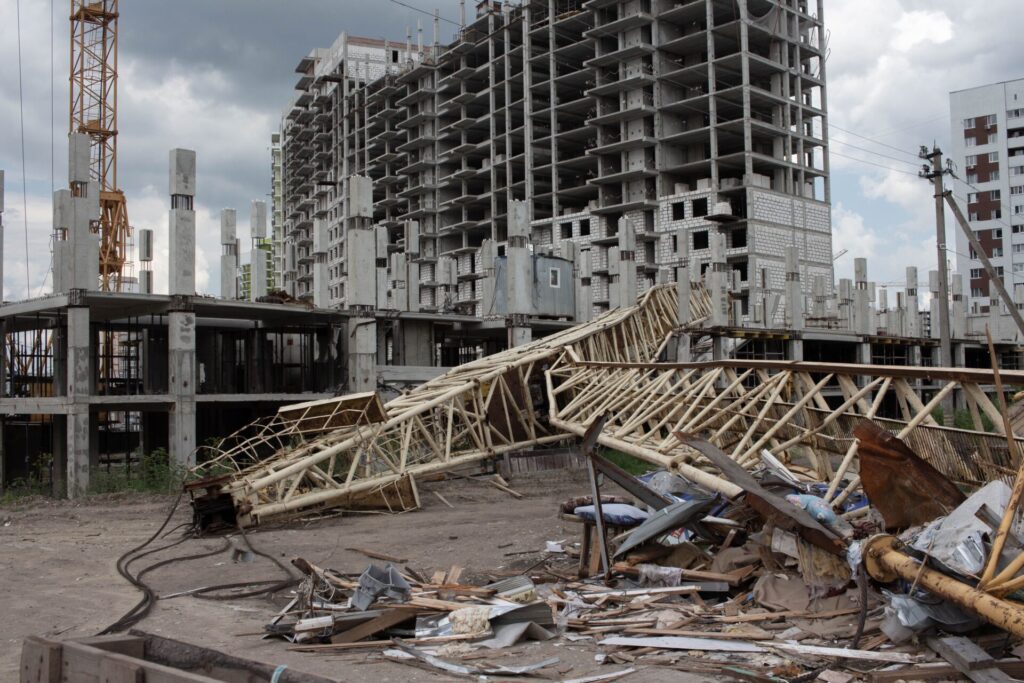
Picture by MAKSIM ZAVIKTORIN on Pexels
Navigating Concurrent Delay (Clause 14.3)
Disputes escalate when employer-caused delays overlap with contractor-caused delays. Simply adding separate delay periods together fails to reflect the true critical path impact.
Under PSSCOC Clause 14.3, the Superintending Officer is explicitly required to consider delays operating concurrently with the relevant event that are attributable to the contractor. A robust delay analysis must evaluate causation, sequencing, and actual completion impact rather than relying on basic comparisons between planned and actual dates.
Strategic 7-Step Roadmap for EOT Management
To safeguard contractual entitlement and prevent prolonged disputes, contract teams should adopt a continuous time management strategy:
- Track Events Live: Log potential delay events immediately as they occur on site.
- Issue Prompt Notices: Serve written notices to the SO well within the 60-day deadline.
- Maintain Baseline Programmes: Update project schedules regularly to reflect real-time progress.
- Quantify Delay Impacts: Record the exact critical path effect of each qualifying event.
- Separate Delay Causes: Clearly distinguish between contractor-caused and employer-driven delays.
- Preserve Contemporaneous Logs: Keep detailed site diaries, meeting minutes, and photo evidence.
- Review Contract Wording: Verify entitlement against specific PSSCOC Clause 14 provisions.
Frequently Asked Questions
What is an extension of time in construction?
An extension of time is additional contractual time granted to adjust the completion date when an eligible qualifying event delays the project.
How long does a contractor have to give notice under PSSCOC?
Under Clause 14.3, the contractor must notify the Superintending Officer in writing forthwith, and in any event within 60 days of the event’s occurrence.
What evidence best supports an EOT claim?
Accepted and updated programmes, site diaries, progress photos, instructions, correspondence, meeting minutes, and procurement logs.
Does every delay qualify for an EOT?
No. The delay must fall within the qualifying provisions of Clause 14.2, impact the completion date, and meet procedural notice requirements.
What is concurrent delay under PSSCOC?
Concurrent delay refers to overlapping delays arising from different causes—such as simultaneous employer-related and contractor-related events. Clause 14.3 requires the SO to consider concurrent contractor delays when assessing entitlement.
References
- BCA — PSSCOC for Construction Works, Eighth Edition July 2020 https://www1.bca.gov.sg/docs/default-source/docs-corp-procurement/psscoc-for-construction-works-2020.pdf
- BCA — List of Amendments to PSSCOC for Construction Works 2020 https://www1.bca.gov.sg/docs/default-source/docs-corp-procurement/list-of-amendments-for-psscoc-for-construction-works-2020.pdf
- Singapore Academy of Law — Construction and Infrastructure article on force majeure and EOT https://journalsonline.academypublishing.org.sg/Journals/SAL-Practitioner/Construction-and-Infrastructure/ctl/eFirstSALPDFJournalView/mid/591/ArticleId/1515/Citation/JournalsOnlinePDF
- RICS — Extensions of Time guidance https://www.rics.org/profession-standards/rics-standards-and-guidance/sector-standards/construction-standards/black-book/extensions-of-time
- Society of Construction Law — Delay and Disruption Protocol https://www.scl.org.uk/resources/delay-disruption-protocol
- Singapore Academy of Law — Guide on the NEC4 Engineering and Construction Contract https://sal.org.sg/wp-content/uploads/2026/01/Guide-on-the-NEC4-Engineering-and-Construction-Contract.pdf
- NEC Contracts — Resources for managing compensation events https://www.neccontract.com/support/faqs/resources-for-managing-compensation-events