dk@dkoutsource.com



Summary: Managing construction claims can affect project costs, cash flow, schedules and working relationships. Construction claims management is more than simply calculating extra costs or identifying delays. This is about understanding the contractual entitlements, looking at the project records and assessing causation and quantum.” A consultant quantity surveyor (QS) can help developers, contractors and project teams to manage construction claims, mitigate commercial risks and resolve disputes, providing insights that apply to Singapore and to international construction projects.
What Is Construction Claims Management?
Construction claims management is the process of identifying, preparing, evaluating, negotiating and managing claims arising out of construction contracts. Claims may be for additional payment, variations, extensions of time (EOT), prolongation cost, disruption or other contractual entitlements.
A construction claim could arise where:
Variations means extra or changed work that changes the original contract price.
Delay Claims A contractor may be entitled to an extension of time or other recompense for delays.
Loss and expense claims. Disruption or prolongation will incur additional costs subject to contract terms.
Payment disputes: Disagreements between parties on progress valuations, deductions, retention or amounts outstanding.
Claims are not automatically justified simply because additional costs or delays occur. Their validity depends on the contract, relevant procedures, supporting evidence and the circumstances of the event.
The Role of a Consultant Quantity Surveyor in Claims Management
A consultant quantity surveyor offers commercial and contractual support, as well as also assessing the financial impact of construction events and assisting parties in comprehending their respective positions.
The Royal Institution of Chartered Surveyors (RICS) defines commercial management as a discipline closely connected with quantity surveying, covering areas like valuing work, understanding costs and commercial decision making. The purpose is not to maximize or minimize a claim. That is to arrive at a defensible evaluation based upon the contract and the evidence available.
In construction claims assessment, a consultant QS may assist with:
- Contract review: Identifying relevant clauses, valuation rules, notice requirements and claim procedures.
- Measurement and valuation: Checking quantities, rates, variations and claimed amounts against contractual provisions.
- Cost analysis: Evaluating labour, plant, materials, subcontractor costs and potential duplication.
- Claims preparation: Organising supporting documents and presenting calculations in a structured manner.
- Claims defence: Reviewing disputed submissions, testing assumptions and identifying unsupported items.
- Negotiation support: Providing an objective commercial assessment to support settlement discussions.
What Makes a Construction Claim Substantiated?
A persuasive construction claim should connect contractual entitlement, factual evidence, causation and quantum.
Causation means establishing the relationship between an event and the alleged consequence. – Cambridge Dictionary
For example, a contractor experiencing delayed access may claim additional site overheads. However, delayed access alone does not automatically establish entitlement or prove the full amount claimed.A useful distinction would be where records show that an event occurred are not necessarily proof that the event caused the claimed delay or expense.
Quantum refers to the financial amount being claimed or assessed. – Cambridge Dictionary
A proper claims assessment considers:
- What contractual provision applies?
- Was the required notice issued within the applicable timeframe?
- Who was responsible for the relevant event?
- Did the event affect the critical activities or regular progress?
- What additional costs were actually incurred?
- Are the costs attributable to the event and recoverable under the contract?
Managing Claims in Singapore and International Projects
In Singapore, construction claims must be viewed in relation to the relevant contract and legal framework. Typical types of contract include the SIA Conditions of Contract, the Public Sector Standard Conditions of Contract (PSSCOC) and other international or specially designed types. Singapore’s Building and Construction Industry Security of Payment Act (SOPA) is a vital framework that provides statutory rights to progress payment and a mechanism for the resolution of qualifying payment disputes through adjudication.

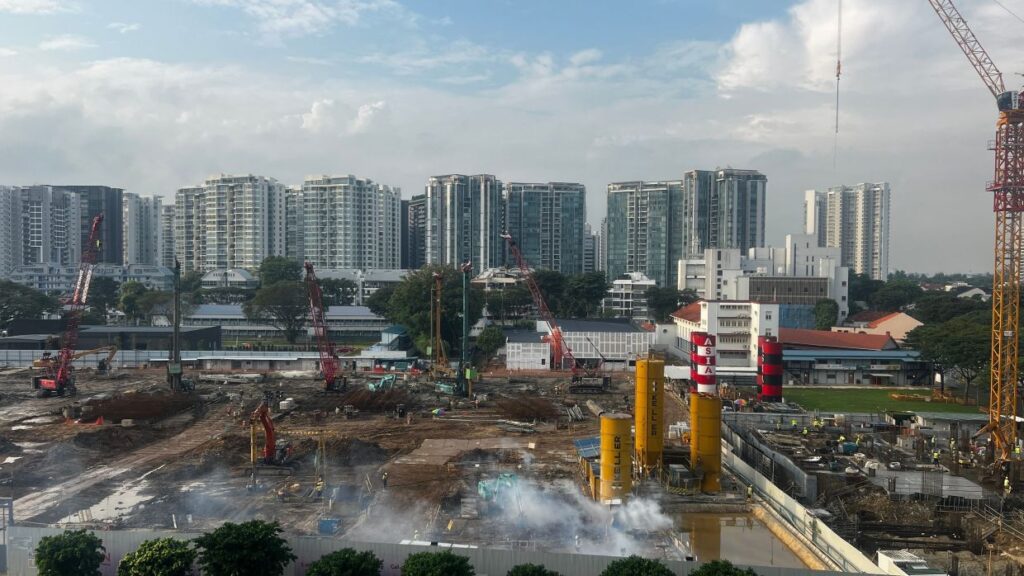
Picture by Mikael Blomkvist on Unsplash
This highlights why timely documentation and proper claims preparation matter. However, SOPA adjudication is not a substitute for every form of construction dispute resolution. Complex delay, damages or other disputes may require different contractual or legal avenues, depending on the circumstances. Internationally, contracts such as FIDIC also contain structured claims procedures. Although the principles of documentation, entitlement and valuation are widely relevant, notice requirements, deadlines and remedies differ between contracts and jurisdictions.
Practical Steps for Better Construction Claims Management
Claims are easier to manage when commercial controls begin before a dispute develops. Proper site documentation, including instructions, inspection records and other relevant records, also supports effective construction claims management.
| Practice | Why it matters |
| Maintain contemporaneous records | Establishes a reliable project chronology |
| Track notices and deadlines | Reduces procedural risks |
| Record variations and instructions | Supports valuation and entitlement reviews |
| Monitor programmes and progress | Helps assess delay and disruption |
| Reconcile costs regularly | Identifies discrepancies early |
| Maintain a claims register | Tracks responsibility, status and outstanding actions |
A practical claims management workflow:
- Identify: Record the event, date, parties involved and potential contractual implications.
- Notify: Check the applicable notice requirements and submit notices where required.
- Investigate: Gather instructions, correspondence, photographs, progress reports, programmes and cost records.
- Assess: Examine entitlement, responsibility, causation, time impact and quantum.
- Resolve: Discuss findings, negotiate where appropriate and consider the relevant dispute resolution process if necessary.
From Claims Assessment to Dispute Resolution
Not every disagreement needs to become a formal dispute. A consultant quantity surveyor can help parties understand the commercial differences between their positions by separating agreed items from disputed issues and presenting the financial implications clearly.
For example, a variation claim may be resolved more efficiently when both parties agree on the measured quantities but disagree on the applicable rates. Addressing that specific issue can be more productive than debating the entire claim.
Effective construction dispute resolution may involve:
- Direct commercial negotiations
- Without Prejudice negotiations, where appropriate
- Mediation
- Adjudication, where available
- Arbitration or litigation, where applicable
The appropriate approach depends on miltiple things like contractual provisions, statutory rights, the dispute’s complexity and the parties’ objectives. Early claims assessment also helps project teams recognise issues such as recurring risks, and can improve contract administration while making better-informed commercial decisions.
Conclusion
Effective construction claims management combines contractual understanding, accurate quantity surveying, reliable documentation and sound commercial judgement. For developers, contractors and consultants in Singapore, engaging quantity surveying services for claims preparation, claims assessment and dispute resolution support can help clarify entitlements, evaluate financial exposure and identify practical routes towards resolution.
Ultimately, a well-managed claim is not simply one with extensive paperwork. It is one that presents a clear contractual basis, a credible explanation of causation and a properly supported assessment of time or money.
Frequently Asked Questions
What is construction claims management?
Answer: Construction claims management involves identifying, preparing, reviewing, assessing, negotiating and resolving claims arising from construction contracts, including variations, payment disputes, delays and additional costs.
What does a consultant quantity surveyor do in construction claims?
Answer:A consultant quantity surveyor reviews contractual provisions, measures work, assesses variations, evaluates claimed costs, organises supporting evidence and assists with claims preparation, defence and commercial negotiations.
What are the most common types of construction claims?
Answer:Common examples include variation claims, extension of time claims, prolongation claims, loss and expense claims, disruption claims and payment disputes.
How can construction claims be prevented?
Answer:Early risk identification, clear contract administration, timely notices, accurate records, regular cost reporting and prompt communication can reduce the likelihood of disputes.
When should a consultant QS be engaged?
Answer:A consultant QS can be engaged when a potential claim first emerges, when a submission needs assessment, during commercial negotiations or when a dispute requires independent cost and quantum analysis. Early involvement can help preserve records and identify procedural requirements.
References
- RICS – Commercial Management of Construction: Practice Standards https://www.rics.org/content/dam/ricsglobal/documents/standards/commercial_management_of_construction_1st_edition_rics.pdf
- RICS – How to Manage the Risk of Construction Claims https://ww3.rics.org/uk/en/journals/construction-journal/how-to-manage-the-risk-of-construction-claims.html
- Building and Construction Authority (BCA) – Security of Payment Act https://www1.bca.gov.sg/growth-and-transformation/procurement/procurement-and-legal-frameworks/security-of-payment-act/
- Cambridge Dictionary – https://dictionary.cambridge.org/dictionary/english/causation
- FIDIC – Claims Workshop: Managing, Defending and Making Claims under FIDIC Contracts https://www.fidic.org/sites/default/files/event-files/FIDIC%20Claims%20Master%202019-1-new-3.pdf
- Singapore Academy of Law – Building and Construction Knowledge Guide https://sal.org.sg/wp-content/uploads/2025/04/Building-and-Construction-Knowledge-Guide-1.pdf