dk@dkoutsource.com


Every construction project is inherently shaped by uncertainty and unforeseen challenges. From unexpected ground conditions and design modifications to material price volatility, labour shortages, and weather disruptions, risk is a constant presence throughout the project lifecycle.
Historically, many standard construction contracts have attempted to manage these risks by shifting the entire commercial burden onto a single party—most commonly, the contractor. While this absolute risk transfer might initially seem to shield the client, it often backfires.
Faced with uncontrolled liabilities, contractors naturally inflate their tender prices with substantial contingency margins, driving up initial project budgets. When unforeseen events inevitably occur, arguments over who pays quickly devolve into costly disputes, payment delays, extension claims, and adversarial legal proceedings. To break this cycle, the modern construction industry is shifting toward a more balanced, collaborative model of fair risk allocation.
What Is Fair Risk Allocation?
Fair risk allocation is the practice of assigning each individual project risk to the stakeholder best equipped to manage, control, or mitigate it.
Rather than dumping all liabilities onto one party, risks are distributed logically and equitably:
- The Contractor is best positioned to manage construction methodologies, labour productivity, and site safety.
- The Client is better equipped to handle planning approvals, regulatory clearance, or subsequent changes to the project scope.
By managing risks where they can be controlled most effectively, project teams can dramatically reduce unnecessary contingency pricing, establish commercial transparency, and focus their energy on successful project delivery rather than arguing over contract liability.
The Hidden Cost of Traditional Risk Transfer
When contracts force contractors to assume risks beyond their reasonable control, clients end up paying a premium.
To protect themselves against unpredictable market forces, contractors build significant financial buffers into their bids to cover:
| Construction Risk | Party Better Positioned to Manage It | Why? |
| Construction methodology and labour productivity | Contractor | The contractor controls the means and methods of construction and day-to-day site operations. |
| Design changes after contract award | Client / design team | Changes generally originate from the client’s requirements or design development. |
| Planning and regulatory approvals | Client / relevant project team | The client and appointed consultants are generally responsible for obtaining and coordinating project approvals. |
| Unforeseen ground conditions | Depends on the contract and available information | The allocation should reflect who had access to site information and who was reasonably able to investigate or manage the risk. |
| Material price volatility | Depends on the contract | The parties can decide whether the contractor, client or both should bear price fluctuation through the chosen pricing mechanism. |
The client pays for these contingencies upfront, regardless of whether the risks actually materialize. Furthermore, if a major unforeseen event does occur, the resulting disagreements often trigger variations, claims, adjudication, or arbitration. These adversarial processes drain valuable resources, incur steep legal fees, and distract project teams from delivery. Fairer risk sharing helps eliminate these hidden transactional costs while encouraging cooperative problem-solving.
The Industry Shift to Collaborative Contracting
To enhance productivity and schedule certainty, the global construction sector is moving toward collaborative contracting frameworks. A prime example is the NEC4 contract suite, which prioritizes proactive problem-solving over assigning blame. Rather than waiting for a dispute to boil over, NEC4 encourages parties to work together to address risks before they escalate.
Collaborative contracting is an approach that encourages project parties to work together towards shared project goals, with elements such as risk sharing, open communication and joint problem-solving. -BCA
Key features of this collaborative approach include:
- Early Warning Procedures: Requiring parties to flag potential issues as soon as they are spotted.
- Risk Reduction Meetings: Bringing stakeholders together to jointly develop mitigation strategies.
- Transparent Programme Management: Ensuring both schedule and cost impacts are openly tracked.
- Shared Incentives: Aligning commercial goals through target-cost arrangements.

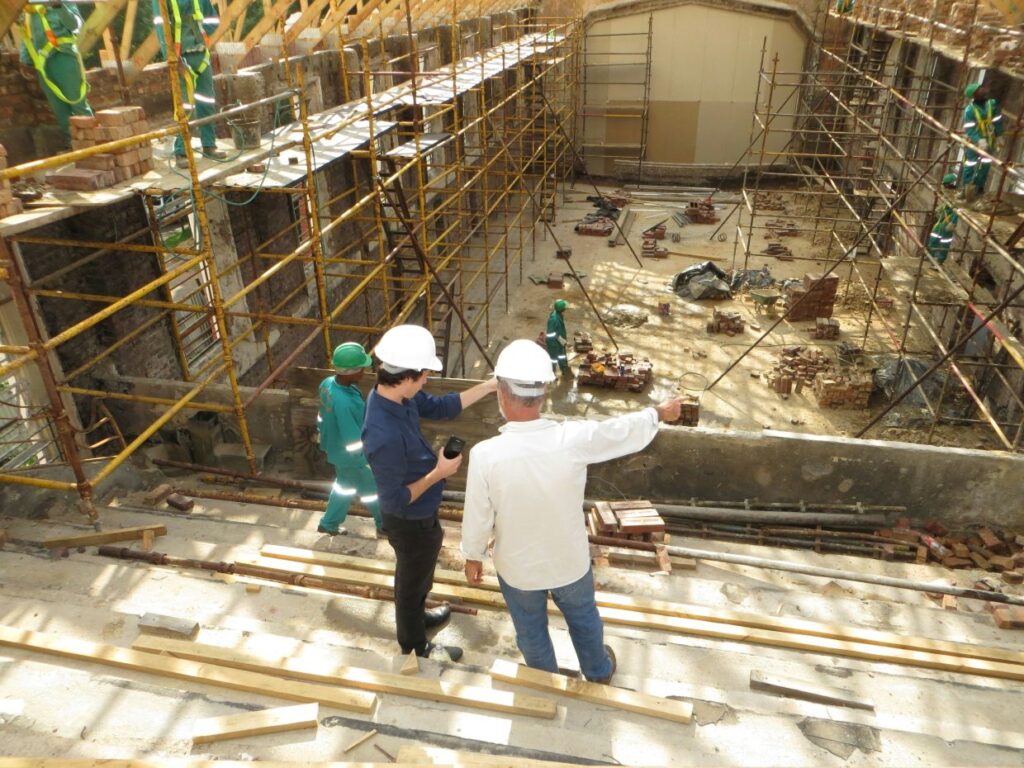
Picture by Hoang NC
Singapore’s Collaborative Evolution
Singapore has placed collaborative contracting at the center of its ongoing Built Environment transformation. The Building and Construction Authority (BCA) has introduced localized NEC4 contract clauses specifically tailored to align with Singapore’s legal framework while fostering mutual trust and balanced risk sharing.
NEC4 is a suite of collaborative contracts for construction and facilities management projects. In Singapore, BCA has worked with NEC to adapt the contract for local legal and industry requirements. -BCA
Leading public agencies, including JTC, the Housing & Development Board (HDB), and the Land Transport Authority (LTA), have actively piloted NEC4 contracts on selected infrastructure and building projects. Highlighting this progressive shift, Singapore awarded its first public-sector NEC4 collaborative contract in 2025, signalling strong institutional confidence in a cooperative procurement model.
The Crucial Role of Consultant Quantity Surveyor Services
Regardless of the chosen contract form, professional consultant quantity surveyor (QS) services are vital to identifying and managing commercial risks across the project lifecycle. Experienced quantity surveyors actively protect budgets and balance commercial interests by:
- Identifying commercial risks during early procurement stages.
- Preparing accurate cost estimates and robust tender documentation.
- Conducting rigorous reviews of contractual risk allocation.
- Evaluating variations, compensation events, and progress claims objectively.
- Maintaining continuous cost control and cash flow monitoring.
- Reducing dispute risks through meticulous, contemporary project documentation.
By translating complex physical construction activities into structured financial data, quantity surveyors ensure that risk registers are not just static lists, but active tools for strategic decision-making.
The Bottom Line of Fair Risk Allocation in Construction
Uncertainty is an inevitable reality in construction, but it does not have to result in conflict. Implementing a fair risk allocation framework—complemented by disciplined contract administration, proactive communication, and professional quantity surveying oversight—enables project teams to resolve challenges long before they escalate into costly legal disputes. As collaborative models like NEC4 gain momentum globally and within Singapore, the industry is entering an era where project success is measured not just by strict contractual compliance, but by delivering projects safely, efficiently, and with optimized value for all stakeholders.
References
- NEC Contracts – Fair Risk Allocation in Construction: https://www1.bca.gov.sg/growth-and-transformation/procurement/standard-contract-forms/nec4-contract/
- Building and Construction Authority (Singapore) – https://www1.bca.gov.sg/growth-and-transformation/procurement/standard-contract-forms/nec4-contract/
- Building and Construction Authority – https://www1.bca.gov.sg/resources/newsroom/launch-of-nec4-contract-for-construction-and-engineering-projects-in-singapore/
- Building and Construction Authority – https://www1.bca.gov.sg/resources/newsroom/construction-demand-to-remain-strong-for-2025/
- Royal Institution of Chartered Surveyors – https://www.rics.org
- International Federation of Consulting Engineers – https://fidic.org