dk@dkoutsource.com


Construction projects are highly complex, multi-party undertakings where disagreements over delays, payment issues, defective work, variations, extensions of time, and contractual obligations are common. When direct negotiations fail to resolve these issues, parties must decide whether to pursue arbitration or litigation. Selecting the most appropriate dispute resolution forum is a strategic decision that heavily impacts costs, confidentiality, timelines, and how the dispute is ultimately managed.
Rather than choosing a route based on assumptions of speed or flexibility, companies must evaluate the nature of the dispute, the specific contract wording, the involved parties, and the type of evidence required.
Core Definitions: Arbitration vs. Litigation
Arbitration
This is a private form of alternative dispute resolution (ADR) where an independent arbitrator or tribunal reviews the evidence and issues a binding decision known as an “award”. Parties have a greater degree of control over the proceedings, including the selection of the decision-maker. The Royal Institution of Chartered Surveyors (RICS) notes that arbitration is highly effective for technically complex construction and engineering disputes where specialist, industry-specific knowledge is required.
Litigation
This process involves bringing the dispute before a court of law, where a judge resolves the issues based on applicable law and evidence. The resulting court judgment is legally binding and enforceable. Litigation provides a highly structured and formal process, making it particularly suited for complex legal questions, disputes requiring the court’s broad procedural powers, or cases involving multiple parties.
The Commercial Case for Arbitration
For many built environment companies, arbitration represents the preferred route due to several distinct advantages:
- Confidentiality and Privacy: Unlike public court proceedings, arbitration is generally private. This allows companies to protect sensitive commercial contracts, technical evidence, and proprietary information from public exposure, which is critical for preserving ongoing commercial relationships and protecting major developments.
- Specialist Expertise: Arbitration allows parties to appoint an arbitrator with specific technical or industry expertise in fields like quantity surveying, valuation, delay analysis, construction defects, or complex contract provisions. Having an industry expert resolve the dispute ensures the nuances of construction practice are properly understood.
- Institutional Frameworks: Globally recognized hubs like Singapore provide robust institutional support. The Singapore International Arbitration Centre (SIAC) operates under rules that guarantee arbitrator independence, impartiality, and strict confidentiality.
- Crucial Caveat: While often perceived as a faster and cheaper alternative, arbitration is not automatically cheaper or faster than litigation. Technically complex construction cases involving extensive expert witnesses, massive volumes of evidence, and lengthy hearings can quickly become highly complicated, expensive, and protracted if proceedings become unnecessarily complex.

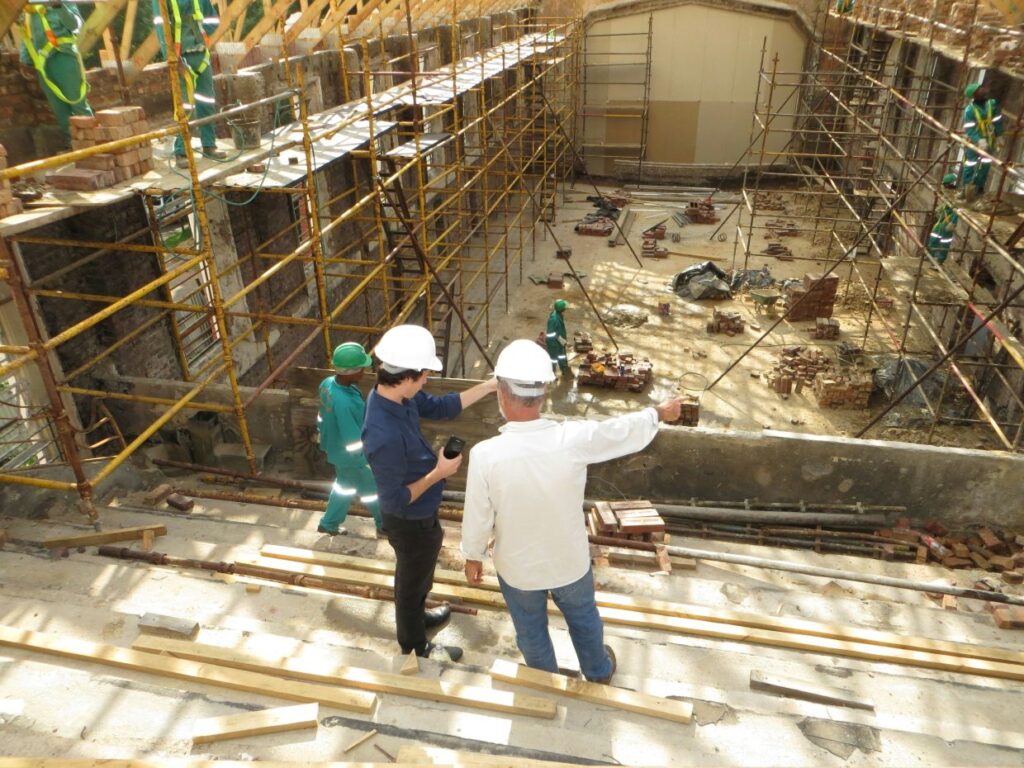
Picture by Mikhail Nilov
When Litigation is the More Appropriate Route
Despite the benefits of arbitration, litigation remains the more practical and effective forum under specific circumstances:
- Multi-Party Disputes: Construction disputes rarely involve only two parties; they often span developers, main contractors, subcontractors, consultants, designers, and suppliers. If separate contracts contain different dispute-resolution clauses, coordinating multiple distinct arbitration can become incredibly complex. Litigation accommodates multi-party claims far more readily through established court mechanisms for consolidation or joinder.
- Legal Precedent and Transparency: If a dispute raises fundamental legal questions that require authoritative judicial interpretation, litigation is preferable. Court judgments are transparent and contribute directly to the development of public legal precedent.
- Procedural Limitations of Arbitration: If contracts lack appropriate clauses for consolidating multiple arbitration or joining third parties, resolving a multi-party dispute through arbitration becomes highly inconvenient.
The primary disadvantages of litigation remain its public nature, high cost, and potential duration, which can place heavy administrative demands on corporate management teams and professional advisors.
Comparative Analysis: Arbitration vs. Litigation
| Feature | Arbitration | Litigation |
| Privacy / Confidentiality | Highly confidential and private | Public proceedings and judgments |
| Decision-Maker Selection | Selected by parties; typically an industry specialist | Court-assigned judge; generalist legal expert |
| Multi-Party Suitability | Complex to manage unless contracts permit consolidation/joinder | Readily consolidates multi-party claims under court rules |
| Speed & Cost | Varies; can be expensive and lengthy for complex cases | Typically expensive and demanding on management |
| Enforceability | Binding and enforceable institutional awards | Legally binding and enforceable court judgments |
Beyond Arbitration and Litigation: The Role of Early ADR
In active construction markets like Singapore, the industry increasingly recognizes that formal legal battles should be a last resort. The Singapore Contractors Association Limited (SCAL) actively promotes alternative dispute resolution through the Singapore Construction Mediation Centre, establishing mediation as a preferred first step to resolve disputes amicably and preserve commercial partnerships. SCAL also runs a Dispute Consultation Clinic to guide businesses toward the most appropriate, cost-effective resolution pathway.
This highlights a fundamental principle across the built environment: not every construction dispute needs to escalate to arbitration or litigation. Engaging in early mediation, structured negotiation, and maintaining disciplined, proactive contract administration remain the most effective ways to manage risks and resolve conflicts before they develop into financially destructive legal deadlocks.
References
- Singapore International Arbitration Centre (SIAC) — SIAC Rules https://siac.org.sg/
- RICS — Surveyors Acting as Arbitrators in Construction Disputes https://www.rics.org/profession-standards/rics-standards-and-guidance/sector-standards/dispute-resolution-standards/surveyors-acting-as-arbitrators-in-construction-disputes
- Society of Construction Law (Singapore) — Expert Evidence in Arbitration https://www.scl.org.sg/
- UNCITRAL – International Commercial Arbitration vs. Litigation https://uncitral.un.org/en/texts/arbitration