dk@dkoutsource.com

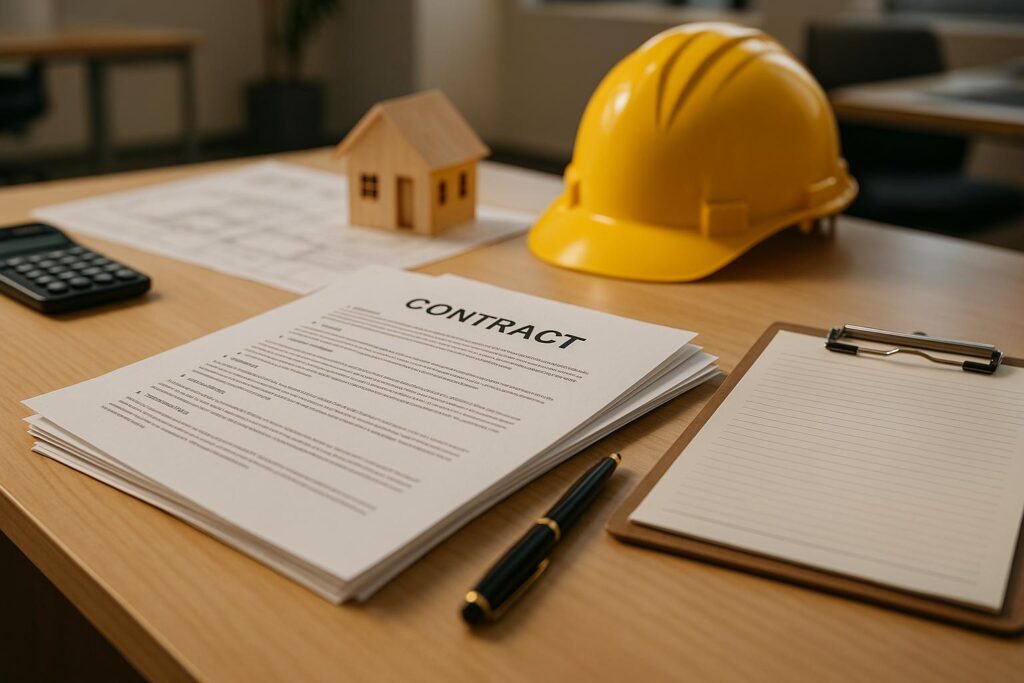
Summary: Construction delays rarely come from one source. Extreme weather, fire, government action, labour shortages, variations and unexpected third-party delays can all affect completion. Under SIA Clause 23, however, a delay does not automatically translate into an extension of time (EOT). Contractors must show that the delay falls within an applicable contractual ground, actually affected completion, and that the required notice and due diligence obligations have been met. This article looks at how SIA Clause 23 delay claims work, with lessons relevant to Singapore and construction projects internationally.
What Is SIA Clause 23?
The SIA Building Contract 2016 identifies Clause 23 as the contractual mechanism covering entitlement, grounds, notice, assessment of time and sequential or concurrent causes of delay. In practical terms, an EOT changes the contractual completion date to reflect qualifying delay. It is therefore closely connected to liquidated damages: if the completion date is properly extended, the period for which delay damages may be assessed can also change.
SIA Clause 23: deals with extension of time under the Singapore Institute of Architects’ building contracts. -Singapore Institute of Architects
The key question is not simply, “Was the project delayed?” It is: What caused the delay, did that cause fall within the contract, and did it actually delay completion?
Acts of God: When Does Force Majeure Apply?
One of the most discussed grounds under SIA Clause 23 is force majeure. A useful definition from Singapore case law describes force majeure generally as an event that impedes or obstructs contractual performance, is outside the parties’ control, and occurs without either party’s default. The Singapore Court of Appeal has also stressed that the precise wording and context of the contractual clause remain important.
The SIA 2016 form separately identifies events such as exceptionally adverse weather, fire, storms, lightning, high winds, earthquakes, floods and other specified events, subject to the contractual conditions.
This creates an important distinction:
- An unusual event does not automatically qualify as force majeure.
- The event must fall within the relevant contractual ground.
- The contractor must establish an actual effect on completion.
- The contractor must still demonstrate the required due diligence.
In Ser Kim Koi v GTMS Construction Pte Ltd, the Singapore courts considered whether prolonged delays associated with electrical connection works could constitute force majeure. The Court of Appeal ultimately held that the particular third-party delay did not qualify as force majeure on the facts, illustrating why the precise circumstances and wording of the contract matter.
Acts of Man: Delays Can Come From Many Directions
Not every qualifying delay is an “Act of God”. Construction projects can also be affected by events involving employers, consultants, authorities, subcontractors, suppliers and other parties.
Examples may include:
| Delay source | What should be examined? |
| Employer instructions | Was additional or changed work instructed? |
| Design information | Did late information affect critical activities? |
| Authority-related matters | Was the delay genuinely outside the contractor’s control? |
| Labour disruption | Does the contractual ground cover the particular event? |
| Material shortages | What caused the shortage and what does the contract provide? |
| Third-party works | Did the third party control an activity needed for completion? |
Singapore case law shows that the cause of delay must be connected to the contractual EOT grounds. In other words, a contractor cannot simply point to a long delay and assume that Clause 23 will provide relief.
This principle is also relevant outside Singapore. Other standard forms use different mechanisms: NEC4, for example, identifies specific compensation events, while FIDIC uses contractual provisions dealing with extensions of time and exceptional events.

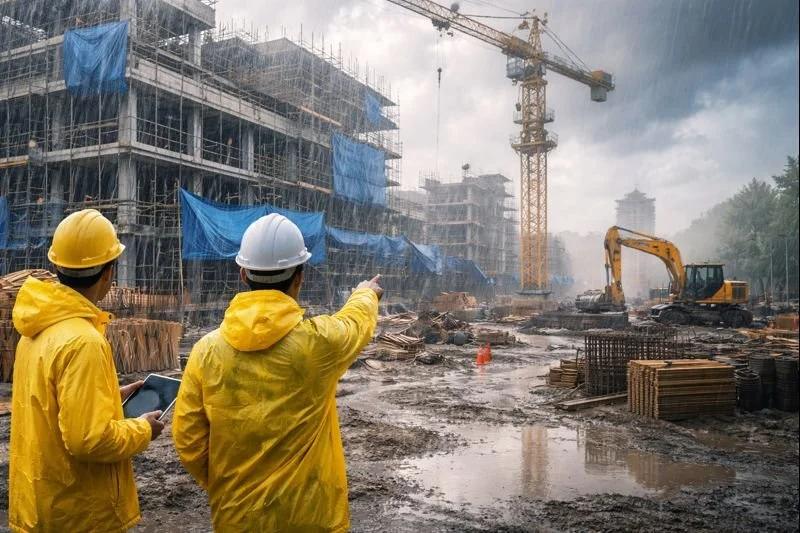
Picture by ana-lucia-videira
Notice Is Not Just Paperwork
One of the biggest practical risks in an SIA EOT claim is late or inadequate notice. Singapore decisions have repeatedly considered the notice requirements under the SIA conditions. In Jia Min Building Construction Pte Ltd v Ann Lee Pte Ltd, the court explained the importance of the contractual requirement for notification within the prescribed period.
For the SIA conditions considered in recent appellate litigation, Clause 23 required the contractor to notify the architect within 28 days of an event, direction or instruction relied upon for an EOT, together with an explanation of why completion would be delayed. The Court of Appeal treated this as a condition precedent to an EOT unless the architect had already indicated willingness to grant one.
The practical lesson is straightforward: Notify early. Explain the event. Identify the contractual ground. Demonstrate the delay. Keep updating the evidence.
Proving the Delay: Critical Path Matters
A delay event alone is not enough. The contractor needs to demonstrate how the event affected the programme and, ultimately, completion. This is where delay analysis, programmes, progress records and contemporaneous documentation become important. Singapore courts have recognised the relevance of critical-path analysis and concurrent delays when assessing EOT issues.
Useful records include:
- Approved and updated construction programmes
- Site diaries and progress photographs
- Architect’s instructions
- RFIs and responses
- Delivery records
- Authority correspondence
- Weather records
- Labour and equipment records
- Meeting minutes
- Daily delay reports
RICS guidance similarly identifies delay costs, EOT clauses and different delay-analysis methods as important areas in construction delay assessment.
What About Concurrent Delay?
Concurrent delay occurs where two or more causes of delay operate during the same period and contribute to delayed completion. This can make an SIA Clause 23 delay claim considerably more complicated. The question becomes: which causes actually affected completion, and which periods should properly be attributed to qualifying events?
The SIA conditions specifically address sequential and concurrent causes of delay. Singapore case law has also recognised that delay assessment may require consideration of multiple causes rather than looking at each event in isolation.
For contractors and project teams, the safest approach is to maintain a clear chronology:
Event → Notice → Programme Impact → Mitigation → Actual Delay → EOT Assessment.
How Can Contractors Strengthen an SIA Clause 23 Claim?
A stronger construction delay claim usually begins long before the final EOT submission.
Contractors should:
- Identify the delay event quickly.
- Check the relevant SIA Clause 23 ground.
- Submit contractual notice within the required timeframe.
- Explain how completion will be affected.
- Take reasonable steps to mitigate the delay.
- Update the programme and preserve contemporaneous records.
- Separate qualifying delay from contractor-caused delay.
- Substantiate the final EOT period with a clear delay analysis.
The objective is not simply to show that something went wrong. It is to establish a contractual chain between the event and the delay to completion. For Singapore projects, where SIA contracts remain an important part of the construction landscape, understanding that distinction can make the difference between a well-substantiated EOT application and a disputed delay claim.
FAQ
Is every force majeure event automatically an EOT?
No. The event must fall within the applicable contractual provision, cause delay to completion, and satisfy the relevant contractual requirements.
Does force majeure automatically mean the contractor gets additional money?
Not necessarily. Extension of time and entitlement to additional costs are separate contractual questions. The applicable contract must be examined to determine whether cost recovery is available.
How long does a contractor have to notify an SIA EOT claim?
The applicable SIA edition and contract amendments should be checked. Under the SIA conditions considered by the Singapore Court of Appeal, the contractor was required to notify the architect within 28 days, subject to the contractual exception where the architect had already indicated willingness to grant an EOT.
What happens if there is concurrent delay?
The contractual provisions and facts must be examined to determine how the overlapping causes affect the EOT assessment. A proper programme and delay analysis can help identify the contribution of each event.
Can a third-party delay qualify as force majeure?
It can depend on the circumstances. Singapore case law demonstrates that third-party delay is not automatically force majeure merely because the contractor did not control the third party. The event must satisfy the contractual test.
Why are contemporaneous records important?
They help establish what happened, when it happened, what work was affected, what mitigation was attempted and whether completion was actually delayed.
References
- Singapore Institute of Architects — SIA Building Contracts and Publications. https://www.google.com/url?sa=t&source=web&rct=j&opi=89978449&url=https://store.sia.org.sg/contracts&ved=2ahUKEwinnvb8pZCXAxUN1zgGHeReGTkQFnoECBsQAQ&usg=AOvVaw3ec1DFxCrUivC74hr-Clmf
- Ser Kim Koi v GTMS Construction Pte Ltd [2022] SGHC(A) 34 — Singapore Court of Appeal. https://www.google.com/url?sa=i&source=web&rct=j&url=https://www.elitigation.sg/gd/s/2022_SGHCA_34&ved=2ahUKEwiUgfnTpJCXAxXz4jgGHcoFMAcQy_kOegoIAggACAAIChAB&opi=89978449&cd&psig=AOvVaw2rRg8pnSmA7b_4jOtkjI7k&ust=1790650925556000
- Ser Kim Koi v GTMS Construction Pte Ltd [2021] SGHC 9 — Singapore High Court. https://legal-wires.com/singapore/gtms-construction-pte-ltd-v-ser-kim-koi-chan-sau-yan-formerly-trading-as-chan-sau-yan-associates-and-another-third-parties-2021-sghc-9/
- Singapore Academy of Law / eLitigation — SIA contract and EOT decisions.
- RICS — Extensions of Time, construction delay guidance. https://www.rics.org/profession-standards/rics-standards-and-guidance/sector-standards/construction-standards/black-book/extensions-of-time
- FIDIC — Extension of Time, contractual guidance. https://fidic.org/faq-page/242
- NEC Contracts — How NEC4 ECC deals with delay and disruption https://www.neccontract.com/news/how-nec4-ecc-deals-with-delay-and-disruption