dk@dkoutsource.com

Construction projects involve substantial financial commitments, intricate processes, and a diverse range of stakeholders. From initial cost estimation and procurement to active contract administration and final completion, potential risks can emerge at virtually every stage of the project lifecycle.
Common challenges such as cost overruns, construction delays, design modifications, material price volatility, labour shortages, contractual disputes, and unforeseen site conditions can heavily impact project outcomes. For businesses operating within Singapore’s built environment, implementing proactive construction risk management is essential for maintaining cost certainty and protecting project profitability.
With the Building and Construction Authority (BCA) projecting robust construction demand—underpinned by landmark developments like Changi Terminal 5, public housing, healthcare, and transport infrastructure—managing risk requires more than simply reacting to problems as they arise; it demands continuous commercial control.
Identifying Construction Risks Early in the Project Lifecycle
Risk is an uncertain event or circumstance that, if it occurs, will affect the outcome of a programme or project. -RICS
Effective risk management must begin long before ground is broken. During the pre-construction and feasibility stages, developers, contractors, and consultants should collaboratively identify potential threats relating to:
- Project costs and budget constraints.
- Subsurface and physical site conditions.
- Design coordination and construction methodology.
- Project programming, scheduling, and contractual obligations.
To manage these uncertainties, project teams should establish a comprehensive risk register to evaluate the likelihood and financial impact of each risk, assign clear responsibility, and define appropriate mitigation measures. Furthermore, early construction cost planning must establish a realistic budget with appropriate contingencies rather than assuming that initial estimates will remain static throughout the project. According to the Royal Institution of Chartered Surveyors (RICS), assessing how risks affect costs and schedules is a fundamental component of modern construction practice.
A risk register is a central record of the risks identified on a project, typically documenting the nature of each risk, its potential consequences, impact rating, and the person responsible for managing it.-RICS
Managing Financial Risk and Controlling Project Budgets
Financial uncertainty represents one of the most critical challenges in construction. Cost overruns are frequently triggered by inaccurate estimation, post-contract scope changes, inflation, volatile material prices, procurement delays, and unexpected site works. To counter these pressures, the Singapore Institute of Surveyors and Valuers (SISV) highlights the Quantity Surveyor (QS) as an essential construction cost consultant, providing critical financial advice, feasibility studies, bills of quantities, life cycle costing, and cost forecasting.
A consultant QS supports project stability from inception to completion:
| Project Stage | QS Risk Management Focus | Examples |
| Pre-Contract | Establishing realistic cost expectations | Cost plans, feasibility assessments, budget forecasts |
| Procurement | Managing commercial and pricing uncertainty | Tender evaluation, procurement strategies, material cost analysis |
| Post-Contract | Monitoring financial performance and changes | Progress payments, variations, claims and expenditure |
| Completion | Finalising project costs | Final account, agreed variations and outstanding claims |
For example, if material costs rise during procurement, a QS can analyse the commercial impact and help teams identify alternative procurement strategies or material specifications to preserve quality and performance.
Mitigating Design and Scope Uncertainties
Design changes introduced after construction has commenced represent a significant risk, often inflating material and labor costs, disrupting schedule sequences, and triggering contractual disputes.
Project teams can control these risks through:
- Rigorous Design Coordination: Architects, engineers, contractors, and quantity surveyors must collaborate to identify omissions, design clashes, and cost implications before site operations progress too far.
- Clearly Defined Project Scope: Ambiguous requirements often result in variation orders, additional works, and subsequent claims. Reviewing drawings, specifications, contract documents, and bills of quantities prior to tendering ensures discrepancies are resolved before they escalate into major financial liabilities.
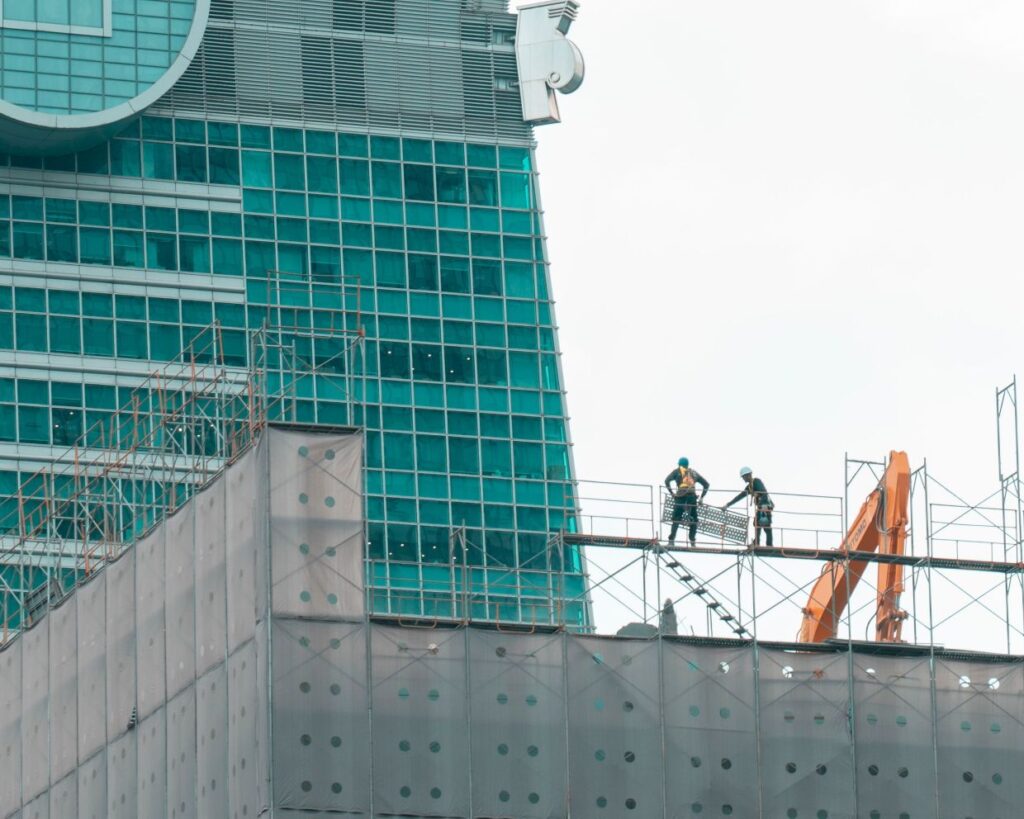
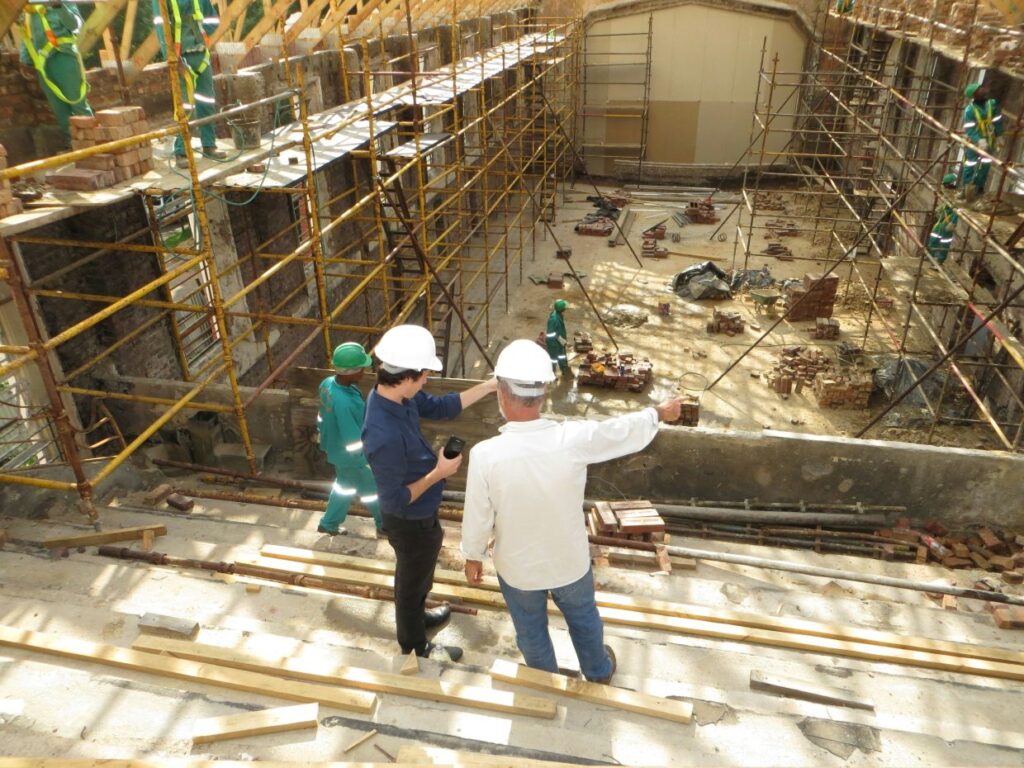
Picture by Jimmy Laio on Pexels
Commercial Governance: Procurement and Contract Risks
A project’s risk profile is heavily influenced by its chosen procurement strategy. Whether utilizing traditional procurement, Design and Build, or alternative routes, each framework carries distinct implications for design responsibility, schedule risk, contract obligations, and overall cost certainty.
To protect commercial interests, construction contracts must clearly define:
- Detailed responsibilities and payment terms.
- Formal variation and change management procedures.
- Extension of Time (EOT) provisions.
- Structured dispute resolution processes.
A consultant quantity surveyor provides vital expertise in this arena by managing tender preparation, conducting objective tender evaluations, administering contracts, and ensuring balanced risk allocation throughout construction.
Active Risk Management on the Job Site
Construction risk management remains a continuous process that must be sustained throughout the active construction phase. New risks—such as poor subcontractor performance, labour shortages, delayed material deliveries, equipment failures, safety hazards, and programme disruptions—can emerge daily.
In Singapore’s high-demand Built Environment, where the BCA drives productivity, innovation, and industry-wide collaboration, executing larger and more complex projects requires vigilant cost control.
Project teams must continuously monitor:
- Active project budgets and cash flow.
- Procurement status and material lead times.
- The master construction programme and schedule.
- Progress payments, variations, and potential claims.
Safeguarding Project Completion and Closeout
The final stages of a construction project require meticulous financial and administrative governance. Outstanding defects, testing and commissioning, incomplete works, unresolved variations, and outstanding claims can easily delay project closeout and strain relationships.
Before final handover, project teams should document and resolve all outstanding works. Furthermore, the QS reviews the final account to ensure all agreed variations, interim payments, and claims are accurately consolidated. Documenting lessons learned from the completed project ensures that future construction management, estimating, and risk assessment are continually improved.
The Bottom Line of Construction Risk Management
While construction risks cannot be completely eliminated, they can be successfully managed through structured cost control, balanced contract administration, and disciplined quantity surveying. By combining early cost planning with continuous risk management, businesses can make data-driven decisions that protect project budgets, minimize uncertainty, and deliver superior construction outcomes.
References
- Building and Construction Authority (BCA) — Steady construction demand in 2026 as Singapore steps up support for Built Environment firms through collaboration and innovation https://www1.bca.gov.sg/resources/newsroom/steady-construction-demand-in-2026-as-singapore-steps-up-support-for-built-environment-firms-through-collaboration-and-innovation/
- Building and Construction Authority (BCA) — Strengthening Singapore’s Built Environment https://www1.bca.gov.sg/resources/newsroom/strengthening-singapore-s-built-environment–advancing-built-environment-professions-and-improving-liveability-in-private-developments/
- Singapore Institute of Surveyors and Valuers (SISV) — Quantity Surveying https://www.sisv.org.sg/qs-about.aspx
- Royal Institution of Chartered Surveyors (RICS) — Risk Management in Construction Projects https://www.rics.org/training-events/training-courses/commercial-management-fundamentals-training/module-eleven
- Royal Institution of Chartered Surveyors (RICS) — What is a Quantity Surveyor? https://www.rics.org/surveyor-careers/surveying/what-surveyors-do/what-is-a-quantity-surveyor