dk@dkoutsource.com


Summary: Payment disputes in construction can affect cash flow, project progress and relationships between employers, contractors, subcontractors and suppliers. This article looks at common causes of construction payment disputes, practical ways to prevent them, and the dispute resolution options available in Singapore and other construction markets.
What Are Payment Disputes in Construction?
A payment dispute occurs when parties disagree over whether money is due, how much should be paid, or when payment should be made under a construction contract. Disputes may involve progress payments, variations, retention sums, delay-related costs, extensions of time or the final account. – BCA
The Singapore Building and Construction Industry Security of Payment Act provides a useful framework for understanding the importance of payment in construction. The Building and Construction Authority (BCA) describes the Act as providing a “fast and low-cost adjudication mechanism” for payment disputes.
Adjudication is a process where an independent third party considers the parties’ positions and makes a determination on the dispute, usually within a much shorter timeframe than traditional litigation. – Cambridge Dictionary
Payment problems can arise for several reasons: unclear contract terms, disagreements over valuation, incomplete supporting records, disputed variations, delayed certification or concerns about the quality or progress of work.
Common Causes of Construction Payment Disputes
The causes are often similar across different markets:
- Unclear payment terms: Contracts may not clearly explain valuation methods, payment dates or supporting documentation.
- Disputed variations: Parties may disagree about whether additional work was instructed, how it should be valued or whether the contractor is entitled to additional payment.
- Different measurements: The employer and contractor may use different quantities, rates or methods of measurement.
- Incomplete records: Missing site records, instructions, invoices, delivery orders or progress records can make claims harder to substantiate.
- Delayed payment responses: Late or inadequate responses can create cash-flow pressure and escalate disagreements.
- Final account disagreements: Parties may agree on most interim payments but still disagree substantially when settling the final account.
FIDIC guidance similarly stresses the importance of presenting claims logically, including the contract basis, cause, effect, entitlement and quantum.
How Can Payment Disputes Be Prevented?
Prevention should begin before a disagreement becomes a formal payment dispute. Clear contractual procedures are important, but they need to be supported by consistent project administration.
| Risk area | Practical approach |
| Payment claims | Submit claims on time with clear supporting documents |
| Variations | Record instructions, scope changes and agreed rates |
| Measurement | Maintain consistent measurement records |
| Progress | Keep updated site and progress documentation |
| Payment responses | Clearly identify accepted, disputed and withheld amounts |
| Final accounts | Reconcile differences progressively instead of waiting until completion |
For Singapore projects, parties should also understand the requirements of the Security of Payment Act, including procedures relating to payment claims, payment responses and adjudication. The current legislation contains specific provisions covering progress payments, valuation, payment claims, payment responses and adjudication.
Resolving Payment Disputes: What Options Are Available?
The appropriate payment dispute resolution method depends on the contract, value of the dispute, urgency and relationship between the parties.
-
Negotiation
Negotiation is often the first step. The parties can review the contract, valuation, supporting records and disputed items and attempt to reach an agreement without formal proceedings. A practical approach is to separate the undisputed amount from the disputed amount. This can help maintain cash flow while the remaining issues are discussed.
-
Mediation
Mediation involves an independent mediator helping the parties reach a mutually acceptable settlement. It can be useful where the parties want to preserve a working relationship or resolve several interconnected issues at the same time.
-
Adjudication
Adjudication is particularly important for construction payment disputes because it can provide a relatively quick decision.
In Singapore, the Security of Payment Act gives eligible parties a statutory route to seek progress payments and adjudication. BCA states that a claimant may apply for adjudication when it disagrees with the response amount or does not receive the payment stated in the payment response.
-
Arbitration or Litigation
For more complex or high-value disputes, arbitration or litigation may be appropriate, depending on the contract and applicable law.
Arbitration is commonly used for international construction disputes. FIDIC contracts, for example, contain mechanisms addressing claims, dispute adjudication, amicable settlement and arbitration. The ICC also publishes specific guidance and procedures for construction arbitration.

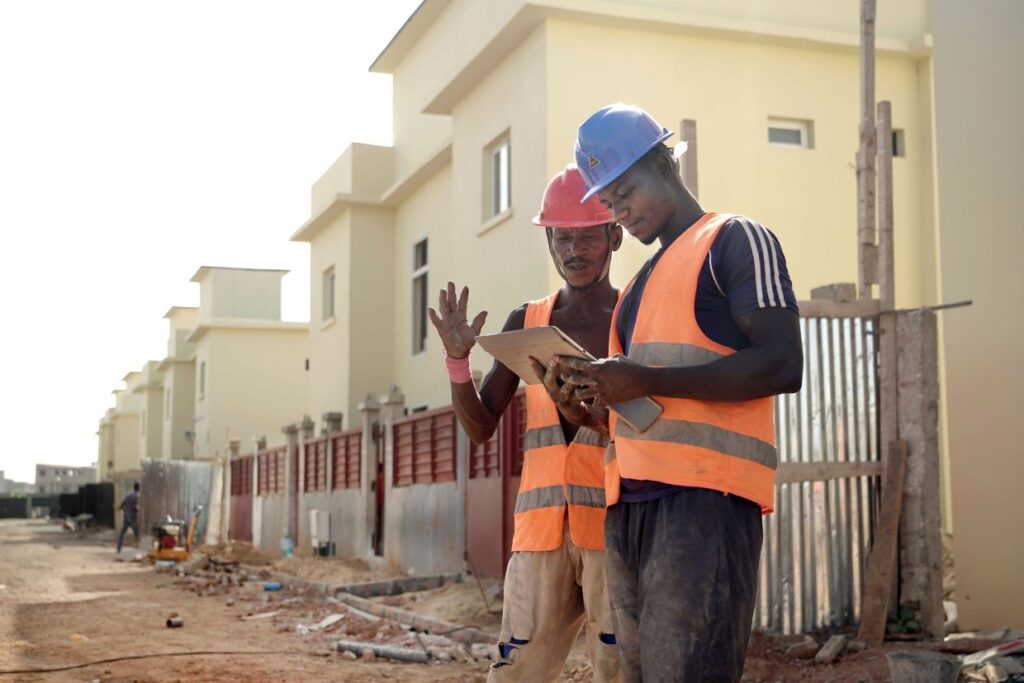
Picture by Mikhail Nilov on Pexels
How Can a Quantity Surveyor Help?
A consultant quantity surveyor can play an important role in preventing and managing payment disputes in construction.
This may include:
- Reviewing payment applications and supporting documents.
- Checking quantities, rates and valuations.
- Assessing variations and contractual entitlements.
- Maintaining records supporting claims.
- Preparing payment assessments and final accounts.
- Analysing the financial impact of delays and changes.
- Assisting lawyers or dispute teams with quantum-related evidence.
Good cost documentation does not necessarily prevent every dispute, but it can make the facts easier to establish when a disagreement occurs.
Conclusion
Construction payment disputes can quickly become a project risk when disagreements over valuation or entitlement affect cash flow. Early documentation, clear payment procedures and regular account reconciliation can reduce the likelihood of disputes escalating.
When a dispute does arise, the objective should not always be to proceed directly to court. Negotiation, mediation, adjudication and arbitration can each have a role: the right approach depends on the contract, circumstances and commercial priorities of the parties.
Frequently Asked Questions
What is a payment dispute in construction?
Answer: A payment dispute occurs when parties disagree about whether payment is due, how much is payable, or when payment should be made under a construction contract.
What are the most common construction payment disputes?
Answer: Common disputes involve progress payments, variations, measurements, retention, final accounts, delayed certification and claims for additional costs.
How are payment disputes resolved in Singapore?
Answer: Depending on the circumstances, parties may use negotiation, mediation, adjudication, arbitration or litigation. The Security of Payment Act provides a statutory adjudication framework for eligible construction payment claims.
What is the difference between adjudication and arbitration?
Answer: Adjudication is generally designed to provide a faster determination, particularly for payment disputes. Arbitration is a more formal dispute resolution process in which an arbitrator or tribunal determines the dispute under the applicable arbitration agreement and rules.
Can a quantity surveyor help with a payment dispute?
Answer: Yes. A quantity surveyor can assist with valuation, measurements, variations, payment assessments, final accounts and the preparation or review of quantum-related evidence.
References
- Building and Construction Authority — Security of Payment Act https://www1.bca.gov.sg/growth-and-transformation/procurement/procurement-and-legal-frameworks/security-of-payment-act/
- Singapore Law Gazette — Security of Payments and Construction Adjudication https://v1.lawgazette.com.sg/2005-8/Ads/Apt1.pdf
- Singapore Law Gazette — Challenging an Adjudication Determination https://v1.lawgazette.com.sg/2012-02/329.htm
- FIDIC — Construction Claims & Responses https://fidic.org/books/construction-claims-responses-effective-writing-presentation
- FIDIC — Construction Contract: MDB Harmonised Edition https://fidic.org/books/construction-contract-mdb-harmonised-ed-version-3-june-2010-harmonised-red-book
- RICS — Consumer Adjudication Service https://www.rics.org/dispute-resolution-service/drs-services/consumer-disputes/rics-consumer-adjudication-service-for-which-trusted-traders