dk@dkoutsource.com


The construction industry is built on collaboration, bringing together clients, developers, architects, engineers, contractors, subcontractors, suppliers, and consultant quantity surveyors. While every project relies on clear communication to achieve successful outcomes, communication breakdowns can quickly trigger costly construction disputes, project delays, variation order disagreements, and even legal claims. Having effective, clear communication in construction remains one of the most powerful tools available to reduce risk across commercial, residential, infrastructure, and industrial developments.
Why Communication Failures Drive Disputes
Many construction claims do not stem from poor workmanship on-site. Instead, they typically arise from administrative and coordination gaps:
- Unclear instructions and undocumented decisions.
- Delayed responses and conflicting project information.
- Unrealistic expectations between project stakeholders.
Even minor communication gaps can create confusion over responsibilities, project scope, and contractual obligations, eventually escalating into costly disagreements.
A Construction claim is a formal request for additional payment, an extension of time, or other contractual entitlement arising from an event or circumstance during a construction project. -FIDIC
For example, a poorly defined project scope can lead to conflicting interpretations of the work required, while incomplete drawings or specifications force contractors to proceed based on incorrect assumptions. Delayed approvals disrupt the construction programme, and misunderstood variation orders often lead to disagreements over additional costs and time extensions.
When project changes, site decisions, or meeting minutes are not properly documented, resolving these issues becomes exceptionally challenging, which significantly increases the risk of contract disputes and expensive litigation.
Establishing Clear Channels from Day One
Successful construction project management must begin before physical work starts. During project planning, all stakeholders should establish clear protocols for how information will flow throughout the project lifecycle. A structured communication plan should explicitly define who is responsible for:
- Approving design changes and issuing site instructions.
- Responding to Requests for Information (RFIs).
- Conducting meetings and distributing records.
- Controlling project documents and reporting progress.
Establishing these protocols from the outset reduces confusion, improves accountability, and ensures everyone works from the latest project data. This coordination is especially critical on large construction projects where multiple consultants, contractors, and specialist subcontractors must work together under tight schedules.
The Power of Rigorous Project Documentation
Contemporary records are records created and maintained at or around the time a construction event occurs, providing evidence of what happened and its effects on the project. -FIDIC
Consistent, accurate documentation is a project team’s strongest defense against future disputes. Throughout the project, teams must maintain a reliable history of decisions to resolve disagreements based on documented facts rather than differing recollections. Essential records include:
| Project record | What it helps establish | Potential dispute risk if missing |
| Site instructions | What work or change was instructed | Disagreement over scope |
| Meeting minutes | Decisions, responsibilities and agreed actions | Conflicting recollections |
| RFIs and responses | Clarifications and design information | Claims arising from ambiguity |
| Design revisions | When and how the design changed | Variation and delay disputes |
| Delay notices | Timing and nature of a delay event | Difficulty establishing entitlement |
| Variation orders | Scope, cost and time implications of changes | Disagreement over additional payment |
| Site photographs | Physical conditions and progress | Difficulty proving site conditions or progress |
Modern digital document management systems can drastically improve communication by ensuring all stakeholders have secure, real-time access to the latest project information from a single source.
Picture by fiqih-alfarish on Unsplash
Multi-Disciplinary Collaboration and the Role of the QS
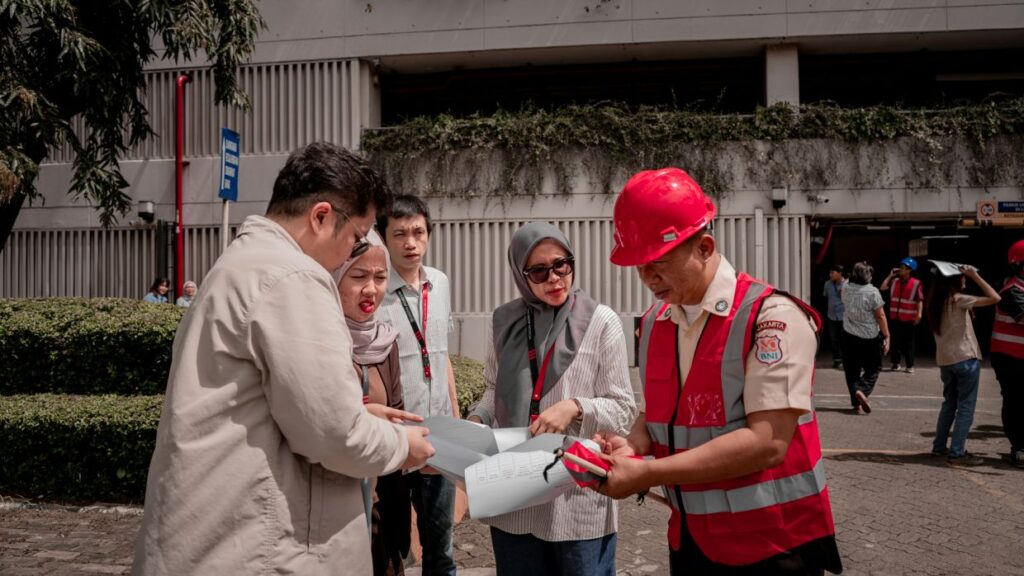
Construction projects require numerous disciplines to work in parallel. While architects focus on design intent, engineers ensure structural integrity, and contractors oversee site execution, consultant quantity surveyors manage cost planning, cost management, procurement, contract administration, and overall financial control. Regular coordination meetings allow these teams to discuss construction sequencing, procurement schedules, budget updates, design coordination, site constraints, and project risks before they escalate. This open communication strengthens decision-making and prevents disputes from affecting project delivery.
Leveraging Digital Construction Tools
Modern technology is transforming project communication. Leveraging Building Information Modelling (BIM), cloud-based collaboration platforms, digital project management software, and common data environments reduces information gaps and improves coordination. These technologies allow teams to access updated drawings instantly, monitor progress, track design changes, manage approvals, and record site issues in real time. This establishes a single source of truth, removing the conflicting information that often fuels construction disputes.
An International Best Practice
Singapore serves as a prime example of how structured communication improves project delivery. The widespread adoption of BIM and collaborative project delivery methods in Singapore has significantly enhanced coordination between clients, consultants, contractors, and government agencies. Similar approaches are widely used across the United Kingdom, Australia, Canada, and Europe, proving that effective communication is globally recognized as an international best practice for reducing construction risk.
Ultimate Meaning of Clear Communication in Construction
Successful construction projects are ultimately built on trust, transparency, and collaboration. By investing in structured communication, meticulous documentation, digital collaboration tools, and professional consultant quantity surveyor services, organizations can mitigate disputes, improve contract administration, control costs, and keep projects on schedule. As projects grow more complex worldwide, companies that prioritize proactive communication are best positioned to deliver quality work on time and within budget.
References
- Building and Construction Authority (BCA). Official Website. https://www1.bca.gov.sg/
- Singapore Mediation Centre (SMC). Official Website. https://www.mediation.com.sg/
- Royal Institution of Chartered Surveyors (RICS). Official Website. https://www.rics.org/
- Chartered Institute of Building (CIOB). Official Website. https://www.ciob.org/
- FIDIC – International Federation of Consulting Engineers. Official Website. https://fidic.org/
- Project Management Institute (PMI). Official Website. https://www.pmi.org/