dk@dkoutsource.com


In the construction sector, project disputes are commonly assumed to stem from structural project delays, cost overruns, or disagreements over the quality of completed work. However, the foundational root cause of many construction conflicts is far more administrative: poor documentation. When critical records are missing, instructions are left undocumented, and communications remain inconsistent, minor site issues frequently escalate into expensive claims and adversarial legal disputes.
Comprehensive construction documentation establishes a factual, contemporaneous history of what was agreed, what was built, and how decisions were made. Without this objective framework, developers, contractors, subcontractors, and consultants find themselves unable to substantiate their positions when commercial disagreements arise.
Contemporaneous Records are records created or maintained at or near the time an event occurs, providing evidence of site activities, instructions, decisions, costs, and other project events. – Society of Construction Law
Why Modern Projects Require Objective Records
Construction developments involve a dense network of stakeholders, including owners, contractors, subcontractors, architects, engineers, and suppliers. Given the sheer volume of transactions and parallel operations, misunderstandings can occur at any stage of the project lifecycle. Proper project documentation acts as an impartial, contemporaneous shield, preserving the facts of the build.
To maintain commercial alignment, project teams must systematically maintain several core record types:
- Contracts and Technical Specifications: The baseline legal and physical requirements.
- Site Diaries and Daily Reports: Real-time logging of site conditions and activities.
- Meeting Minutes and RFI Logs: Formal tracking of design clarifications and decisions.
- Variation Orders and Email Correspondence: Clear evidence of scope modifications and agreements.
- Inspection, Testing, and Payment Records: Verification of quality standards and certified progress.
When these records are maintained in an orderly, accessible manner, emerging disputes can often be resolved quickly and amicably before parties adopt entrenched positions. In contrast, missing or incomplete documentation forces stakeholders to rely on fading memories or conflicting interpretations, making resolution far more difficult and frequently forcing the parties into formal dispute resolution.
The Compounding Financial Impact of Missing Records
The severe consequences of inadequate documentation are rarely felt immediately; instead, they emerge months or even years after the initial administrative failure occurs.
A classic industry scenario involves a verbal instruction issued on-site to carry out additional work. The contractor executes the task under tight deadlines, but the instruction is never formally written down, priced, or signed off. Months later, when the contractor submits a progress claim for the associated costs, the client disputes the entitlement, arguing the work fell within the contract’s original scope. Without supporting records, proving entitlement becomes exceptionally difficult. What should have been a routine valuation discussion quickly deteriorates into a formal construction claim, statutory adjudication, or prolonged litigation.
The commercial fallout of these evidentiary gaps includes:
- Delayed payments and severely restricted cash flow.
- Escalated legal fees and administrative overheads.
- Slowing project momentum and schedule delays.
- Eroded profit margins and reduced project viability.
- Severely damaged professional relationships and reputational harm.
In many cases, the direct financial cost of formally resolving a documentation-driven dispute can easily exceed the monetary value of the original disagreement itself.

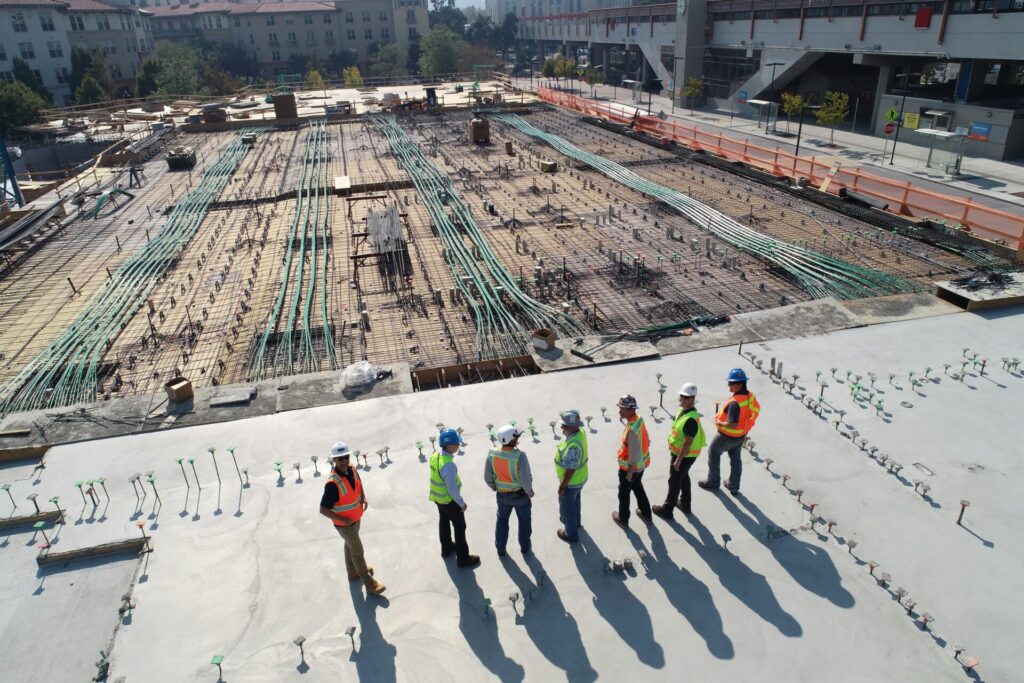
Picture by gustavo fring on Pexels
A Global Commercial Reality: From East to West
The critical need for rigorous documentation spans across global construction markets, where statutory and contractual frameworks place the burden of proof squarely on the claimant:
- Singapore (The SOP Act): Under the Building and Construction Industry Security of Payment (SOP) Act, contractors and subcontractors pursuing progress claims must present robust, contemporaneous evidence to prove work-in-progress values and substantiate claims for additional variation costs. If a subcontractor executes several design changes on a commercial development without formal written approval, they face severe legal and financial hurdles when trying to recover those payments through statutory adjudication.
- Western & Middle Eastern Markets: This commercial principle remains identical whether a project is executed in Singapore, Australia, the United Kingdom, the Middle East, or North America. Regardless of the local legal jurisdiction, the party with the most comprehensive, organized contemporary records is almost always the party that successfully establishes the facts and secures a favorable resolution.
Systemic Record-Keeping Failures on the Job Site
To prevent documentation from failing during a claim, project managers must identify and eliminate four recurring administrative vulnerabilities:
| Documentation Failure | Potential Dispute Risk | Record to Maintain |
| Verbal instructions | Disputes over scope, cost and responsibility | Written site instructions and confirmation emails |
| Incomplete variation records | Difficulty proving entitlement to additional payment | Approved variation orders, quotations and valuation records |
| Deficient site diaries | Difficulty substantiating delay and disruption claims | Daily records of labour, weather, equipment and site events |
| Scattered correspondence | Important evidence may be overlooked or difficult to retrieve | Centralised project correspondence and document registers |
The Hybrid Solution: Digital Platforms and QS Expertise
As projects grow in complexity, modern digital document management systems are transforming contract administration by centralizing approvals, RFIs, progress photos, and site records in a secure cloud environment. This technology provides absolute transparency and establishes an unalterable, time-stamped audit trail of the project.
However, technology is only an enabler; its effectiveness depends entirely on the discipline of the project team to enter accurate data in a timely and organized manner. This is where a consultant quantity surveyor (QS) adds critical commercial value. By establishing strict document control procedures, managing variation records, and auditing site documentation, experienced quantity surveyors ensure that the project’s administrative foundation remains robust and legally defensible.
PROACTIVE DISPUTE PREVENTION CHECKLIST
- Document all site instructions in writing immediately
- Maintain detailed, contemporaneous daily site diaries
- Issue formal variation and EOT notices promptly
- Formally record and distribute all progress meeting minutes
- Systematically organize and centralize all project emails
- Capture and archive high-resolution progress photographs
- Implement strict document control protocols from day one
Conclusion
Ultimately, the vast majority of construction disputes do not arise from poor physical workmanship or malicious intent. Instead, they occur because of a critical lack of reliable, contemporaneous evidence to support what actually happened on-site. Accurate, disciplined documentation remains the single most effective tool for protecting contractual rights, securing cash flow, and de-risking project delivery. By investing in rigorous record-keeping processes and engaging professional quantity surveying services early, construction firms can safeguard their budgets and avoid the immense hidden costs of poor documentation.
References
- Singapore Statutes Online. Building and Construction Industry Security of Payment Act. https://sso.agc.gov.sg
- Building and Construction Authority (BCA) Singapore. Industry Resources and Payment Practices. https://www1.bca.gov.sg
- Royal Institution of Chartered Surveyors (RICS). Construction Claims and Dispute Management Guidance. https://www.rics.org
- Chartered Institute of Building (CIOB). Construction Record Keeping and Documentation Best Practices. https://www.ciob.org