dk@dkoutsource.com

The built environment sector is entering a new phase where the future of construction is shaped by innovation, adaptability, and collaboration.
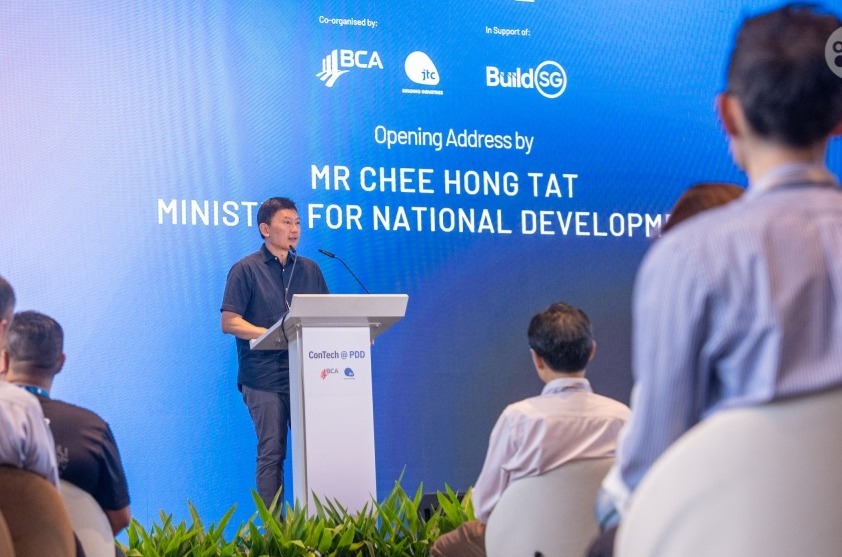
Recently, Minister for National Development Chee Hong Tat spoke about the importance of taking calculated risks to encourage innovation within Singapore’s built environment sector. He mentioned, that instead of avoiding uncertainty, companies should start to create opportunities to not only test new solutions, but also to learn from setbacks, and improve through continuous experimentation.
Traditionally, due to safety considerations and financial risks, the construction industry has taken various precautions as the complexity of projects increase. However, as challenges such as manpower constraints, rising costs, and increasing project demands continue to emerge, embracing innovation has become essential for long-term growth.
New technologies such as robotics, automation, artificial intelligence (AI), and digital solutions are changing how projects are designed, constructed, and managed. These advancements can help improve productivity, enhance collaboration, and provide project teams with better information for decision-making.
However, innovation and new technologies aren’t the only thing needed for success. There must be a willingness across the industry to rethink traditional processes and develop new approaches that improve efficiency while at the same time, maintain quality and safety standards.
Managing Risk Through Smarter Construction Practices
Innovation and risk management must work together. Even though new technologies can create opportunities for people, they also require careful planning, financial evaluation, and effective implementation.
This then is where professional advisory services become increasingly important. Consultant quantity surveyors and cost consultants play an important role in helping organisations evaluate the financial impact of adopting new construction methods. This starts from preparing accurate construction cost estimates to providing cost advisory support throughout the project lifecycle.
As projects increase in complexity, engaging an outsourced consultant quantity surveyor or cost management consultant can help businesses better their cost control, improve budget accuracy, and make good decisions. Through effective construction cost management, project teams can balance innovation with financial responsibility while ensuring that new solutions deliver measurable value.
Building a More Innovative Industry
The Built Environment Innovation Hub (BEIH) provides a platform for companies to test and refine emerging technologies through innovation sandboxes. These initiatives allow companies in the construction industry to experiment with new solutions, practical applications, and accelerate the use of new technologies that can improve construction productivity.
For consultants who work on project management, cost planning, and construction delivery, these changes create new ways of working. Today, digital tools, improved data management, and integrated collaboration platforms can help people identify potential issues earlier which would then help them make proper decisions.
The role of construction professionals is also evolving. In addition to their tasks, consultants need to know more about how new ideas affect project costs and the value they provide.
Shaping the Future of Construction
The future of construction won’t be about removing risks but about learning how to manage them effectively. Being ready to experiment, collaborate, and adopt new solutions will allow the industry to overcome challenges and improve project outcomes.
With the support of cost consultancy, technology adoption, and stronger collaboration between developers, contractors, the built environment sector can continue to progress towards a more productive future. Innovation requires careful planning; and by taking calculated risks, the construction industry can build smarter, more sustainable solutions for the days ahead.
References
- Ler, Sean. “Govt backs ‘calculated risks’ in built environment sector with fee waivers, rule changes: Chee Hong Tat.” AsiaOne, 17 July 2026.
- Building and Construction Authority (BCA). “New measures to accelerate productivity and innovation in the Built Environment Sector.” 17 July 2026.
- JTC Corporation. “New pro-enterprise measures to accelerate Built Environment Sector Transformation.” 30 April 2026.