 dk@dkoutsource.com



Summary: Subcontractor payment certification plays a crucial role in maintaining construction cash flow and financial control. However, inaccurate valuations, premature certification and mismatched upstream and downstream payment assessments can expose contractors to significant financial risks. This article explains how quantity surveying, disciplined payment certification, effective contract administration and proper documentation can help prevent over-certification, reduce cash flow risks and protect project profitability, with practical considerations for Singapore and international construction projects.
Understanding Subcontractor Payment Certification
Subcontractor payment certification is the process of assessing and confirming the amount payable to a subcontractor for work completed, materials supplied or other contractual entitlements, subject to the applicable contract.
Unlike simply approving an invoice, certification requires a proper assessment of:
- Measured work progress against actual site conditions.
- Contract rates and agreed pricing schedules.
- Approved variations and their supporting records.
- Applicable retention sums, previous payments and deductions.
- Contractual requirements for materials, testing and supporting evidence.
A payment certificate should reflect the subcontractor’s contractual entitlement, not merely the amount requested.
What Is Over-Certification and Why Does It Matter?
Over-certification occurs when a payment certificate approves a higher amount than is properly due under the contract at that assessment date.
Common causes include:
- Inflated progress percentages or inaccurate quantity measurements.
- Certifying incomplete work as fully completed.
- Including unapproved or inadequately substantiated variations.
- Double-counting work across successive payment claims.
- Failing to deduct previous certifications, retention or applicable adjustments.
The consequences extend beyond accounting discrepancies: over-certification can weaken cost control, distort project forecasts and create recovery difficulties if payments exceed the subcontractor’s eventual entitlement.
The upstream cashflow trap
A contractor may certify subcontractor work downstream before securing equivalent recognition upstream. This creates a potential funding gap, particularly where valuations, supporting evidence or contractual payment procedures differ.
For example, a subcontractor claims $200,000, and $180,000 is certified based on its contractual entitlement. However, the corresponding upstream assessment recognises only $150,000. The contractor faces a potential $30,000 timing or funding gap, subject to the actual payment obligations and any valid contractual adjustments.
Importantly, this difference does not automatically mean the subcontractor is overpaid or that the contractor can withhold the difference.
Practical Controls: How to Prevent Over-Certification
Effective construction payment management begins with a consistent assessment process.
| Control | Recommended practice |
| Site measurement | Verify quantities against drawings, measurements and site records. |
| Progress assessment | Assess actual completion against defined work items and milestones. |
| Variation control | Track instructions, approvals, valuation and outstanding quotations separately. |
| Payment reconciliation | Compare previous certificates, current claims, retention and deductions. |
| Documentation | Maintain photographs, inspection records, delivery orders and measurement sheets. |
| Independent review | Introduce appropriate checks for high-value or disputed assessments. |
A practical monthly payment workflow should follow these steps:
- Receive: Log the payment claim and verify submission requirements.
- Measure: Check completed work, quantities and supporting evidence.
- Assess: Apply contractual rates, valuation rules and adjustments.
- Reconcile: Check cumulative certified amounts against the contract budget and previous assessments.
- Respond: Issue the required payment response or certificate within the applicable contractual and statutory timelines.
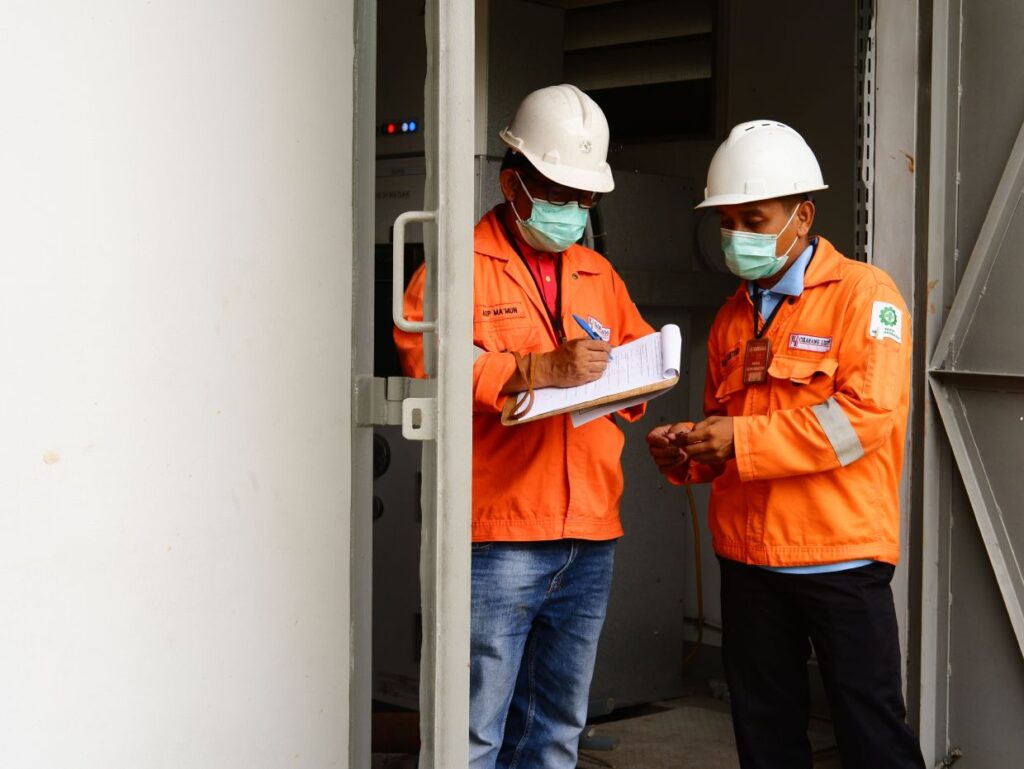
Picture by annaszakaria on Pexels
Singapore and International Contract Considerations
Singapore’s Building and Construction Industry Security of Payment Act (SOPA) supports cash flow by providing statutory rights to progress payments and a payment adjudication mechanism. The Building and Construction Authority (BCA) explains that eligible claimants who have carried out construction work or supplied goods or services under a contract may claim payment under the Act.
Section 6 addresses the amount of a progress payment, while sections 10 and 11 cover payment claims and responses. Parties should verify the applicable requirements, deadlines and current legislation.
A critical distinction: pay-when-paid clauses and upstream valuation differences are not interchangeable. Singapore’s SOPA restricts provisions that make payment conditional on payment under another contract, subject to statutory exceptions. A contractor should not assume that an upstream shortfall automatically justifies withholding a subcontractor’s payment.
Internationally, payment legislation, certification procedures and standard forms differ. Contractors operating across jurisdictions must review local requirements rather than applying Singapore practices universally.
Definitions and Professional Guidance
Two useful concepts help clarify the assessment process:
- Progress payment: Under Singapore’s SOPA, this includes payment for construction work carried out or goods or services supplied under a contract, including certain single or final payments.
- Quantity surveying: A professional discipline concerned with construction costs, measurement, procurement and commercial management throughout a project.
The RICS New Rules of Measurement (NRM) provide structured guidance for measurement and cost management. Consistent measurement methods and transparent records support more defensible valuations.
The underlying principle is straightforward, which is that certifications should be evidence-based, contract-compliant and traceable.
Protecting Cash Flow Without Compromising Accuracy
Preventing construction payment disputes requires more than careful arithmetic. Contractors should establish clear payment procedures, realistic cashflow forecasts and early communication channels.
Recommended measures include:
- Maintain a subcontract payment register tracking claims, certificates, due dates and actual payments.
- Monitor upstream and downstream valuations without treating them as automatically identical.
- Escalate discrepancies before certification deadlines.
- Separate disputed variations from properly supported work assessments.
- Review subcontract payment terms, retention and supporting-document requirements at award.
Conclusion
Accurate subcontractor payment certification protects project cash flow, commercial relationships and financial accountability. By strengthening quantity surveying controls, maintaining reliable records and understanding payment obligations, contractors can reduce over-certification, identify funding gaps early and manage construction payment risks more effectively.
Contact us for our Quantity Surveying Services.
Frequently Asked Questions
- What is subcontractor payment certification?
Answer: Subcontractor payment certification is the assessment and confirmation of the amount payable to a subcontractor for completed work, supplied materials and other contractual entitlements. - What is over-certification in construction?
Answer: Over-certification occurs when a payment certificate approves more than the amount properly due under the contract, potentially resulting in financial losses and cashflow issues. - How can contractors prevent over-certification?
Answer: Contractors can verify site progress, measure completed work, reconcile previous certificates, review variations and maintain accurate supporting documentation. - Can a main contractor withhold subcontractor payments if the client has not paid?
Answer: Not automatically. In Singapore, the Security of Payment Act restricts certain conditional payment provisions. Contractors should review applicable legislation, contractual obligations and any statutory exceptions before withholding payment. - How does quantity surveying help manage subcontractor payment risks?
Answer: Quantity surveying supports accurate measurement, cost monitoring, variation assessments and payment verification, helping contractors improve cost control and identify potential discrepancies early.
References
Building and Construction Authority (BCA) – Singapore’s payment framework, progress payment rights and adjudication. https://www1.bca.gov.sg/growth-and-transformation/procurement/procurement-and-legal-frameworks/security-of-payment-act/
Singapore Statutes Online – Building and Construction Industry Security of Payment https://sso.agc.gov.sg/Act/BCISPA2004
Building and Construction Authority (BCA) – Practical guidance on payment claims, responses and adjudication https://isomer-user-content.by.gov.sg/338/abd89729-beea-46bd-8fcb-658864ead7a5/sop_infokit.pdf
RICS – Standard measurement rules and cost management guidance https://www.rics.org/profession-standards/rics-standards-and-guidance/sector-standards/construction-standards/nrm
Singapore Statutes Online – Section 11: Payment responses – Requirements for payment responses, including response amounts and reasons for withholding https://sso.agc.gov.sg/Act-Rev/30B/Published
Singapore High Court – 2022 SGHC 276 Discussion of contractual progress payments and valuation of work https://www.elitigation.sg/gd/s/2022_SGHC_276