 dk@dkoutsource.com

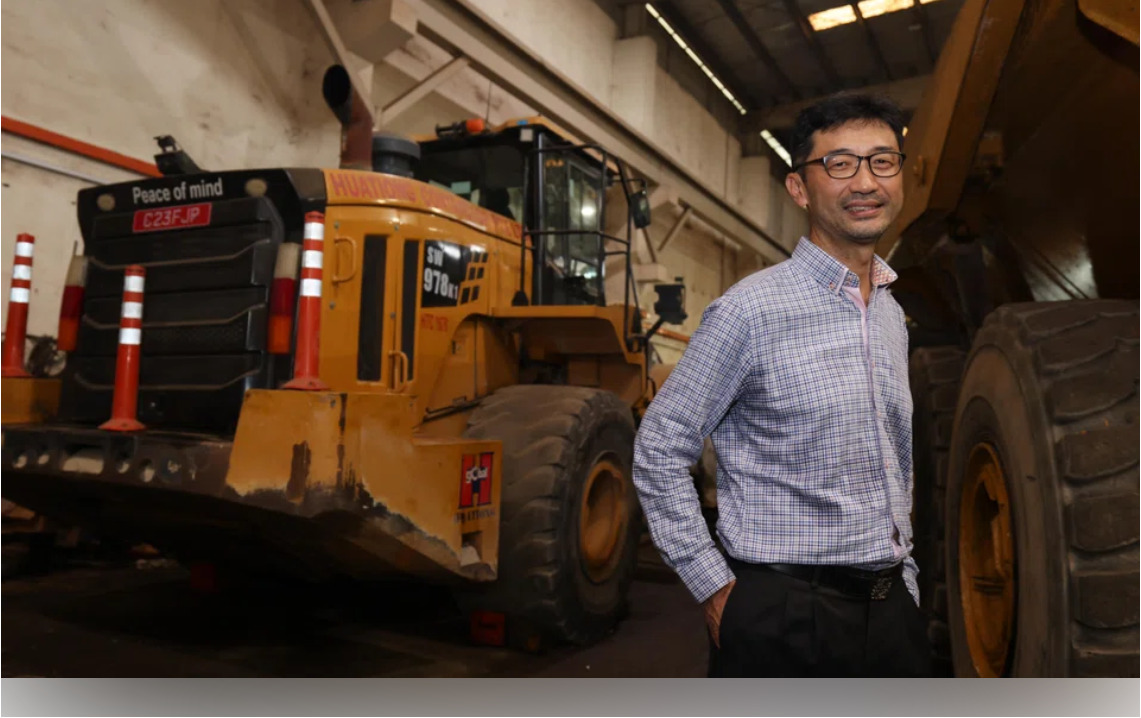
Case Study: The Resilient Evolution of Huationg Global
Summary: This business case examines how Huationg Global, under the leadership of CEO Patrick Ng, successfully transformed its risk posture from a vulnerable, single-trade subcontractor into a resilient, diversified main contractor. By leveraging the extreme operational stress of the COVID-19 pandemic as a strategic pivot point, Huationg expanded into recurring revenue streams—specifically workers’ accommodation and maintenance services—thereby turning acute industry risk into a long-term competitive advantage.
Organizational & Leadership Context
- Background: Patrick Ng joined Huationg as an engineer in 1999 after earning a civil engineering degree from the University of London. He served as a director before becoming CEO when the company listed on the Singapore Exchange in 2014.
- Leadership Structure: Major strategic decisions are made collectively by three family members: Founder and Executive Chairman Ng Hai Liong (father), CEO Patrick Ng, and COO Vincent Ng (brother).
- Recognition: Ng was named Best CEO (Small-Cap Category) at the 2026 Singapore Corporate Awards for leading the company’s strategic evolution.
Risk Identification & Operational Vulnerabilities
Concentration & Cyclical Risk
Relying solely on a single trade in civil engineering leaves a firm acutely vulnerable to macroeconomic downturns and industry-specific shocks. As Ng noted, single-trade dependency is insufficient to sustain a company during severe economic disruptions.
Fixed-Cost Exposure & Cash Flow Interruption
During the pandemic—the greatest challenge of Ng’s tenure—construction work ground to a total halt for approximately four months. While project revenue completely ceased, repayment obligations on heavy construction equipment remained due. To preserve liquidity, staff and leadership (including Ng himself) took pay cuts.
Margin Compression & External Cost Inflation
Even during construction upturns, supply chain volatility presents a continuous risk. In H1 FY2026, despite a 64% year-on-year jump in overall revenue to S$197.8 million, net profit fell 10.8% to S$7.7 million due to higher fuel and supply-chain costs squeezing profit margins.
Manpower Constraints
Attracting and retaining local talent remains an industry-wide structural risk that threatens project execution and capacity expansion.
Risk Mitigation & Strategic Response
| Risk Category | Vulnerability & Context | Strategic Response | Key Outcome |
|---|---|---|---|
| Concentration & Cyclical Risk | Single-trade civil subcontracts (S$8M–S$10M) vulnerable to downturns. | Upgraded licenses to main contractor (>$100M jobs); diversified into workers’ dormitories. | Order book of S$553M across next 4 years. |
| Fixed-Cost & Cash Flow Shock | 4-month pandemic shutdown stopped income while equipment debt remained. | Built Changi East Dormitory Village (10,400 workers, 30 blocks in 18 months). | Generates ~S$10M revenue in H1 FY2026 with 4,000 beds at near-full capacity. |
| Capacity Expansion & Growth | Need for steady long-term recurring revenue. | Acquired 4,385-sqm site in Changi South for S$58M; secured HDB tenancies at Lorong Bistari & Tengah. | New facility online in 18 months to drive 5-year accommodation growth. |
| Margin & Supply Inflation | High fuel and logistics costs compressed profit margins. | Integrated material sales, inland logistics, maintenance, and security systems. | Civil engineering revenue up 58% YoY in H1 FY2026 (~90% of total revenue). |
Strategy 1: Building Counter-Cyclical & Recurring Revenue Streams
To offset project-based volatility, Huationg entered the workers’ accommodation sector during the pandemic:
- Initial Capability Build: Secured a contract with Changi Airport Group in 2020 to construct and operate the Changi East Workers Dormitory Village (10,400 workers), delivering 30 blocks within 18 months.
- Tenancy Expansion: Secured tenancies with the Housing & Development Board (HDB) starting January 2026 for dormitories at Lorong Bistari and Tengah.
- Asset Acquisition: Invested S$58 million to acquire a 4,385-sqm site in Changi South to build a purpose-built dormitory expected to contribute revenue within 18 months.
- Financial Impact: The segment currently manages 4,000 beds at near-full capacity, generating ~S$10 million in H1 FY2026 (~5% of total top-line revenue) with growth projected over the next 5 years.
Strategy 2: Value Chain Advancement & Auxiliary Services
Huationg moved up the value chain from subcontractor to main contractor capable of executing large-scale civil engineering works. To insulate against margin pressures, the group utilizes complementary internal divisions:
- Sale of construction materials and inland logistics support.
- Construction maintenance, auxiliary works, and security systems to generate steady, recurring income.
Strategy 3: Workforce Resilience & Governance Continuity
- Talent Strategy: Mitigated local labour shortages by building a diverse multinational workforce and investing in employee training.
- Succession Planning: Grooming younger engineers and grooming the next generation across all business units to ensure operations can run smoothly on “auto mode”.
Key Performance Indicators & Strategic Outcomes
| Strategic Indicator | Performance Metric & Financial Outcome |
|---|---|
| Total Order Book | S$553 million over the next 4 years. |
| H1 FY2026 Group Revenue | S$197.8 million (+64% year-on-year growth). |
| Civil Engineering Segment Revenue | +58% year-on-year growth (represents ~90% of overall top line). |
| Workers’ Accommodation Revenue | ~S$10 million in H1 FY2026 (~5% of total revenue, operating 4,000 beds). |
| Net Profit & Cost Inflation | S$7.7 million (-10.8% YoY due to higher fuel and supply-chain costs). |
| Capital Investment (Changi South Site) | S$58 million for 4,385-sqm purpose-built dormitory site. |
| National Construction Pipeline | S$39 billion to S$46 billion average annual demand (2027-2030). |
Questions for Strategy Leaders
- Crisis-Driven Pivoting: How can capital-intensive companies evaluate whether a short-term crisis project (e.g., pandemic dormitories) should be institutionalized into a permanent business line?
- Margin vs. Volume Trade-off: Given Huationg’s 64% revenue surge paired with a 10.8% net profit decline due to supply chain inflation, what claims or contractual price-escalation clauses should main contractors adopt to protect margins?
- Concentration Risk Calibration: While civil engineering accounts for 90% of revenue, workers’ accommodation represents 5%. What is the optimal revenue split required for a heavy industry firm to maintain true crisis resilience?
Feel free to comment at dk@dkoutsource.com; We would love to hear from you.
References
The Business Times – https://bt.sg/ge4h