dk@dkoutsource.com



Summary: In MCST Plan No. 3322 v Tiong Aik Construction Pte Ltd [2016] SGCA 40, the Singapore Court of Appeal ruled that architects and main contractors are not automatically liable for defects caused by independent subcontractors. The court held that non-delegable duties remain exceptional and that liability generally follows fault. The decision underscores the importance of contractual risk allocation, warranties, and identifying the party actually responsible for defective works.
Construction projects involve a wide range of parties, from developers and architects to main contractors and specialist subcontractors. While this collaborative approach allows projects to benefit from specialised expertise, it can also create uncertainty when building defects emerge after completion. A common question is whether architects or main contractors can be held responsible for defects caused by subcontractors.
This issue was examined by the Singapore Court of Appeal in Management Corporation Strata Title Plan No. 3322 v Tiong Aik Construction Pte Ltd and RSP Architects Planners & Engineers (Pte) Ltd [2016] SGCA 40, a landmark decision that clarified the limits of liability for construction professionals.
Background of the Case
The dispute arose from The Seaview condominium, a residential development comprising 546 units across six residential blocks.
Following completion of the project, the Management Corporation Strata Title (MCST) commenced legal proceedings against several parties involved in the development, including the developer, architect, main contractor, and certain subcontractors. The MCST alleged that defects existed within the common property areas, including issues relating to fibre optic cabling, landscaping around the swimming pool, and foul odours linked to the plumbing and sanitary system.
Many of the alleged defects were connected to works performed by specialist subcontractors rather than by the architect or main contractor themselves.
Non-Delegable Duty: A non-delegable duty is a legal obligation that remains with a party even after work has been delegated to another contractor or consultant. If such a duty exists, the original party may still be liable for negligence committed by the party carrying out the work.
The MCST’s Argument
The MCST argued that both the architect and the main contractor owed a non-delegable duty of care. In essence, they contended that these construction professionals should remain responsible for defects within the development even when the defective work was performed by independent subcontractors.
Definition: MCST (Management Corporation Strata Title)
An MCST is the legal entity formed by all subsidiary proprietors of a strata development, such as a condominium. It is responsible for managing and maintaining common property areas including lobbies, swimming pools, landscaping, lifts, and shared facilities.
If accepted, this argument would have significantly expanded the liability of architects and contractors, effectively requiring them to assume responsibility for defects throughout the entire project regardless of who carried out the work.
The Court’s Decision
The Court of Appeal rejected the argument and dismissed the appeal. The Court held that architects and main contractors do not generally owe a broad non-delegable duty requiring them to guarantee that all subcontracted works are performed without negligence.
As a result, subcontractors remain responsible for their own negligent workmanship or design. Main contractors and architects are not automatically liable simply because they engaged or coordinated those subcontractors. The judgment reinforces the principle that construction professionals are not insurers against every defect that may arise within a project.

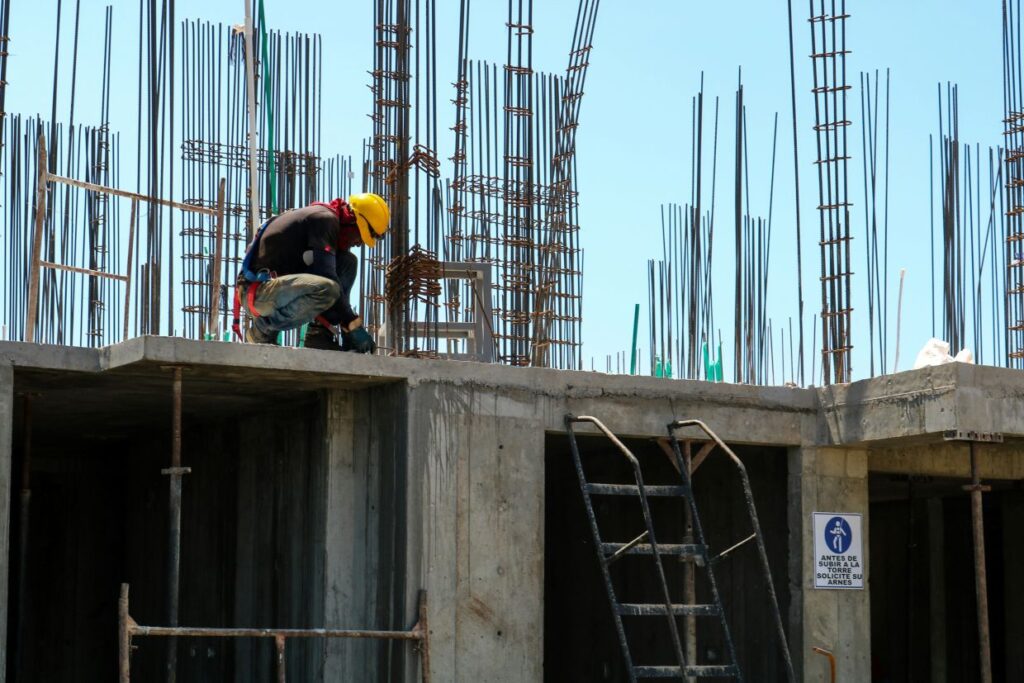
Picture by Shox on Pexels
Why the Court Rejected the Claim
The Court explained that non-delegable duties are exceptional and traditionally arise only in specific types of relationships involving care, control, and vulnerability. Examples include relationships between employers and employees, schools and students, and hospitals and patients.
The relationship between a condominium’s MCST and construction professionals is fundamentally different. The MCST was never under the custody, care, or control of the architect or main contractor. As such, the characteristics that typically justify the imposition of a non-delegable duty were absent.
The Court also examined the Building Control Act (BCA). While the legislation imposes various duties on builders and architects, the Court clarified that its primary focus is on structural safety, compliance with approved plans, and compliance with building regulations.
Importantly, Parliament did not intend the BCA to make architects and contractors responsible for every workmanship issue or aesthetic defect that may arise during construction. The Court further recognised the realities of the modern construction industry.
Large projects rely extensively on specialist subcontractors with expertise in areas such as plumbing, landscaping, communications infrastructure, and mechanical and electrical systems. Imposing blanket liability on architects and main contractors for all subcontractor negligence would create an excessive burden and significantly alter established industry risk allocation practices.
Key Findings from the Court
The Court made several important findings that continue to influence construction defect claims in Singapore.
First, architects and main contractors do not owe a broad non-delegable duty to ensure that every aspect of a project is completed without negligence.
Second, independent subcontractors generally remain liable for their own negligent acts and defective workmanship.
Third, the Building Control Act focuses primarily on structural safety and regulatory compliance rather than general workmanship standards.
Finally: the Court reaffirmed that liability should generally follow fault. Where a defect is caused by a negligent subcontractor, the appropriate claim will ordinarily lie against the party responsible for the defective work rather than against upstream project participants who have exercised reasonable care in carrying out their own responsibilities.
What This Means for the Construction Industry
For developers, the decision highlights the importance of clear contractual arrangements and properly drafted warranty provisions. Contractual protections remain one of the most effective ways to manage construction risk.
For architects and main contractors, the judgment confirms that while they remain responsible for exercising reasonable professional skill and care, they are not automatically liable for every mistake made by independent specialists.
For MCSTs and property owners, the decision demonstrates the importance of identifying the actual source of defects and pursuing claims against the appropriate parties rather than assuming liability rests with the project’s lead consultants or contractors.
Conclusion
The Court of Appeal’s decision in MCST Plan No. 3322 v Tiong Aik Construction Pte Ltd provides important clarity on risk allocation within Singapore’s construction industry.
While architects and main contractors continue to owe professional duties of care, they are generally not responsible for defects caused solely by the negligence of independent subcontractors. The judgment reinforces the principle that liability should generally rest with the party whose negligence caused the loss.
For all project stakeholders, the case serves as a timely reminder that robust contracts, clear warranty arrangements, and effective project administration remain essential for managing construction risks and resolving defect disputes.
References
- Management Corporation Strata Title Plan No. 3322 v Tiong Aik Construction Pte Ltd and another [2016] SGCA 40 (Court of Appeal of Singapore) https://www.elitigation.sg/gdviewer/s/2016_SGCA_40
- PDF Version of the Judgment
https://www.elitigation.sg/gd/gd/2016_SGCA_40/pdf - Building Control Act 1989 (Singapore Statutes) https://sso.agc.gov.sg/Act/BCA1989
- Building Control Act Overview (Building and Construction Authority) https://www1.bca.gov.sg/safety-and-standards/building-control-act/