dk@dkoutsource.com


As construction projects increasingly span multiple countries, they naturally involve a much wider and more diverse array of contractors, consultants, suppliers, and stakeholders. While these international collaborations unlock significant regional growth opportunities, they also introduce intricate legal, contractual, and financial complexities that can lead to costly construction disputes.
Cross-border construction disputes are legal conflicts arising from construction or engineering projects involving parties based in different jurisdictions. -FIDIC
Differences in regional regulations, contract laws, currencies, and project standards often make resolving these disagreements far more challenging than in domestic developments. However, by implementing robust contract management, maintaining meticulous documentation, and engaging professional consultant quantity surveying services, project teams can successfully manage these risks and ensure the smooth delivery of cross-border developments.
Why Cross-Border Projects Present Unique Complexities
Unlike local developments, cross-border construction projects require parties to operate across entirely different legal and commercial environments. For instance, a contractor based in one nation might work for a developer in another while sourcing materials from several additional countries.
This geographic and administrative dispersion introduces several unique friction points:
- Varying Contract Laws: Parties must navigate different and sometimes conflicting construction contract laws.
- Currency and Market Fluctuations: Exchange rate movements can unpredictably affect project costs, and unexpected inflation or rising material prices can dramatically inflate budgets.
- Supply Chain and Logistical Bottlenecks: Delays in international supply chains, shipping delays, and complex customs clearance procedures can severely disrupt schedules.
- Standards and Regulations: Conflicting building codes, local labor regulations, varying procurement laws, and differences in construction standards and specifications complicate compliance.
- Operational Barriers: Communication barriers, different banking systems, payment certifications, and varying contractual procedures add layers of administrative overhead.
These challenges are highly visible in Southeast Asia, where many Singapore-based developers and contractors participate in projects across Malaysia, Indonesia, Vietnam, and the Philippines, exposing them directly to highly diverse regulatory and labour landscapes.
Primary Catalysts for International Construction Disputes
Many international construction disputes stem from systemic issues that could have been mitigated through proactive planning and clearer contracts. For Singapore-based projects, the choice of contract form can also have a significant influence on how responsibilities, risks, claims, variations, and extensions of time are managed. Standard forms such as the Singapore Institute of Architects (SIA) Conditions of Contract and the Public Sector Standard Conditions of Contract (PSSCOC) provide structured contractual frameworks for different project and procurement contexts.
The most common triggers include:
- Poorly Defined Contract Scope: International projects frequently involve multiple consultants and subcontractors; if the scope of work is not clearly and precisely defined, disagreements over specific responsibilities become almost inevitable.
- Delays and Extension of Time (EOT) Claims: When shipping delays, customs issues, labor shortages, or unexpected site conditions impact project schedules, contractors frequently submit EOT claims, which employers may dispute regarding whether the delays were actually excusable.
- Cost Overruns: Rising material prices, unexpected inflation, or sudden currency movements can escalate costs, triggering disputes over which party should bear the additional financial burden.
- Uncontrolled Variation Orders: Changes to designs, specifications, or requirements are common in international developments, but without proper documentation and valuation, these variations rapidly escalate into disputed claims.
- Payment Disputes: Late payments remain a leading cause of conflict in global construction, often exacerbated by differences in regional banking systems, payment certifications, and contractual procedures.
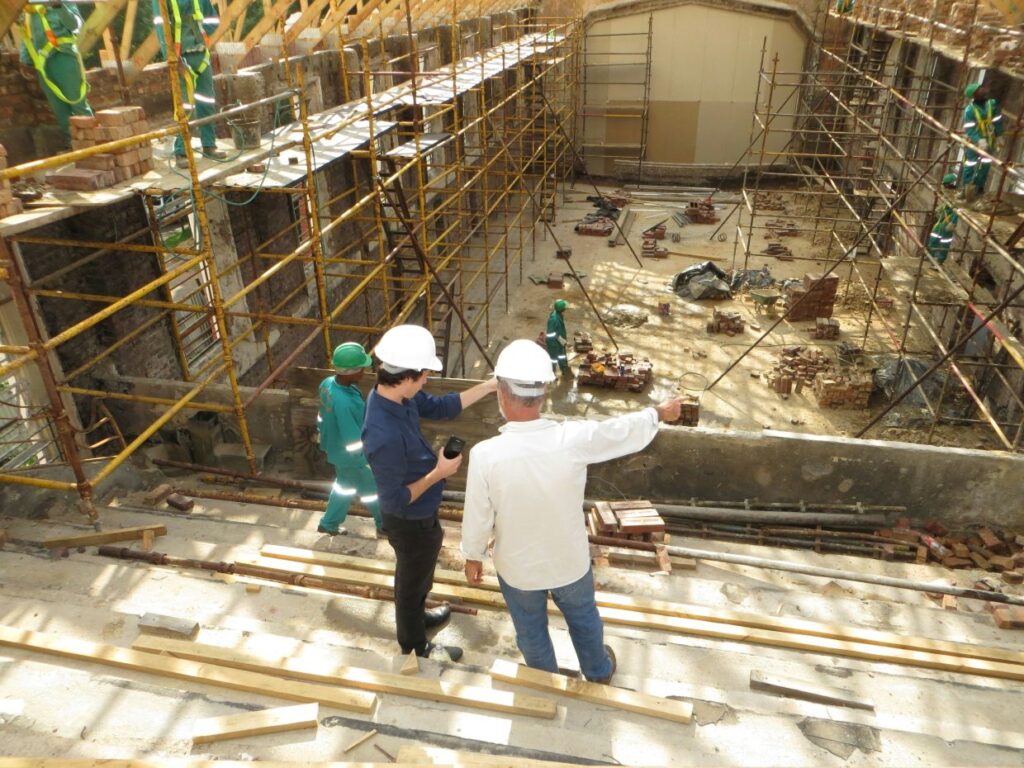
Picture by Mark Pottersen
Dispute Resolution Pathways
Despite rigorous planning, conflicts can still occur.
When disputes arise in international construction, they are commonly resolved through several distinct methods:
- Negotiation: Many disagreements can be resolved early through direct discussions before the parties resort to formal legal proceedings.
- Mediation: An independent, neutral mediator helps both parties reach a mutually acceptable commercial solution without issuing a legally binding decision.
- Dispute Boards: Many international contracts establish Dispute Avoidance and Adjudication Boards (DAABs) early in the project lifecycle. These boards actively encourage parties to resolve disagreements before they develop into larger, adversarial claims, helping construction continue with minimal disruption.
- Arbitration: For high-value infrastructure projects involving parties from different countries, international arbitration remains one of the most widely used and trusted methods for binding dispute resolution.
Proactive Prevention: Safeguarding Cross-Border Deliverables
While having robust dispute resolution mechanisms is essential, preventing conflicts from arising is always the superior outcome.
Project teams can significantly de-risk international developments by adopting several preventative practices:
- Preparing highly detailed construction contracts and ensuring clear risk allocation.
- Defining the project scope with absolute clarity to prevent overlap or gaps.
- Maintaining comprehensive, contemporaneous project documentation.
- Monitoring costs continuously and managing variation orders promptly.
- Conducting regular contract reviews to catch misalignments early.
- Understanding the applicable contractual framework and complying with its requirements for notices, claims, variations, payments, and extensions of time. For Singapore projects, familiarity with standard forms such as SIA Conditions of Contract and PSSCOC can help project teams establish clearer procedures and responsibilities from the outset.
- Engaging experienced consultant quantity surveyor services to provide independent, professional oversight.
Early, active collaboration between clients, contractors, consultants, and quantity surveyors is the single most effective way to prevent minor contractual issues from developing into costly, protracted legal disputes.
The Critical Role of the Consultant Quantity Surveyor
Throughout the entire lifecycle of an international project, a Consultant Quantity Surveyor acts as a vital commercial anchor.
They provide structured, transparent support across multiple critical functions:
- Financial Governance: Conducting accurate cost estimation, cost planning, budget control, and final account preparation.
- Contract and Tender Administration: Managing tender evaluations, contract administration, and independent claims assessments.
- Change Management: Providing objective, evidence-based valuations of variation orders.
By ensuring financial transparency and maintaining proper documentation of all contractual changes, quantity surveyors greatly reduce misunderstandings regarding project costs and payment claims. For international developments, their expertise is particularly valuable in evaluating the complex financial impacts of exchange rate fluctuations, overseas procurement costs, and volatile material prices across different markets.
Conclusion
In the arena of international construction, managing contractual and financial risks is just as critical as delivering quality physical engineering. Cross-border developments involve unique legal, financial, and operational challenges that demand careful planning, robust contract administration, and highly effective communication between all stakeholders. By providing specialized cost management, documenting contractual changes, evaluating claims, and maintaining financial control at every stage of construction, professional consultant quantity surveyors provide the essential commercial support organizations need to deliver international projects with confidence and minimize the risk of costly disputes.
References
- FIDIC – Conditions of Contract for Construction (Red Book): https://fidic.org/books/construction-contract-2nd-ed-2017-red-book?id=1864
- FIDIC – Alternative Dispute Resolution: https://fidic.org/node/761
- FIDIC Contract Lawyers – Adjudication in Engineering Projects: https://fcl.fidic.org/adjudication-addressing-disputes-in-engineering-projects/
- International Construction Law – Risk Allocation and Dispute Resolution: https://doi.org/10.64457/icl.en.ch1